Sample Letter for Request for Corporate Information 2026

Get Form
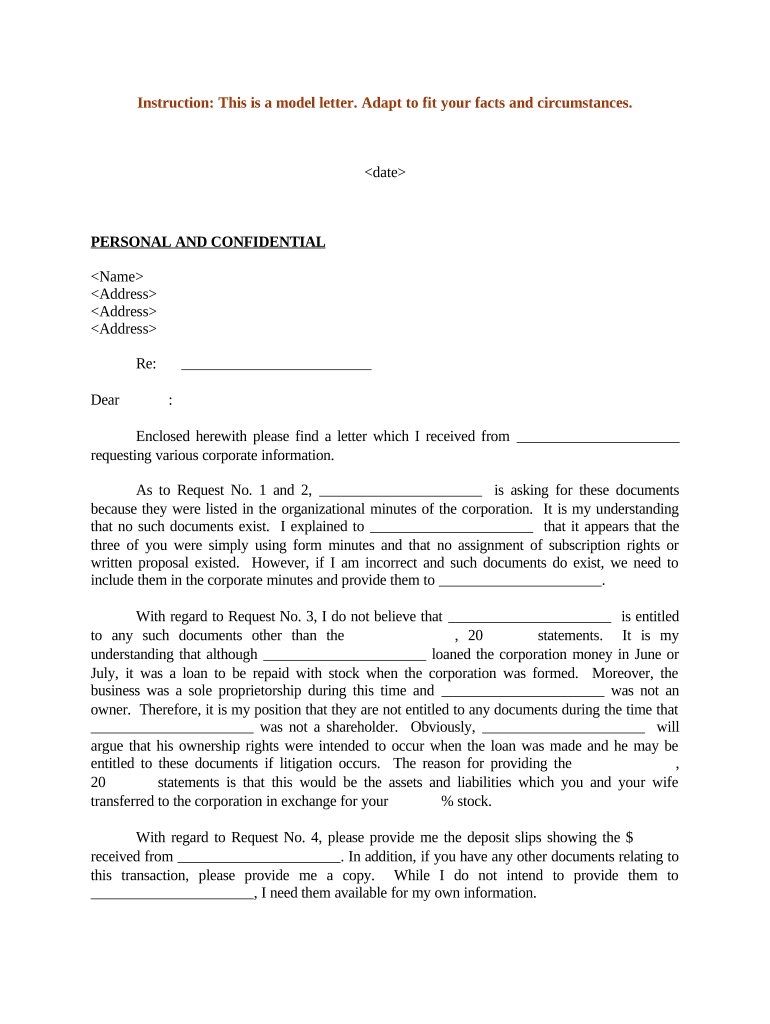
sample request letter for documents Preview on Page 1

Here's how it works

01. Edit your sample request letter for documents online
Type text, add images, blackout confidential details, add comments, highlights and more.
02. Sign it in a few clicks
Draw your signature, type it, upload its image, or use your mobile device as a signature pad.
03. Share your form with others
Send sample of request letter for documents via email, link, or fax. You can also download it, export it or print it out.

How to use or fill out Sample Letter for Request for Corporate Information with our platform

Form edit decoration
9.5
Ease of Setup
DocHub User Ratings on G2
9.0
Ease of Use
DocHub User Ratings on G2
  1. Click ‘Get Form’ to open the Sample Letter for Request for Corporate Information in the editor.
  2. Begin by entering the date at the top of the letter. This is crucial as it establishes the timeline of your request.
  3. Fill in your name and address details in the designated fields. Ensure accuracy to maintain professionalism.
  4. In the 'Re:' section, specify the subject of your request clearly to provide context.
  5. Address the recipient appropriately, ensuring you include their name and title if known.
  6. Carefully review each request outlined in the letter, filling in any specific details required, such as document names or dates.
  7. Conclude with a polite closing statement and your signature. You can easily add a digital signature using our platform.

Start editing your Sample Letter for Request for Corporate Information today for free on our platform!

be ready to get more

Complete this form in 5 minutes or less

Get form

Got questions?

We have answers to the most popular questions from our customers. If you can't find an answer to your question, please contact us.
Contact us
How to write a letter asking for information Consider the purpose of your request and create an outline. Begin by introducing yourself and your credentials. Discuss the organization or committee that you represent. Highlight how the information could contribute to a project or initiative.
Follow these steps to write your letter: Include contact details and the date. Open with a professional greeting. State your purpose for writing. Summarise your reason for writing. Explain your request in more detail. Conclude with thanks and a call to action. Close your letter. Note any enclosures.
4 tips for effective requests for information (RFI) Give specific requirements. The more specific you can get in terms of what you need, the better your chances of getting specific, on-target responses. Use clear formatting. Include background information and resources. Set clear and realistic expectations.
Tips for Writing Request Emails State your ask upfront. Dont bury your request in paragraphs of pleasantries. Make it incredibly easy to say yes. The less work someone has to do, the more likely they are to help. Briefly explain the why Give a little context. Provide a graceful exit. Nobody likes feeling cornered.
Dear [Name of the addressee or Team of [Name of addressee company]], Please allow me to introduce myself: my name is [Your name], and I am writing to you in order to [express interest, make an inquiry, or request information] about [specific product, service, or partnership] offered by [Company].

Security and compliance

At DocHub, your data security is our priority. We follow HIPAA, SOC2, GDPR, and other standards, so you can work on your documents with confidence.

Learn more
ccpa2
pci-dss
gdpr-compliance
hipaa
soc-compliance
be ready to get more

Complete this form in 5 minutes or less

Get form

People also ask

How to write a letter of request. Gather information. Before you write your letter of request, youre probably going to need to do some research. Plan your content. Introduce yourself. Detail your request. Explain why. Conclude the letter.
RFIs dont need to be complicated and shouldnt be long, but they should usually contain at least these seven key components. Contact information. Project details. Scope. Requirements and deliverables. Evaluation criteria. Project timeline. Give specific requirements. Use clear formatting.

sample email requesting documents from employee