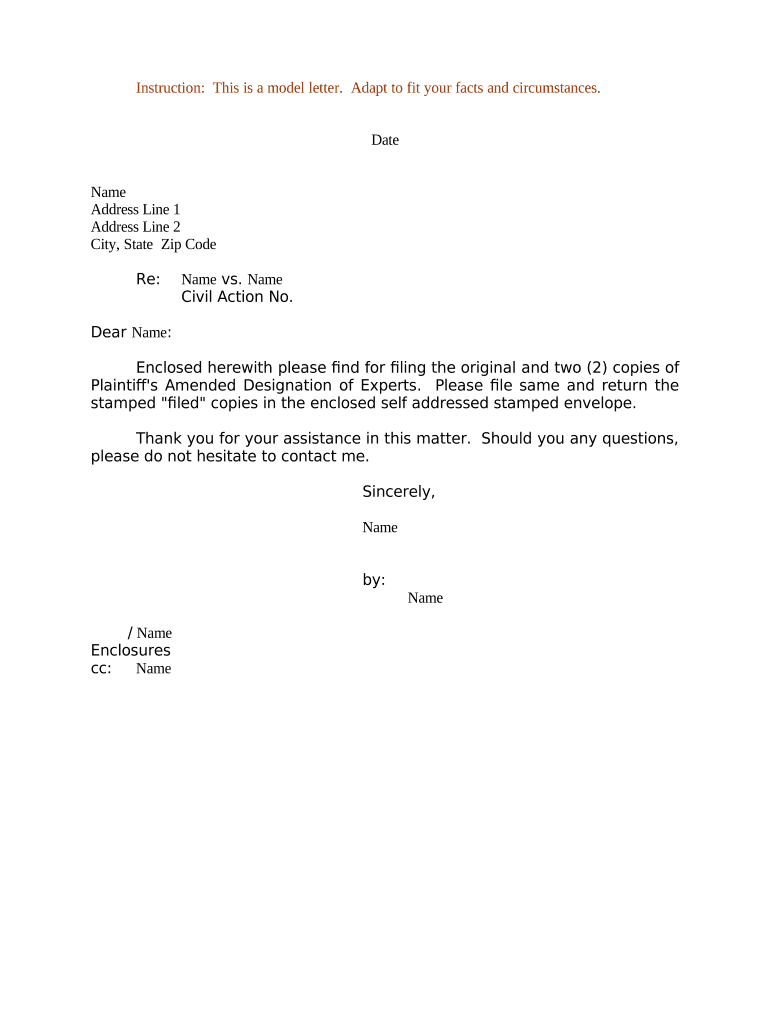







Definition and Purpose of the Sample Letter Regarding Plaintiff's Amended Designation of Experts
The term "Sample Letter regarding Plaintiff's Amended Designation of Experts" refers to a structured legal document utilized in civil litigation. It serves to formally notify the opposing party and the court about the plaintiff's designated experts who will provide testimony in support of their case. This letter is critical in outlining the qualifications and relevance of each expert, as well as any changes made to the initial designations. Understanding the context and specifics of this document is essential for legal professionals involved in litigation.
- Communication of Amendments: The letter allows plaintiffs to amend their previously submitted designations, reflecting any changes in strategy or circumstances since the original submission.
- Expectation of Engagement: The letter sets the stage for expert witness discovery, informing all parties involved about who can be expected to testify and what expertise they bring to the case.
How to Use the Sample Letter Regarding Plaintiff's Amended Designation of Experts
Using the sample letter effectively involves following specific guidelines and utilizing proper legal formats. The letter should clearly communicate the designation and qualifications of the experts while adhering to any court rules regarding form and submission.
- Drafting the Letter: The plaintiff or their attorney drafts the letter, ensuring it includes all relevant details required by the jurisdiction.
- Including Key Information:
- Full names and contact information of the designated experts.
- Areas of expertise and relevance to the case.
- Confirmation that the experts are available for deposition or trial.
- Complying with Legal Standards: Ensure the letter is compliant with the rules of the court in which the case is filed, including any specific formatting requirements.
Steps to Complete the Sample Letter Regarding Plaintiff's Amended Designation of Experts
Completing the sample letter requires a systematic approach to ensure all essential information is included and presented appropriately. This task includes several steps to facilitate a comprehensive submission.
- Identify Required Experts: Review the case details to determine which experts are necessary to support the plaintiff's position.
- Gather Expert Information: Collect biographies, qualifications, and any relevant documentation that outlines the expert’s background and expertise.
- Write the Letter: Structure the letter to include:
- A clear subject line indicating the letter's purpose.
- An introduction stating the intent to amend designations.
- Detailed sections about each expert, including their qualifications and areas of expertise.
- Review for Compliance: Ensure all information is accurate and formatted according to relevant court rules.
Key Elements of the Sample Letter Regarding Plaintiff's Amended Designation of Experts
A well-crafted designation letter must include specific elements to fulfill its purpose effectively. Understanding these elements greatly enhances the quality and comprehensiveness of the document.
- Title: The letter should begin with an appropriate title that clearly states it is a designation of experts.
- Contact Information: Include the plaintiff’s representative's contact details, ensuring clarity on who to reach for questions.
- Expert Details: For each expert, provide:
- Full name
- Professional title and affiliation
- Brief description of qualifications
- Summary of expected testimony and relevance to the case
- Closing Statement: A formal closing, expressing willingness to provide further information or clarification if necessary.
Legal Use of the Sample Letter Regarding Plaintiff's Amended Designation of Experts
The sample letter is not only a formality but a crucial aspect of litigation. Understanding its legal implications can have significant effects on the outcome of a case.
- Establishing Expert Testimony: The letter essentially establishes the framework for expert involvement in court, ensuring both parties have transparency regarding the testimony.
- Dictating Discovery Processes: The contents of the letter provide a foundation for future discovery processes related to expert witness evaluations, depositions, and potential trials.
- Fulfilling Court Requirements: Submitting the letter in accordance with the jurisdiction’s rules confirms the plaintiff's adherence to legal protocols, potentially influencing judges’ view of the case’s validity.
Examples of Using the Sample Letter Regarding Plaintiff's Amended Designation of Experts
Practical applications of the letter highlight its significance within the broader context of civil litigation. Here are a few scenarios illustrating how the letter is utilized.
- Amending Designations: If new evidence arises necessitating additional expert witnesses, a plaintiff’s attorney can draft an amended designation letter to include these changes, ensuring all parties are informed.
- Defending Against Challenges: In situations where the opposing party challenges an expert’s qualifications, having a well-crafted letter that describes the expert’s background can strengthen the plaintiff’s position.
- Facilitating Settlements: In preparation for mediation or settlement discussions, the letter can clarify the expert’s role and anticipated contributions, aiding in negotiations.
This structured approach ensures clarity and thoroughness in legal communication, crucial for effective representation in court.