
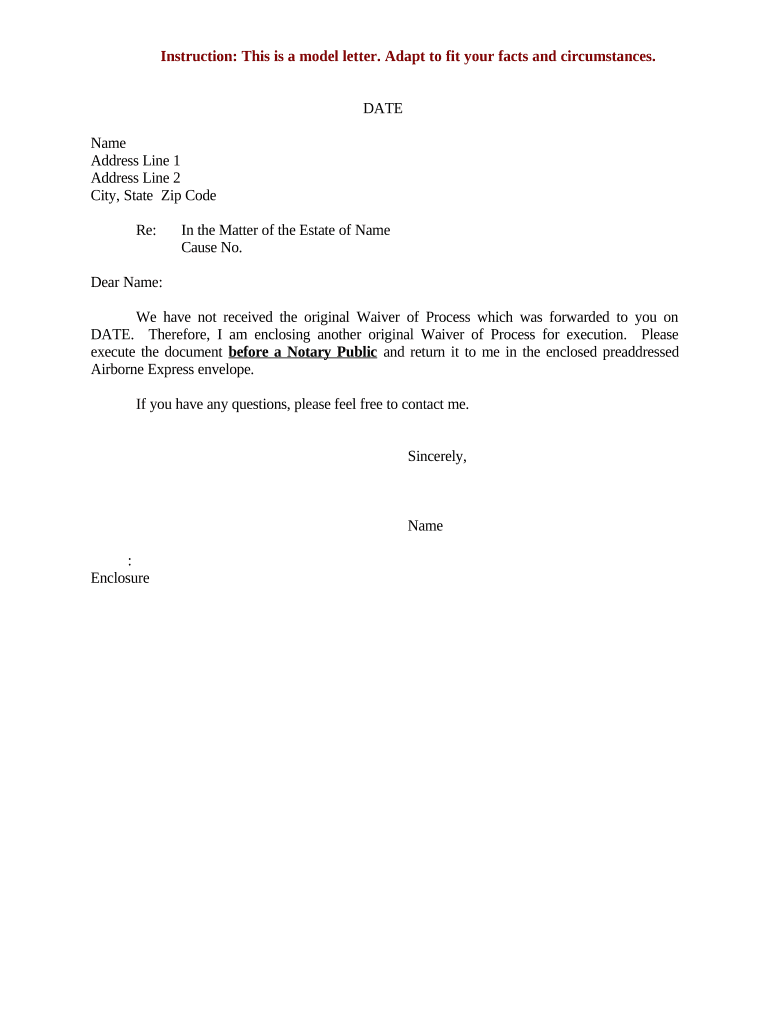







Understanding the Waiver Letter and Its Significance
A waiver letter is a formal document that relinquishes a right or a claim. It is commonly used in various contexts, such as legal situations, events, and educational settings. By signing a waiver, individuals may express their understanding that certain risks are involved, thereby releasing another party from liability.
Common Uses of Waiver Letters
- Event Participation: Individuals may sign a waiver letter before participating in activities like sports or adventure events, acknowledging the risks involved.
- Educational Contexts: Students might submit a waiver letter to exempt themselves from certain requirements or to allow for exceptions wherever necessary.
- Legal Matters: In legal cases, waiver letters can be used to relinquish rights to a trial or to waive the requirement for certain processes.
How to Use a Waiver Letter Sample Effectively
Using a waiver letter sample can guide individuals in drafting their letters. The sample provides a clear structure, which includes necessary components such as the purpose of the waiver, the parties involved, and a statement acknowledging the risks.
Key Elements of a Waiver Letter
- Header: Include your name and contact information, followed by the date and the recipient's information.
- Opening Statement: Clearly state the purpose of the waiver.
- Acknowledgment of Risks: Include a section that explains the risks associated with the activity or situation.
- Release of Liability: Provide a statement that releases the other party from liability.
- Signature Lines: Space for signatures of the waiver writer and, if necessary, witnesses or notaries.
Steps to Complete a Waiver Letter Sample
Creating a waiver letter requires careful thought and attention to detail. Following a structured approach will help ensure all necessary components are included.
- Identify the Parties Involved: Start with the full names and addresses of all relevant parties.
- Draft the Purpose Statement: Clearly articulate why the waiver is being created.
- Outline the Risks: Detail the specific risks that may be associated with the activity.
- Include the Release Statement: Explicitly state that the signer understands and waives their rights to claims against the other party.
- Sign and Date: Ensure that both parties sign and date the document for validity.
Who Typically Uses a Waiver Letter Sample?
Waiver letters are utilized by a diverse group of individuals and organizations. Below are examples of who might need to access these samples:
- Students: For waiving rights related to educational policies.
- Event Organizers: To have participants acknowledge risks in physical activities.
- Businesses: In contracts where liability needs to be limited, especially in service-oriented fields like fitness or child care.
Important Terms Related to Waiver Letters
Familiarizing oneself with the terminology associated with waiver letters can enhance understanding. Here are some key terms:
- Liability: Legal responsibility for one's actions or events.
- Indemnification: Protection from financial loss or legal repercussions.
- Informed Consent: Agreement to participate after understanding the risks involved.
Legal Use of a Waiver Letter Sample
Waiver letters can have legal significance, particularly in establishing that the signers acknowledged certain risks and voluntarily chose to proceed. Understanding the legal implications of a waiver can help in its proper drafting.
Essential Legal Considerations
- Clarity: The language used should be clear and understandable to avoid misinterpretation.
- Scope: The waiver should only cover specific activities or events and not be overly broad.
- Capacity: Ensure that all parties signing the waiver have the legal capacity to enter into such agreements.
Examples of Waiver Letter Samples
Providing various examples can help illustrate the diverse applications of waiver letters:
Example 1: Event Participation Waiver
This waiver might include an acknowledgment of risks involved in participating in a skydiving event, along with statements that the participant agrees to hold the organizers harmless from any injuries.
Example 2: Educational Waiver
A student might submit a waiver to not attend a mandatory laboratory session, citing a medical reason, with a statement of understanding concerning the waived educational opportunities.
Variants of the Waiver Letter Sample
Understanding that different scenarios may require tailored wording, the following types of waivers exist:
- General Liability Waiver: A broad waiver that can apply to various situations.
- Healthcare Waiver: Used in medical settings where patients consent to treatment after being informed of risks.
- Parental Waiver: Specific to situations involving minors, where a guardian signs on behalf of a child.
By utilizing these thorough insights on waiver letters, individuals can effectively create, understand, and employ various waiver letter samples that cater to their specific needs.




