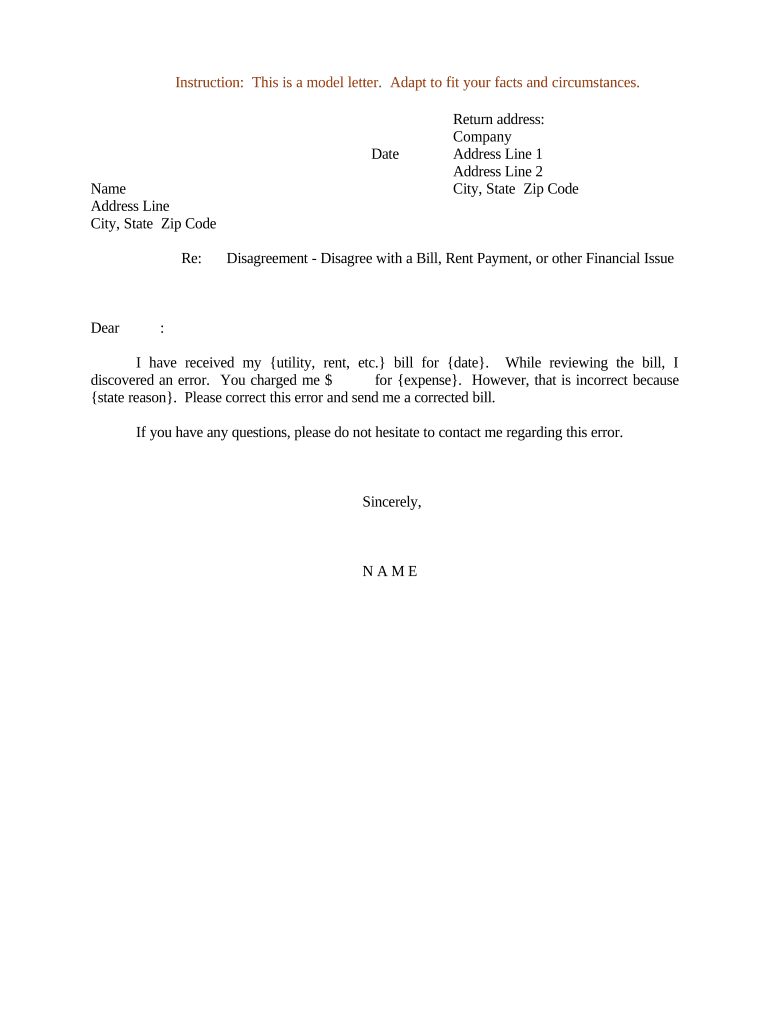







Understanding the Sample Letter Bill
A sample letter bill is a written communication template that addresses discrepancies, requests, or approvals related to billing. It is often used by individuals or businesses to formally express their concerns about a bill they received, such as a utility, medical, or service bill. By utilizing a structured sample letter, the writer can ensure that all necessary information is conveyed clearly and effectively.
The letter should begin with the sender's details, followed by the recipient's information. It typically includes specific references to the bill in question, a description of the issue, and a request for resolution. For example, someone may need to request a corrected invoice due to an overcharge. The format aids in ensuring that all pertinent information is included, facilitating a smoother resolution process.
How to Use the Sample Letter Bill
To effectively use a sample letter bill, begin by customizing it to accurately reflect your situation. This involves filling in important details such as:
- Sender Information: Your name, address, and contact number.
- Recipient Information: The name and address of the billing party or company.
- Subject Line: A brief overview of the purpose of the letter, such as "Dispute of Billing Amount."
- Specific Bill Information: Include details like account numbers, invoice dates, and the amount in question.
Once the template is personalized, review the letter for clarity and grammatical accuracy. Clearly stating the issue encourages a prompt response. Providing relevant documentation, such as copies of previous communications or invoices, can also strengthen your position.
Steps to Complete the Sample Letter Bill
Completing a sample letter bill involves several essential steps:
- Select the Appropriate Template: Choose a sample letter that aligns with your specific issue—be it a billing dispute, payment request, or an inquiry about charges.
- Fill in Your Information: Input your contact information and the recipient's details, ensuring accuracy for effective communication.
- Draft the Body:
- Open with Purpose: Start by outlining your reason for writing and clearly stating the issue at hand.
- Detail the Discrepancy: List out the specifics, including invoice numbers and the nature of the error.
- State Your Request: Clearly articulate what you are seeking, whether it's a corrected bill or a request for a payment extension.
- Review and Edit: Reread the letter for clarity and to ensure that all necessary information is included.
- Sign and Send: After finalizing the letter, print it if sending via post, or attach it to an email if submitting electronically.
This meticulous approach ensures that your communication is professional and complete.
Important Elements in the Sample Letter Bill
A well-structured sample letter bill must include several important elements to be effective:
- Clear Subject Line: Indicate the main purpose of the letter, such as "Invoice Discrepancy Notification."
- Date: Always include the date the letter is being sent.
- Professional Greeting: Address the recipient appropriately, using their name if known.
- Introduction Paragraph: Briefly introduce your concern.
- Main Body Content:
- Detailed explanation of the billing issue.
- Reference to specific charges, bills, or invoices.
- Any timelines or relevant deadlines related to the issue.
- Conclusion and Request: Summarize your request and provide your contact information for follow-up.
- Signature: Conclude with your name, and if sent in hard copy, sign above your typed name.
Including these components ensures clarity and professionalism.
Examples of Using the Sample Letter Bill
Here are a few examples of situations where a sample letter bill may be used:
- Disputing a Utility Bill: A customer might write to their electric company to contest an unusually high bill, citing meter readings and usage history.
- Medical Billing Error: A patient may send a letter to their healthcare provider disputing a charge that they believe was wrongly applied after insurance payment.
- Late Payment Notice: A business might employ a sample billing letter to remind a client of an overdue payment while providing a breakdown of services rendered.
- Request for Correction: After receiving an incorrect invoice for goods or services, a company could utilize a sample letter bill to notify the vendor and request a corrected version.
These scenarios illustrate the adaptability and necessity of clear and formal communication when addressing billing issues.