Pending litigation 2026

Get Form
non litigation letter format Preview on Page 1

Here's how it works

01. Edit your non litigation letter format online
Type text, add images, blackout confidential details, add comments, highlights and more.
02. Sign it in a few clicks
Draw your signature, type it, upload its image, or use your mobile device as a signature pad.
03. Share your form with others
Send no pending litigation sample letter via email, link, or fax. You can also download it, export it or print it out.

How to use or fill out pending litigation with our platform

Form edit decoration
9.5
Ease of Setup
DocHub User Ratings on G2
9.0
Ease of Use
DocHub User Ratings on G2
  1. Click ‘Get Form’ to open the pending litigation document in the editor.
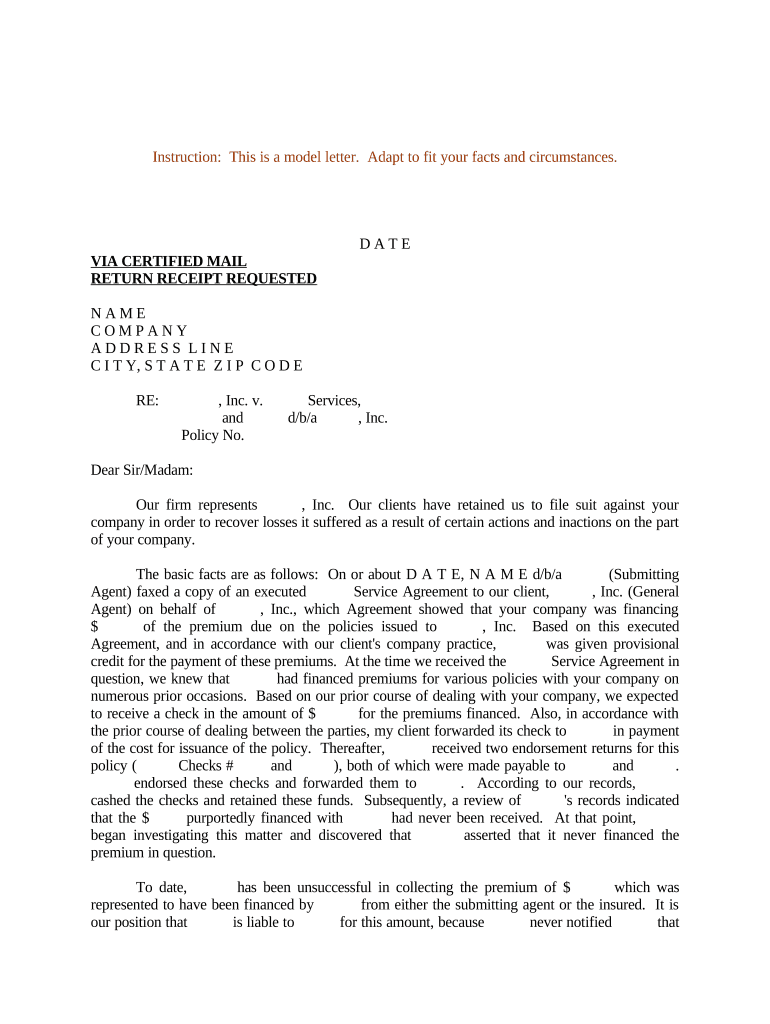
  2. Begin by entering the date at the top of the form. This is crucial for establishing a timeline for your case.
  3. Fill in the recipient's name, company, and address details accurately. Ensure that all information is current to avoid any delays.
  4. In the RE: section, specify the parties involved in the litigation clearly, including any relevant policy numbers.
  5. Detail the facts of your case in a structured manner. Use bullet points if necessary to enhance clarity and ensure all key points are covered.
  6. Make a demand for payment in a clear and concise manner, specifying the amount due and a deadline for response.
  7. Finally, sign off with your name and title, ensuring that you include any necessary cc recipients at the bottom of the letter.

Start using our platform today to streamline your document editing and ensure your pending litigation is handled efficiently!

be ready to get more

Complete this form in 5 minutes or less

Get form

Got questions?

We have answers to the most popular questions from our customers. If you can't find an answer to your question, please contact us.
Contact us
While there is no set timeline for a civil litigation case, the process can take several months to several years. Each stage of litigation, from filing to trial and potentially appeal, adds time to the process.
Contrary to what you may believe, litigation is not just another word for a filed lawsuit. Litigation is a term used to describe legal proceedings, following the filing of a lawsuit, between two parties to enforce or defend a legal right through a Court supervised process.
Litigation is generally thought of as the process of resolving rights-based disputes through the court system, from filing a law suit through arguments on legal motions, a discovery phase involving formal exchange of information, courtroom trial and appeal.
Litigation allows people to settle disputes that they have been unable to on their own. A lot of the time, the parties involved in a disagreement are so emotionally invested in the argument that it is hard for them to look at it clearly. Neither side wants to budge because they feel wronged.
Very few cases go all the way to trial. Step 1: Pleadings. A lawsuit starts when a plaintiff files a complaint. Step 2: Discovery. Discovery is the process each side uses to get information from the other side. Step 3: Summary Judgement or Trial.

Security and compliance

At DocHub, your data security is our priority. We follow HIPAA, SOC2, GDPR, and other standards, so you can work on your documents with confidence.

Learn more
ccpa2
pci-dss
gdpr-compliance
hipaa
soc-compliance

People also ask

Pending or Threatened Litigation means any action, suit or proceeding (i) against any Seller or Acquired Subsidiary as to which a complaint has been filed and a Seller or Acquired Subsidiary has been served or otherwise given notice as to such filing on or before the Closing Date or (ii) which has been threatened
The prior and pending litigation exclusion found in most directors and officers (DO) liability policies precludes coverage for claims from litigation that was pending prior to the inception of the policy.

Related links