






Definition and Meaning of the Spell Sheet
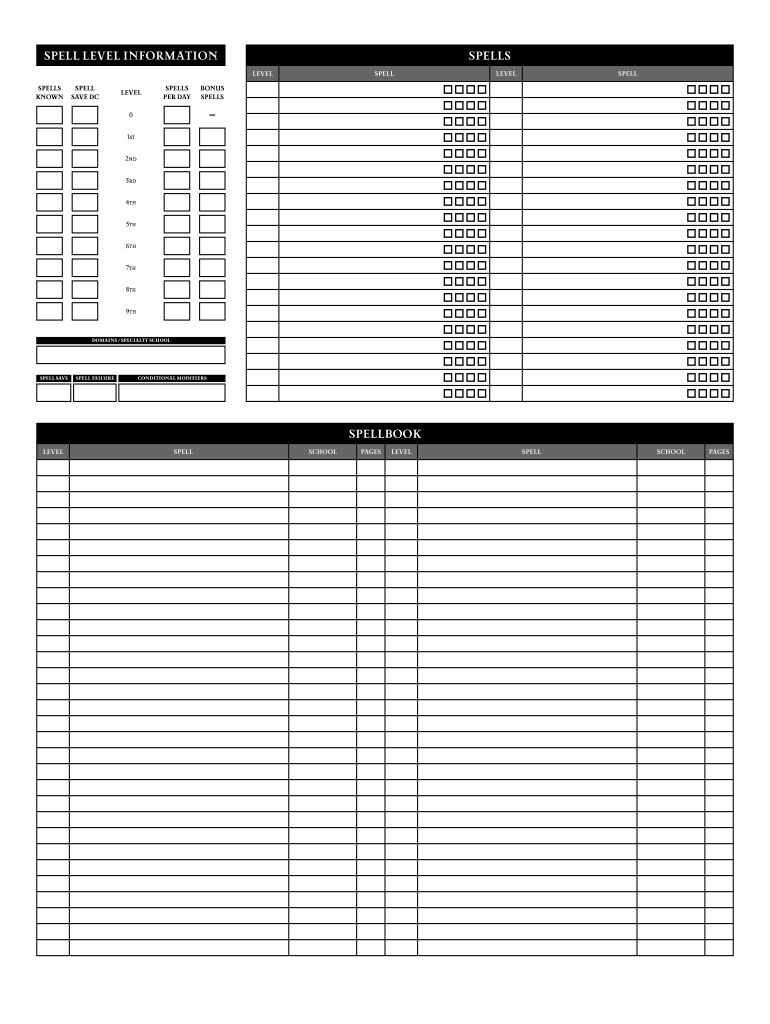
A spell sheet is a comprehensive document used primarily in tabletop role-playing games, such as Dungeons & Dragons (D&D) and Pathfinder, that allows players to track their characters' magical abilities. It organizes critical information related to spells, including spell levels, spell slots, spells known, and unique character bonuses. Utilized effectively, the spell sheet serves as a central hub for a character's magical repertoire, contributing to gameplay efficiency and enhancing player experiences.
Components of a Spell Sheet
- Spell Levels: The sheet categorizes spells by their levels, ranging from first to ninth level, clearly indicating their potency and availability.
- Spells Known: Players can list spells that their characters are capable of casting based on class specifications and level progressions.
- Spell Save DC: This is the difficulty class for enemies to resist a caster's spells, and it is calculated based on character stats and class abilities.
- Bonus Spells: Some characters may have access to bonus spells due to high ability scores, which should also be listed.
- Organizational Structure: The spell sheet may further categorize spells by school of magic (e.g., evocation, illusion) for ease of reference during gameplay.
How to Use the Spell Sheet Effectively
Utilizing a spell sheet effectively requires understanding both its layout and your character’s specific magical capabilities. Here are some practical steps to enhance your use of the sheet during gameplay:
Filling Out the Spell Sheet
- Character Class and Level: Begin by noting your character’s class, as it dictates available spells and casting abilities.
- Spells Known Section: Input the spells your character can learn, generally provided in class materials and character guides. Make sure to account for character advancement when selecting spells as new levels will allow additional known spells.
- Tracking Spell Slots: Record the number of spell slots available for each level next to the corresponding spells. This helps in managing spells cast during encounters.
- Spell Save DC Calculation: Calculate and update the spell save DC, ensuring it reflects any ability score improvements or magical bonuses.
During Gameplay
- Quick Reference: Use the sheet as a quick reference during game sessions. Having spells organized enables rapid access when it comes time to cast.
- Highlighting: Consider highlighting spells that are frequently used or situationally valuable to enhance visibility during play.
- Note Taking: Leave space on the sheet for notes on spell interactions or outcomes that may inform future uses.
Steps to Obtain a Spell Sheet
Acquiring a spell sheet is essential for those looking to engage with magic in their tabletop role-playing experience. Different versions may be available, reflecting various gaming systems or editions.
Online Resources
- Official Game Websites: Visit the official sites for Dungeons & Dragons or Pathfinder, where players can often find downloadable PDF templates.
- Community Forums: Engage with character sheets posted by fellow players on forums or websites dedicated to tabletop gaming, such as Reddit or specialized RPG forums.
Printable Variants
- Pre-printed Sheets: Retailers often sell physical versions of spell sheets at game stores which provide aesthetically pleasing designs for those who prefer tangible formats.
- Personalized Sheets: Many players design their custom sheets using tools like design software or template creators, allowing for unique personalization.
Key Elements of the Spell Sheet
A spell sheet comprises several key elements that aid players in tracking their characters' magical capabilities efficiently:
Essential Sections
- Spell List: A central inventory of accessible spells, typically categorized by level.
- Spell Slots: Indicates how many spells can be cast before requiring a rest.
- Class Features: Notes specific class abilities that interact with spell casting, such as elemental affinity or unique repertoire bonuses.
User Customization
Players can adapt their spell sheet to reflect personal play styles:
- Additional Notes: Include character backstory elements or future spell considerations.
- Visual Elements: Utilize symbols or color-coding to represent spell schools or utility ratings, enhancing readability.
Important Terms Related to Spell Sheet
Understanding the terminology associated with spell sheets aids in clarity and gameplay:
- Spell Save DC (Difficulty Class): A number that represents the challenge for opponents to avoid or resist spells.
- Cantrips: Spells that can be cast at will without using spell slots and do not require memorization.
- Prepared Spells: Spells that a caster has chosen to be available for casting in a given period.
Legal Use of the Spell Sheet
Although gameplay is often seen as fun and informal, certain aspects require understanding the broader implications of spell sheet use, particularly in tournament settings or competitive play.
Guidelines for Fair Use
- Original Content: Ensure that the spell sheet design or content does not infringe on copyrighted materials unless within the bounds of licensed usage, such as that provided by Dungeons & Dragons or Pathfinder.
- Adherence to Rules: Participants in structured play environments must follow official rules as outlined by the game publishers to avoid penalties or disqualifications, particularly in organized play settings.