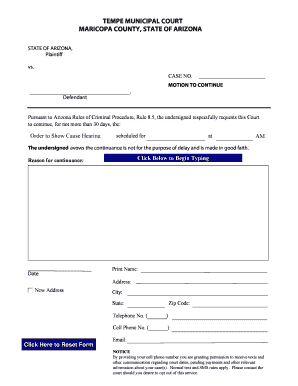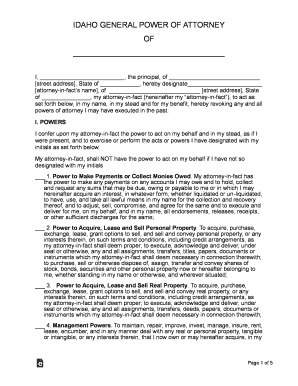
The Garnishment Process Explained 2 For example, if John Smith owes $10,000 in unpaid taxes, the IRS can garnish his wages. The IRS would then direct Smiths employer to remit a portion of his salary for a certain amount of time until Smiths tax obligation is fully paid.
What is the most common type of garnishment?
The most common type of garnishment is called an income withholding. In an income withholding, money from the defendants paycheck is withheld by the employer and sent to the plaintiff. Each garnishment lasts for 90 days.
What is an example of garnished?
Garnishment is a legal process that allows a third party to seize assets of a debtor. For example, a creditor, who can be a winning party in a suit or a creditor in a bankruptcy case, can acquire the wage of the debtorthrough the debtors employer.
What are the different types of garnishee?
The person or business who owes money to the debtor is called the garnishee. Generally there are three different types of garnishment: garnishing wages, garnishing bank accounts, and garnishing rent owed to a landlord, where the landlord is also the debtor.
What is another word for garnishment?
Some common synonyms of garnish are adorn, beautify, deck, decorate, embellish, and ornament. While all these words mean to enhance the appearance of something by adding something unessential, garnish suggests decorating with a small final touch and is used especially in referring to the serving of food.
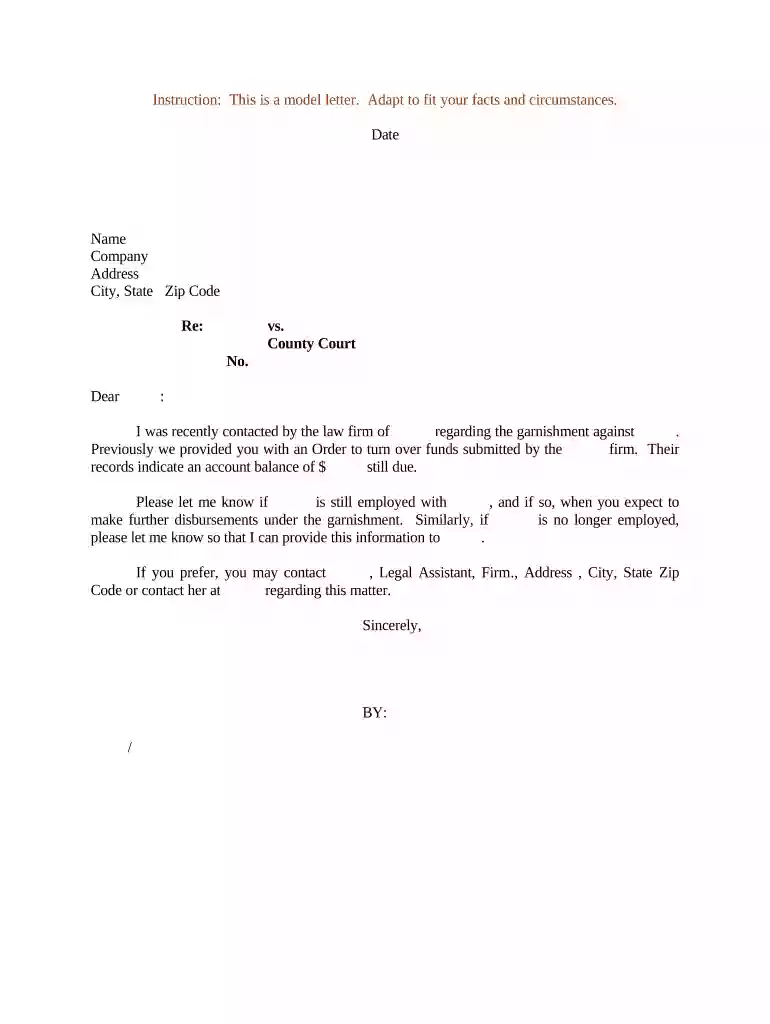
wage garnishment employee termination letter
Sample letter garnishmentLetter garnishment templateHow to look up garnishmentsLetter garnishment exampleWho can garnish wages without noticeWage garnishment Letter templateCreditor garnishmentHow to look up garnishments free
Security and compliance
At DocHub, your data security is our priority. We follow HIPAA, SOC2, GDPR, and other standards, so you can work on your documents with confidence.
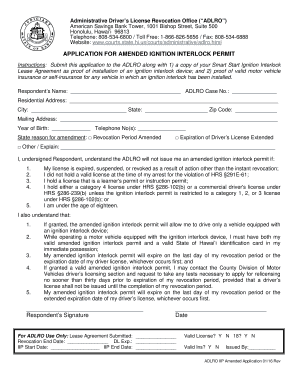
Mar 15, 2023 Before filing a Garnishment Petition, you must have been awarded a Judgment. An advance cost for filing a Garnishment Petition is required.
Appendix A to Part 212Model Notice to Account Holder
Garnishment is a legal process that allows a creditor to remove funds from your [bank]/[credit union] account to satisfy a debt that you have not paid.
Cookie consent notice
This site uses cookies to enhance site navigation and personalize your experience.
By using this site you agree to our use of cookies as described in our Privacy Notice.
You can modify your selections by visiting our Cookie and Advertising Notice.