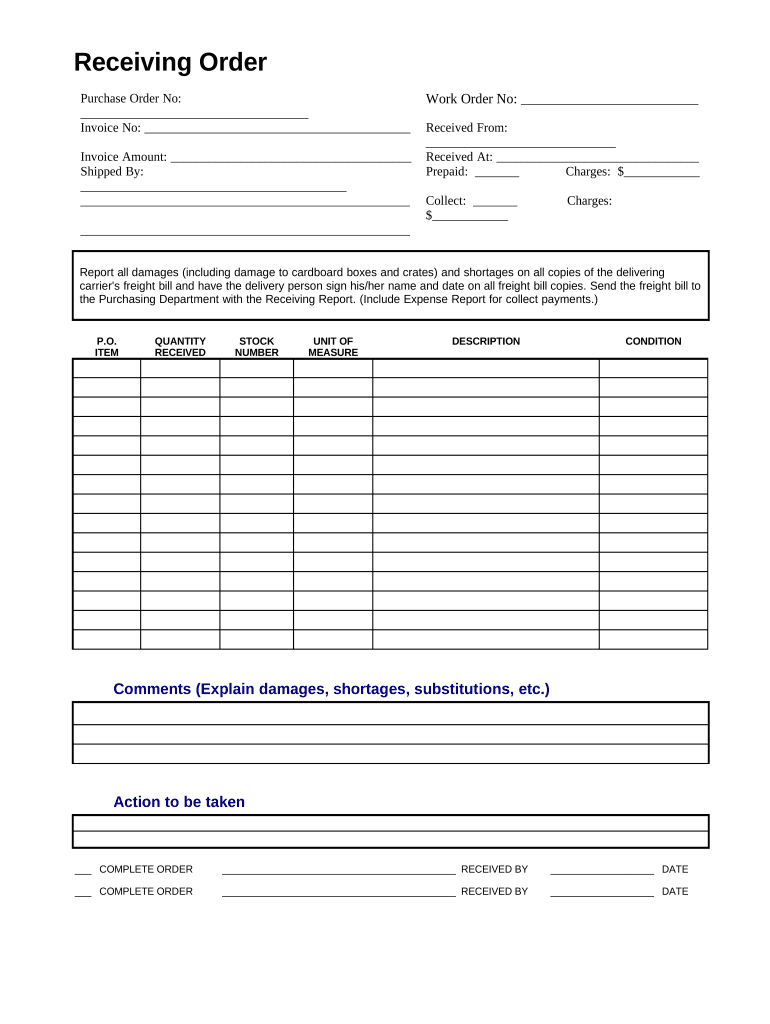







Definition and Meaning of a Receiving Order
A Receiving Order is a formal document used to acknowledge the receipt of goods specified in a purchase order. This document includes critical information such as purchase order and invoice numbers, shipping details, charges, and any conditions pertaining to the items received. It serves to confirm that goods have arrived in the expected condition and quantity, making it an essential tool for record-keeping and inventory management.
Understanding the concept of the Receiving Order is crucial for businesses that engage in trade. It not only acts as proof of delivery but also facilitates effective communication between suppliers and purchasers. Additionally, should disputes arise regarding damages or shortages, the Receiving Order can provide a historical reference to support claims.
Importance of Reporting Damages and Shortages
Effective inventory management depends on accurate documentation. The Receiving Order emphasizes the necessity of reporting any damages or shortages on freight bills. This requirement ensures that any issues encountered upon delivery are formally noted and can be quickly addressed with the supplier. Establishing clear protocols for reporting discrepancies helps maintain transparency and accountability between involved parties.
Key Elements of the Receiving Order
Typical components of a Receiving Order include:
-
Purchase Order Number: A unique identifier linking the delivery to the original order.
-
Invoice Number: Reference for billing purposes, ensuring that financial records align with received goods.
-
Shipping Information: Details regarding the carrier or delivery service used, including tracking numbers.
-
Item Descriptions: Specifics about the products received, which aids in verifying completeness and accuracy.
-
Conditions of Receipt: Notes on any discrepancies between what was ordered and what was received, along with any other relevant notes.
These elements contribute to creating a comprehensive overview of the received items and supporting all subsequent logistical processes.
Steps to Complete the Receiving Order
Completing a Receiving Order involves various steps that ensure accurate documentation of received products. The following outline provides a structured approach:
-
Prepare for Receipt: Ensure the appropriate personnel are available to receive deliveries, and have the Receiving Order template ready for documentation.
-
Compare Goods Against Order: As items are unloaded, verify each box or package against the purchase order. Record any discrepancies, such as missing items or damages, on the Receiving Order.
-
Document Details: Enter necessary information, including:
- Purchase Order and invoice numbers
- Shipping details
- Date of receipt
- Names of personnel involved in the process
-
Review Recorded Information: Double-check that all information accurately reflects what has been received, including quantities and conditions.
-
File the Order Properly: Once confirmed, file the Receiving Order with the pertinent purchase records, ensuring easy access for future reference.
-
Notify Stakeholders: Communicate with relevant team members or departments regarding the receipt and any discrepancies noted, promoting a collaborative approach to handling the goods.
Implementing these steps can prevent errors and miscommunications, enhancing the overall efficiency of inventory management.
Who Typically Uses the Receiving Order
The Receiving Order is commonly utilized across various sectors that deal with the buying and selling of goods. Key users include:
-
Manufacturers: Often receive raw materials and components essential for production lines.
-
Retailers: Utilize Receiving Orders to manage stock levels and maintain accurate inventory records.
-
Wholesale Distributors: May require documentation for large shipments to track inventory accurately.
-
Freight Companies: Use Receiving Orders to confirm deliveries made to customers, acting as part of their service commitment.
Understanding who uses Receiving Orders enhances the document’s applicability, bringing better organization and efficiency across different business operations.


Related Terms and Concepts
-
Document Received Form: Often interchangeable with the Receiving Order, this form is tailored more towards acknowledging documents rather than goods.
-
Receiving Form for Documents: Specifically caters to the acknowledgment of administrative or legal documentation, ensuring clarity within organizational protocols.
This knowledge of related concepts further reinforces the significance of the Receiving Order within its broader context.
Examples of Using the Receiving Order
Practical applications of the Receiving Order can vary widely by industry and circumstance. Some scenarios include:
-
Warehouse Management: A warehouse receives a shipment of electronics. Upon delivery, warehouse staff compare received items against the purchase order, noting any damaged packaging on the Receiving Order. This documentation assists in claiming compensation from the supplier.
-
Retail Store Stocking: A retailer receives a shipment of apparel. The delivery team uses the Receiving Order to confirm that the shipment aligns with the purchase order. In cases where items are missing, the staff records this on the form, facilitating follow-up with the manufacturer.
-
Construction Projects: A contractor receives materials for a building site. The site manager uses the Receiving Order to confirm the quantity and quality of goods against supplier invoices, maintaining accountability for inventory usage.
These examples illustrate how the Receiving Order can be integral to maintaining efficiency and accountability across different business operations.
Legal Use of the Receiving Order
The legal implications of the Receiving Order are significant, especially in commercial transactions. This document provides a legal basis for claims regarding undelivered or damaged goods.
Binding Nature
-
Proof of Receipt: The Receiving Order acts as evidence, indicating that the recipient acknowledges the delivery of goods, thus holding the supplier accountable for their condition and accuracy.
-
Dispute Resolution: In case of disagreements regarding the transaction, the Receiving Order can serve as a reference point for both parties, helping to resolve issues effectively.
Compliance and Accountability
Various industries may have regulations surrounding the use of Receiving Orders. For instance, companies dealing with hazardous materials may be legally required to maintain detailed records of receipts for safety and compliance purposes.
Ensuring that the Receiving Order is filled out correctly and retained is essential for legal compliance and accountability within business operations.