
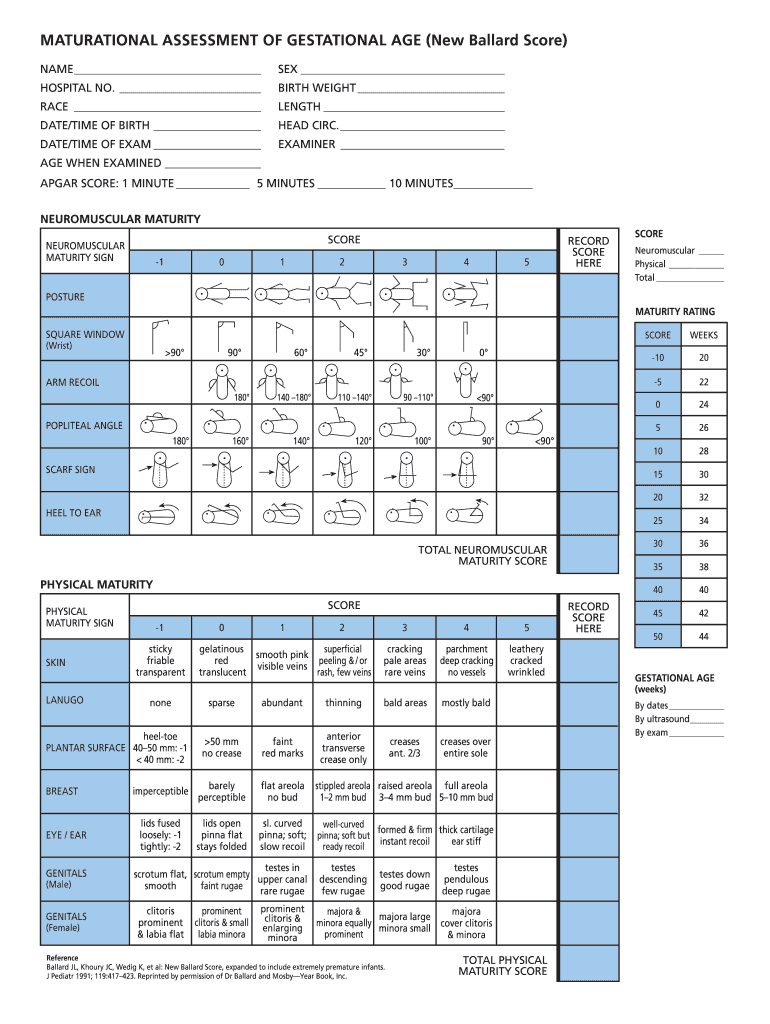







Definition & Meaning of the Assessment Ballard Score
The assessment Ballard score, commonly referred to in medical settings as the New Ballard Score, is a standardized tool designed to evaluate the gestational age of newborn infants. This scoring system assesses both neuromuscular and physical maturity indicators, providing healthcare professionals with a reliable method to estimate gestational age based on observable traits. Utilizing a combination of specific criteria, the assessment can yield a score that correlates to the infant's maturity level, ranging from extremely premature to full-term.
The New Ballard Score incorporates various key components, such as physical characteristics like skin texture, lanugo, and genital development, along with neuromuscular assessments including reflexes and posture stability. Each aspect contributes to a comprehensive understanding of the infant’s developmental stage, which is crucial for providing appropriate medical care and interventions as needed.
Key Components of the Ballard Score
-
Physical Maturity Indicators:
- Skin condition: Evaluating the texture and color of the skin.
- Lanugo presence: Assessing the amount of fine hair present on the infant.
- Genitalia development: Specific assessments vary between males and females.
-
Neuromuscular Evaluation:
- Posture: Observing flexion of arms and legs.
- Reflexes: Testing reflexes such as the grasp reflex and the pull-to-sit maneuver.
How to Use the Assessment Ballard Score
Utilizing the assessment Ballard score involves systematic observation and scoring based on defined criteria. Medical professionals will typically follow these steps:
-
Prepare the Assessment Tool:
- Access a standardized Ballard score sheet which outlines specific criteria and scoring guidance.
-
Gather Patient Information:
- Collect relevant information about the newborn, including the birth history and any complications during pregnancy.
-
Conduct Physical and Neuromuscular Evaluations:
- Perform the physical assessment to evaluate skin condition, body posture, and other physical traits.
- Carry out the neuromuscular assessment focusing on reflex activities and muscle tone.
-
Score Each Component:
- Assign values to the observed characteristics using the scoring guidelines provided on the Ballard score sheet.
-
Calculate Total Score:
- Sum the points from both the physical and neuromuscular evaluations to arrive at a total score, which corresponds to estimated gestational weeks.
Steps to Complete the Assessment Ballard Score
Completing the assessment Ballard score requires a methodical approach to ensure accuracy and reliability. Here’s a detailed breakdown of the steps involved:
-
Ensure Optimal Conditions:
- Conduct the assessment in a warm, quiet environment to keep the newborn calm.
-
Perform a Detailed Physical Examination:
- Assess each physical characteristic according to standardized definitions (e.g., check skin thickness).
-
Assess Neuromuscular Maturity:
- Observe the infant’s muscle tone and reflexes systematically, documenting findings on the score sheet.
-
Document Each Observation:
- Maintain clear and accurate documentation of observations, with annotations as necessary to provide context.
-
Score Calculation:
- After observing all required indicators, calculate the total score based on assigned values, cross-referencing with the established scoring categories that correspond to gestational ages.
Important Terms Related to Assessment Ballard Score
Familiarity with the relevant terminology enhances understanding and application. Important terms associated with the assessment Ballard score include:
- Gestational Age: The age of the fetus or newborn, measured in weeks from the first day of the last menstrual period.
- Maturity Indicators: Observable characteristics used to assess the developmental stage of the newborn.
- Neuromuscular Assessment: A component focused on the infant's reflexes, muscle tone, and general neurological function.
Examples of Using the Assessment Ballard Score
In clinical practice, the assessment Ballard score is frequently employed in scenarios involving premature infants. For instance:
-
Premature Newborn: A newborn born at thirty weeks may present with less developed skin and sparse lanugo, resulting in a lower Ballard score indicating immaturity.
-
Full-Term Infant: Conversely, a newborn delivered at forty weeks will likely show developed physical characteristics, such as thick skin and robust muscle tone, leading to a higher score that reflects full maturity.
Such examples highlight the utility of the assessment Ballard score in determining the care plans necessary for infants based on their gestational age. Understanding how to interpret the results correctly enables healthcare professionals to offer tailored medical support for the diverse needs of newborns.




