Type text, add images, blackout confidential details, add comments, highlights and more.
02. Sign it in a few clicks
Draw your signature, type it, upload its image, or use your mobile device as a signature pad.
03. Share your form with others
Send it via email, link, or fax. You can also download it, export it or print it out.
How to use or fill out tx 2 court with our platform
Ease of Setup
DocHub User Ratings on G2
Ease of Use
DocHub User Ratings on G2
Click ‘Get Form’ to open the tx 2 court document in the editor.
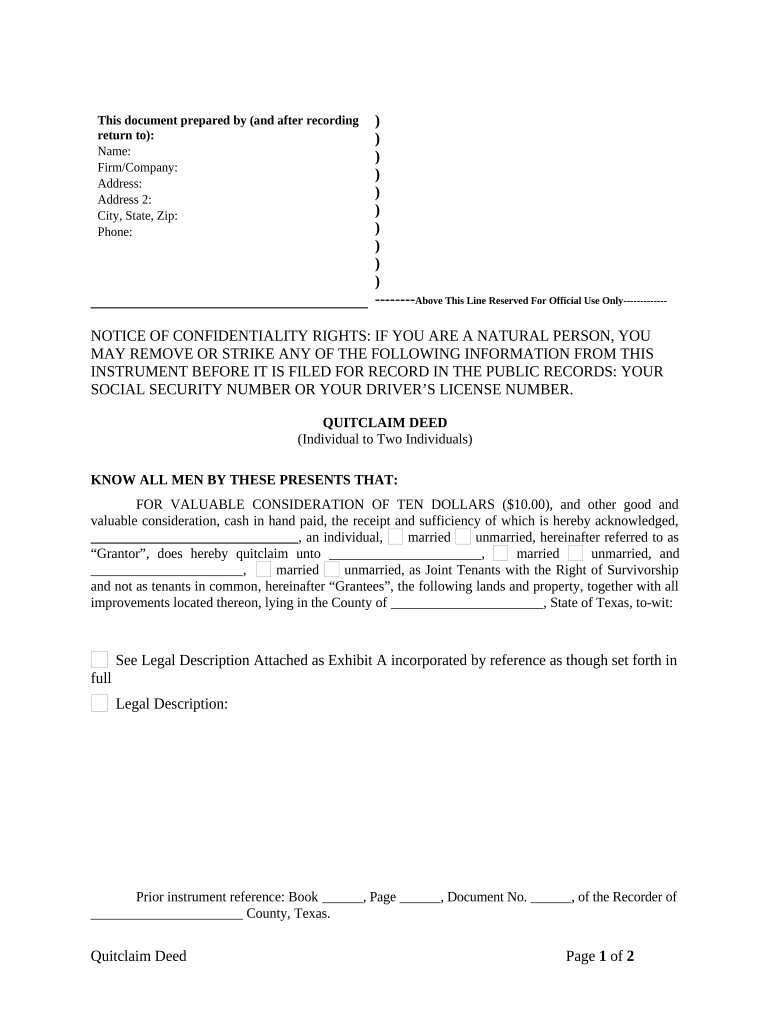
Begin by filling in your personal information at the top of the form, including your name, firm/company, address, and phone number. Ensure accuracy as this information is crucial for identification.
In the section labeled 'Grantor', specify the name of the individual transferring property rights. Indicate their marital status by checking either 'married' or 'unmarried'.
Next, identify the 'Grantees' by entering their names and marital statuses. This section outlines who will receive the property.
Provide a detailed legal description of the property being transferred. If necessary, attach an exhibit with this information.
Complete any additional sections regarding taxes and homestead status as applicable to your situation.
Finally, ensure all signatures are collected from both Grantor and Grantee(s) before submitting for notarization.
Start using our platform today to streamline your tx 2 court form completion for free!
Complexity of Cases: The General District Court usually deals with straightforward cases, while the Circuit Court handles more complex and serious legal matters.
What is worse, District Court or Circuit Court?
District courts are lower and have the responsibility for holding trials, while circuit courts are appellate courts that do not hold trials but only hear appeals for cases decided by the lower court.
What kind of cases are heard in the Circuit Court?
Criminal matters the Circuit Court deals wit The Circuit Court hears criminal matters triable on indictment, except for certain serious crimes which are tried in either the Central Criminal court or the Special Criminal Court. Most indictable offences are dealt with in the Circuit Court.
How serious is circuit court?
A circuit court has the power to issue death sentences and impanel grand juries. The courts decisions become legal precedents.
What kind of cases does a Circuit Court handle?
Types of Cases the Federal Circuit Handles international tradecertain monetary claims against the United States government government contracts federal personnel patents veterans benefits trademarks public safety officers benefits claims
Related Searches
Bexar county Court 2county court at law no. 2 dentonTexas Second Court of AppealsCollin County Court at Law 2Court of Appeals Texascounty court at law no. 2 tarrantGregg County Court at Law 27th Court of Appeals Texas
Security and compliance
At DocHub, your data security is our priority. We follow HIPAA, SOC2, GDPR, and other standards, so you can work on your documents with confidence.
Cookie consent notice
This site uses cookies to enhance site navigation and personalize your experience.
By using this site you agree to our use of cookies as described in our Privacy Notice.
You can modify your selections by visiting our Cookie and Advertising Notice.