Fiduciary Deed for use by Executors, Trustees, Trustors, Administrators and other Fiduciaries - South Carolina 2026

Get Form
Fiduciary Deed for use by Executors, Trustees, Trustors, Administrators and other Fiduciaries - South Carolina Preview on Page 1

Here's how it works

01. Edit your form online
Type text, add images, blackout confidential details, add comments, highlights and more.
02. Sign it in a few clicks
Draw your signature, type it, upload its image, or use your mobile device as a signature pad.
03. Share your form with others
Send it via email, link, or fax. You can also download it, export it or print it out.

How to use or fill out Fiduciary Deed for use by Executors, Trustees, Trustors, Administrators and other Fiduciaries - South Carolina

Form edit decoration
9.5
Ease of Setup
DocHub User Ratings on G2
9.0
Ease of Use
DocHub User Ratings on G2
  1. Click ‘Get Form’ to open it in the editor.
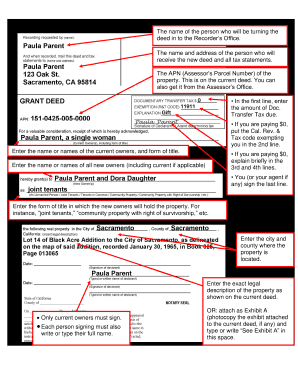
  2. Begin by entering the Grantor's name and title in the designated fields. Ensure that you accurately reflect their fiduciary role.
  3. Next, specify the Grantee's details. This could be an individual or multiple individuals as joint tenants. Clearly describe the property involved or state 'SEE DESCRIPTION ATTACHED'.
  4. Fill in the District, Map & Parcel Number, along with prior instrument references for proper indexing.
  5. Complete the section regarding taxes for the year, indicating how they will be prorated between Grantor and Grantee.
  6. Ensure all required signatures are present. This includes original signatures from witnesses and notarization to validate the document.
  7. Finally, review all entries for accuracy before saving your completed form. Utilize our platform’s features to easily navigate through each field.

Start using our platform today to streamline your Fiduciary Deed completion process for free!

be ready to get more

Complete this form in 5 minutes or less

Get form

Got questions?

We have answers to the most popular questions from our customers. If you can't find an answer to your question, please contact us.
Contact us
These are five basic options to consider when you name a successor trustee for you or you and your spouse: A single individual, such as a highly-responsible adult child. Two co-trustees or even multiple trustees who get along extremely well.
What are the disadvantages of a fiduciary? The disadvantages of a fiduciary may include potentially higher fees due to their in-depth service and a limitation to products they believe are in your best interest, which might restrict a broader market view. For most investors, this is not a problem.
Trustees, executors, and agents are examples of fiduciaries. When you select people to fill these roles in your estate plan, you are picking one or more people to make decisions in the best interests of you and your beneficiaries and in accordance with the instructions you leave.
Each type of trust has unique tax rules. In South Carolina, revocable trusts allow grantors to retain control, but any income generated by the trust generally counts as the grantors personal income. These trusts are flexible and allow changes over time, but they dont provide a separate tax identity.
A fiduciary duty is a legal obligation to act in the best interests of another person. Executors and trustees are both fiduciaries, which means that they have a legal obligation to act in the best interests of beneficiaries of the estate or trust.

Security and compliance

At DocHub, your data security is our priority. We follow HIPAA, SOC2, GDPR, and other standards, so you can work on your documents with confidence.

Learn more
ccpa2
pci-dss
gdpr-compliance
hipaa
soc-compliance