In conclusion, a quitclaim deed can help transfer property ownership in California, especially among family members or in situations where trust is established. However, its important to understand that this type of deed offers no guarantees about the propertys title.
What are the risks of a quitclaim?
However, this approach has certain risks, so its not always the best option. Using a quitclaim deed might create tax issues or result in a loss of control of the property after the transfer. Additionally, the property could still require probate if you dont handle the transfer correctly.
What are quitclaim deeds most often for?
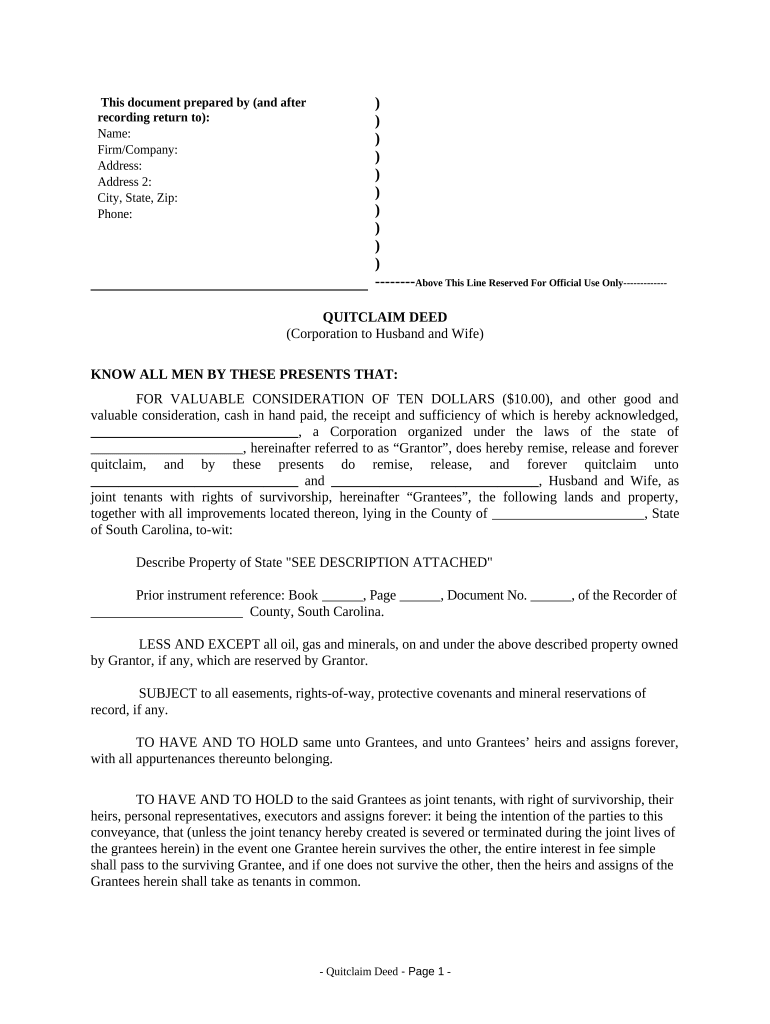
A quitclaim deed is a simple tool for transferring interest in a property without guaranteeing that the grantor has valid ownership. Its most commonly used in non-sale situations, such as transfers between family members, or to update or clarify ownership titles.
How do you transfer a deed to a family member in South Carolina?
Deeding a house, or transferring ownership to a family member, begins with identifying the recipient of the property. Once the terms and conditions have been agreed to, you will both complete and sign a change of ownership form, which will be filed with the local county recording office.
Who benefits the most from a quitclaim deed?
The quitclaim deed simply transfers any interest they may have to the other party. Because of the lack of title guarantees, quitclaim deeds are most often used to transfer property between two parties who know and trust each other, such as family members.
Related Searches
South Carolina quit claim deed requirementsSouth Carolina Quit claim deed PDFSouth Carolina deed transfer formFree quit claim deed form South CarolinaHow to add a spouse to a deed in South CarolinaWhat is a nottostate deedRichland County quit Claim DeedHorry County, South Carolina quit claim deed
Security and compliance
At DocHub, your data security is our priority. We follow HIPAA, SOC2, GDPR, and other standards, so you can work on your documents with confidence.
General warranty deeds provide the most legal protection for the Grantee when conveying property interest. The Grantor warrants to the Grantee that they have equitable legal title and there are no other claims to the property.
Are quit claim deeds legal in South Carolina?
In South Carolina, a quit claim deed is a real property deed that only transfers interest in the property to the grantor who has a title. Unlike a warranty deed, a South Carolina quit claim deed does not guarantee good title to the property.
What are the disadvantages of quitclaim?
The big drawback is it doesnt offer guarantees. The person getting the property takes it as is. They risk the seller not really owning the property. This makes quitclaim deeds less ideal for most real estate deals. Warranty deeds offer more protection.
Related links
PLJOv18#3 Probate Law Journal of Ohio - Hahn Loeser
General warranty deed + endorsement Note: a quitclaim deed may be problematic, depending on how the insurance company views quitclaim deeds because it
Renunciations and Disclaimers under South Carolina Law
by AL Moses 1980 Thus, the use of a quitclaim deed by a disclaimant to insure that he did not have title to the disclaimed property could be fatal. Such a deed would be
(12) that constitute a corrective deed or a quitclaim deed used to confirm title already vested in the grantee, as long as no consideration is paid or is to
Cookie consent notice
This site uses cookies to enhance site navigation and personalize your experience.
By using this site you agree to our use of cookies as described in our Privacy Notice.
You can modify your selections by visiting our Cookie and Advertising Notice.