






Definition and Purpose of PLLC Notices and Resolutions - Connecticut
In the context of business operations, the "PLLC Notices and Resolutions - Connecticut" refer to the official documentation utilized by a Professional Limited Liability Company (PLLC) in the state of Connecticut to declare and officially record essential decisions made during member meetings. This document serves multiple purposes:
- Formalizing changes or updates to the Articles of Organization.
- Detailing resolutions regarding significant business actions like dissolving the company, increasing its membership, or altering management structures.
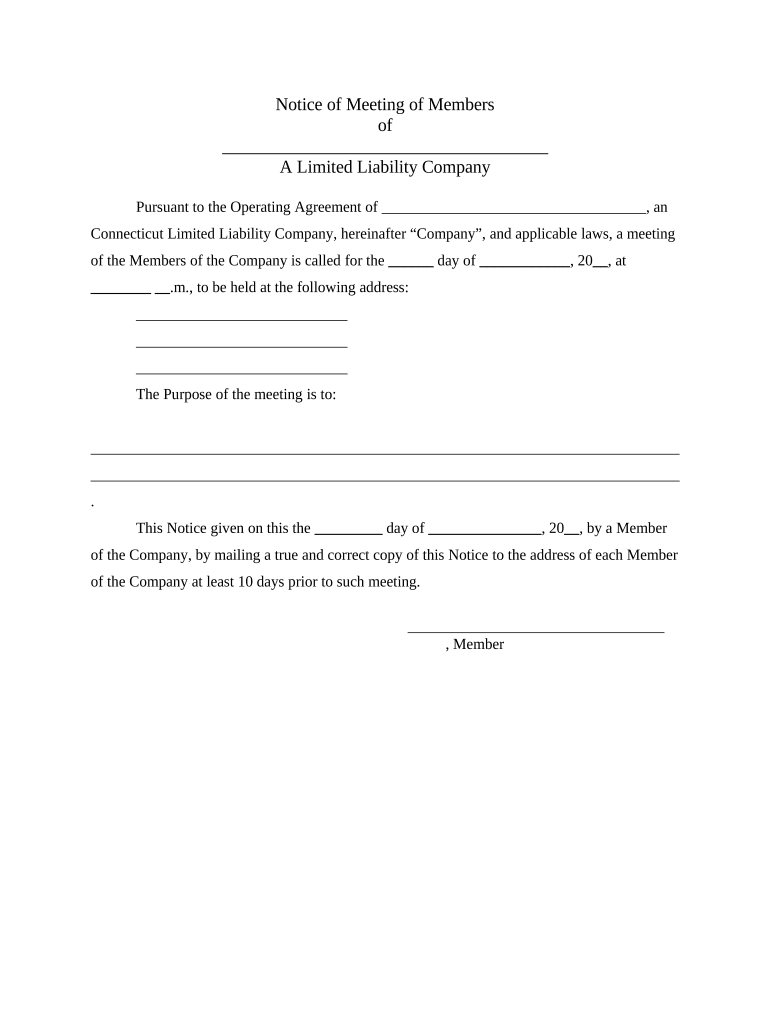
- Officially notifying members of impending meetings with details on their objectives and agendas.
These notices and resolutions are integral to maintaining transparency and legal compliance within the organizational operations of a PLLC.
Important Sections of PLLC Notices and Resolutions
The PLLC Notices and Resolutions document typically contains key elements that are crucial for legal and operational clarity. These sections include:
- Meeting Purpose: A clear statement describing the agenda, whether it's to discuss financial disbursements, amendments to the company structure, or managerial changes.
- Resolutions Adopted: A thorough account of any resolutions passed, including detailed descriptions of the decisions and their implications for the business.
- Member Notifications: Guidelines and templates for informing members about upcoming meetings to ensure their participation and compliance.
- Document Formatting: Instructions on the structure and format of the documents, which aids in maintaining consistency across communication.
Each section ensures that all proceedings are documented comprehensively, supporting the company's legal framework.
Steps to Complete the PLLC Notices and Resolutions - Connecticut
Completing the PLLC Notices and Resolutions form involves several key steps to ensure accuracy and compliance:
- Identify Meeting Intentions: Clearly define the objective of the meeting. Whether it is to alter bylaws or elect new management, the purpose must be explicitly stated.
- Draft the Notice: Create a comprehensive notice that includes the date, time, location, and purpose of the meeting. Ensure all relevant members receive this notification.
- Conduct the Meeting: Hold the meeting in line with the scheduled time and agenda. Record all discussions and decisions diligently.
- Document Resolutions: List all resolutions adopted during the meeting, ensuring that each is thoroughly detailed and signed off by the necessary parties.
- Review and Distribute: Have the document reviewed for legal accuracy and distribute copies to all relevant stakeholders.
These steps collectively facilitate a well-documented process that enhances operational transparency and accountability.
Legal and Compliance Aspects
The execution and utilization of PLLC Notices and Resolutions in Connecticut are bound by specific legal guidelines:
- State Regulations: Compliance with Connecticut's business laws is mandatory. This includes adhering to protocols for document formatting, meeting notification timings, and resolution adoption processes.
- Documentation Requirements: Every decision and operational change must be officially recorded to safeguard against legal challenges.
- Member Participation: Ensuring all members are adequately informed and involved in decision-making processes is critical.
Following these legal stipulations helps in mitigating risks and ensuring that the PLLC operates within the bounds of state and federal laws.
Variants and Alternatives to PLLC Notices and Resolutions
While the "PLLC Notices and Resolutions" are specific to Professional Limited Liability Companies in Connecticut, alternative documents or forms may be applicable depending on the business structure:
- LLC Notices and Resolutions: Used by standard Limited Liability Companies.
- Corporate Meeting Minutes: Adopted by corporations to capture meeting deliberations.
- Partnership Agreements: Applicable for partnerships where decisions and changes need formal recording.
Understanding the differences and selecting the appropriate documentation ensures alignment with business-specific requirements and legal obligations.
Examples and Scenarios for Using PLLC Notices and Resolutions
Illustrating the application of PLLC Notices and Resolutions through real-world examples helps clarify their utility:
- Business Expansion: A PLLC looking to increase its member count must formally issue a notice and document resolutions authorizing this change.
- Leadership Transition: When a PLLC appoints a new manager, the process involves notifying all members and officially documenting the decision.
- Operational Shifts: In cases where the company alters its operating procedures or bylaws, these changes must be recorded within the resolution documentation.
These scenarios underscore the form's role in facilitating structured decision-making processes.
Obtaining PLLC Notices and Resolutions - Connecticut
Securing the PLLC Notices and Resolutions form involves understanding its access points:
- State Resources: Visit the Connecticut Secretary of State's website for official documentation and resources.
- Legal Service Providers: Engage with firms specializing in business formation and compliance for tailored advice and forms.
- Professional Associations: Membership bodies for PLLCs often provide templates and guidelines for these forms.
Access to these resources ensures that all forms are up-to-date and compliant with current legal standards.
State-Specific Requirements and Differences
Connecticut's approach to PLLC Notices and Resolutions may include state-specific nuances that differentiate it from other states:
- Notification Timelines: Connecticut may have specific requirements around how far in advance members must be notified of meetings.
- Resolution Documentation Standards: The state may outline distinct formatting or content criteria for resolutions.
- Legal Filing Requirements: There may be state-mandated filing requirements post-meeting for certain resolutions.
Adhering to these state-specific requirements is essential for maintaining the PLLC's legal standing and operational integrity.