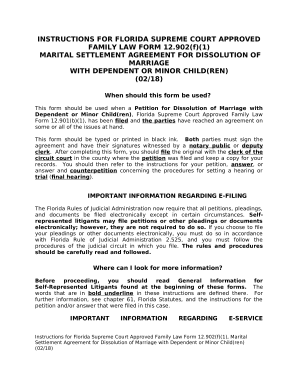
Type text, add images, blackout confidential details, add comments, highlights and more.
02. Sign it in a few clicks
Draw your signature, type it, upload its image, or use your mobile device as a signature pad.
03. Share your form with others
Send it via email, link, or fax. You can also download it, export it or print it out.
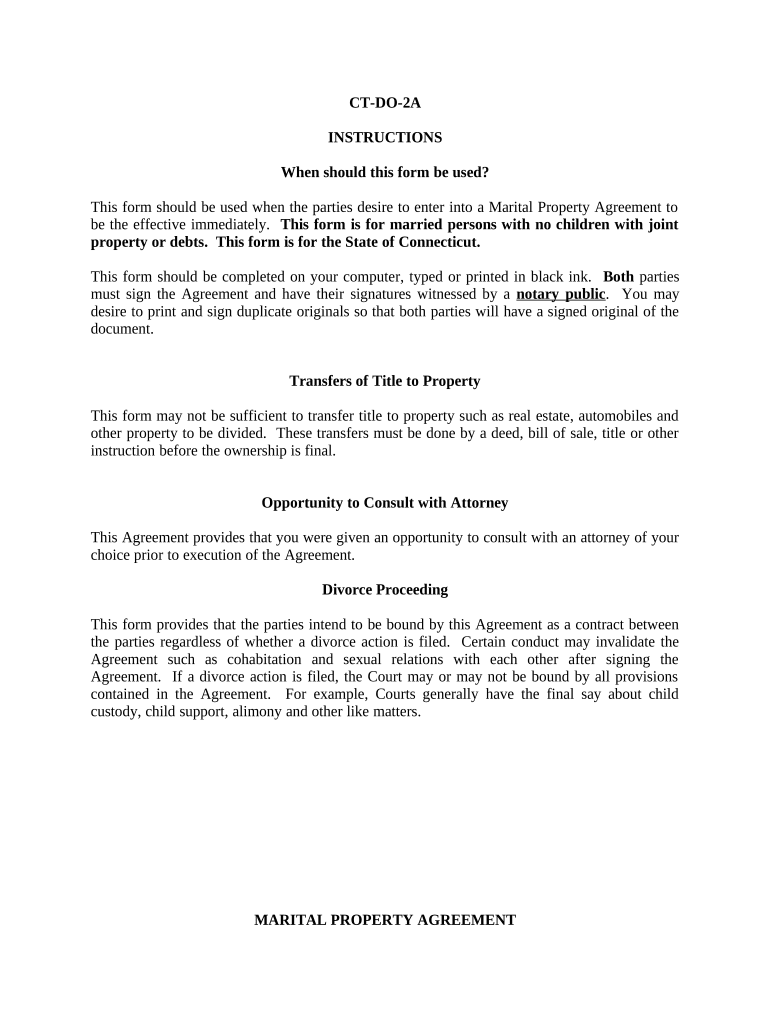
How to use or fill out Marital Legal Separation and Property Settlement Agreement no Children parties may have Joint Property or Debts Effective Immediately - Connecticut
Ease of Setup
DocHub User Ratings on G2
Ease of Use
DocHub User Ratings on G2
Click ‘Get Form’ to open it in the editor.
Begin by entering the full legal names of both parties at the top of the form, ensuring accuracy for legal purposes.
In Section 1, confirm your separation status and initial each party's initials to acknowledge understanding.
Proceed to Section 2, where both parties must disclose their financial statuses. Fill in all assets and liabilities accurately.
In Section 3, detail the division of assets. Clearly describe each item and its current fair market value for transparency.
Move to Section 4 to outline debts. Specify which party is responsible for each debt, ensuring clarity on financial obligations.
Review Sections 5 through 20 carefully, making sure all provisions are understood and agreed upon before signing.
Once completed, print the document for signatures. Ensure both parties sign in front of a notary public as required.
Start using our platform today to streamline your document editing and signing process!
Fill out Marital Legal Separation and Property Settlement Agreement no Children parties may have Joint Property or Debts Effective Immediately - Connecticut online It's free
Separation agreement CTHabitual intemperanceSimple marriage Separation Agreement pdfHow are pensions split in a divorce in CTWhat is a wife entitled to in a divorce in CTCT divorce laws adulteryDivorce in CT who gets the houseCT legal separation forms
Security and compliance
At DocHub, your data security is our priority. We follow HIPAA, SOC2, GDPR, and other standards, so you can work on your documents with confidence.
Summary Dissolution: Is Connecticuts Current System as
(d) There is no marital property to be divided or the parties have entered into an agreement for the division of their marital property. They have no childrenRead more
Chapter 815j - Dissolution of Marriage, Legal Separation
Superior Court, having obtained jurisdiction over the custody of minor children in a dissolution of marriage action, retains jurisdiction over their custodyRead more
Cookie consent notice
This site uses cookies to enhance site navigation and personalize your experience.
By using this site you agree to our use of cookies as described in our Privacy Notice.
You can modify your selections by visiting our Cookie and Advertising Notice.