







Definition and Purpose of the FMS Score Sheet
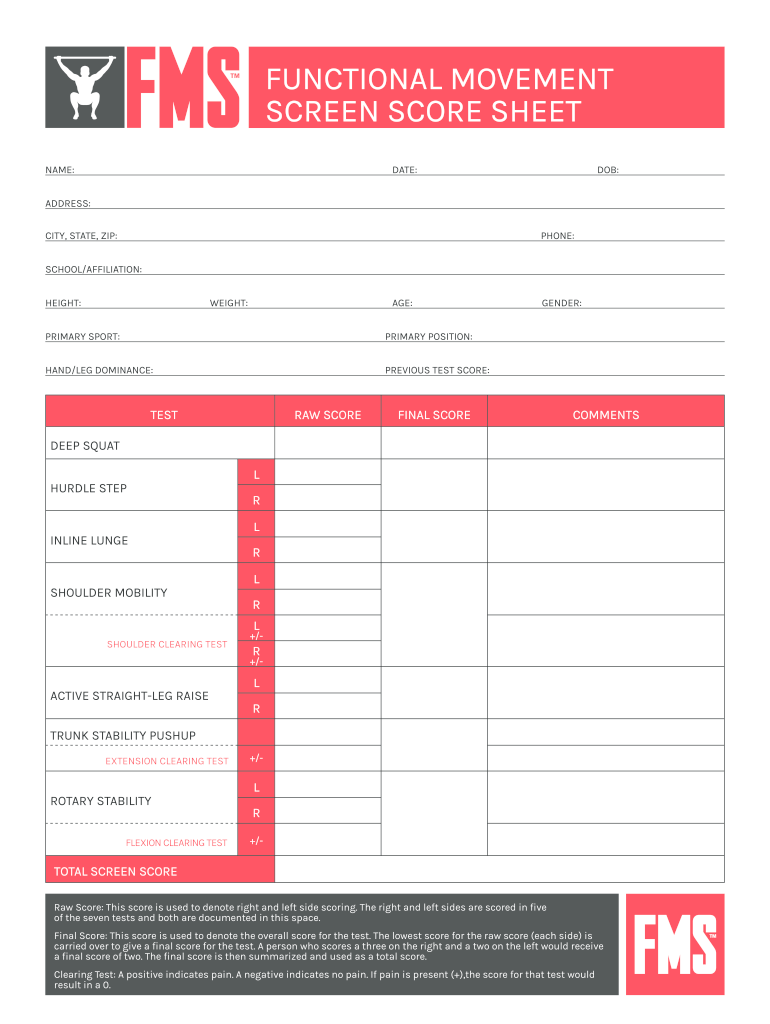
The FMS score sheet, or Functional Movement Screen score sheet, is a specialized document used to evaluate an individual's movement capabilities and physical performance. This tool is essential for fitness professionals, physical therapists, and trainers as it helps identify functional limitations and asymmetries in movement patterns. By systematically assessing various fundamental movements, the FMS score sheet allows practitioners to tailor training programs that address specific needs, improve athletic performance, and decrease injury risk.
The score sheet comprises several components, including personal information, specific test scores for various functional movements, and a scoring system. This scoring system differentiates between raw scores—reflecting immediate performance—and final scores that consider a more comprehensive analysis of the individual's movement quality. For example, areas such as squatting, lunging, and reaching are assessed, each contributing to a final score that indicates overall functional ability.
Structure of the FMS Score Sheet
The FMS score sheet includes several key sections designed to streamline the assessment process:
-
Personal Information: This section collects basic details such as name, date, age, and occupation. This information helps clinicians contextualize the scores based on age and activity level.
-
Functional Movement Tests: The core of the score sheet encompasses various tests, each with designated space for the score and performance notes. Common movements assessed include:
- Squat
- Hurdle step
- Inline lunge
- Shoulder mobility
- Active straight-leg raise
- Trunk stability push-up
- Rotary stability
-
Scoring System: The scoring matrix typically ranges from zero to three:
- A score of three indicates optimal movement quality.
- A score of two signifies compensatory movements.
- A score of one reflects severe limitations during the assessment.
-
Clearing Tests: These tests help confirm whether any pain or discomfort is present during movement screening. Clearing tests are crucial for ensuring the safety of the individual during further training or rehabilitation.
-
Notes and Observations: Additional space is provided for practitioners to add qualitative observations, which can significantly inform future training and therapy strategies.
Using the FMS Score Sheet Effectively
To utilize the FMS score sheet efficiently, follow these steps during the assessment process:
-
Prepare the Assessment Environment: Ensure adequate space, proper equipment, and a comfortable atmosphere for the individual being assessed.
-
Collect Personal Information: Have the individual fill out their basic details on the score sheet. This information can help in tracking progress over time.
-
Conduct the Functional Movement Tests: Administer each test systematically. As the individual performs each movement, carefully observe their technique and any compensatory patterns. Record the results on the score sheet.
-
Use the Scoring System: After each test, assign scores based on observed performance. If the individual experiences pain during any test, note this and utilize the clearing tests before proceeding.
-
Review and Analyze Scores: After completing all tests, analyze the scores collectively. Identify patterns of strong and weak movement abilities that can inform training decisions.
-
Develop an Individualized Plan: Use the results to create a tailored training or rehabilitation plan that addresses any identified deficiencies.
Common Applications of the FMS Score Sheet
The FMS score sheet’s primary applications include:
-
Physical Therapy: Therapists utilize the score sheet to assess injuries and create rehabilitation plans. Understanding which movements are restricted helps guide treatment effectively.
-
Strength and Conditioning: Coaches and trainers use the FMS score sheet to identify areas of improvement in their athletes. Targeted training programs can lead to enhanced performance and reduced injuries.
-
Fitness Assessments: Health clubs and personal trainers may incorporate the FMS score sheet within initial assessments for new clients. This approach allows for personalized programming from the outset.
Interpretive Insights from FMS Scores
Interpreting the final scores on the FMS score sheet requires an understanding of key factors:
-
Threshold Scores: A final score of fourteen or below often indicates a higher risk for injury, suggesting a need for a focused corrective exercise program.
-
Movement Patterns: Analyzing the score distribution among different tests helps identify specific movement deficiencies. For example, a low score in shoulder mobility could signal the need for targeted flexibility work.
-
Regular Re-assessment: Practitioners should encourage regular follow-up assessments to monitor improvements and adjust training programs accordingly.
-
Integration into Broader Assessments: The FMS should be viewed as one tool among others in a comprehensive assessment strategy, including strength testing and cardiovascular evaluations.
Importance of Documentation and Tracking Progress
Maintaining comprehensive records using the FMS score sheet allows for effective tracking of progress over time. A practitioner can:
- Compare initial and subsequent scores to measure improvement.
- Identify trends in movement performance, adjusting training strategies accordingly.
- Enhance communication with clients or athletes about their progress, fostering motivation and commitment to their training programs.
Utilizing the FMS score sheet effectively involves a deep understanding of individual movement patterns and a thoughtful approach to training and rehabilitation. By leveraging this tool, professionals can significantly enhance their clients' physical performance and overall well-being.




