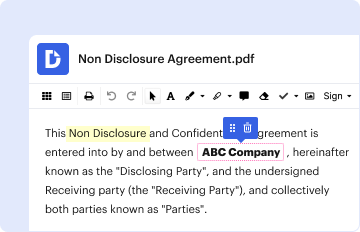
Type text, add images, blackout confidential details, add comments, highlights and more.
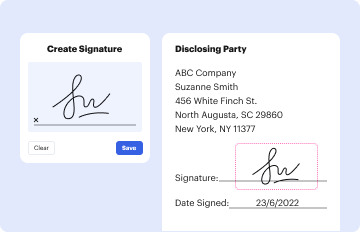
02. Sign it in a few clicks
Draw your signature, type it, upload its image, or use your mobile device as a signature pad.
03. Share your form with others
Send it via email, link, or fax. You can also download it, export it or print it out.
How to use or fill out Warranty Deed from Individual to Corporation - Connecticut with our platform
Ease of Setup
DocHub User Ratings on G2
Ease of Use
DocHub User Ratings on G2
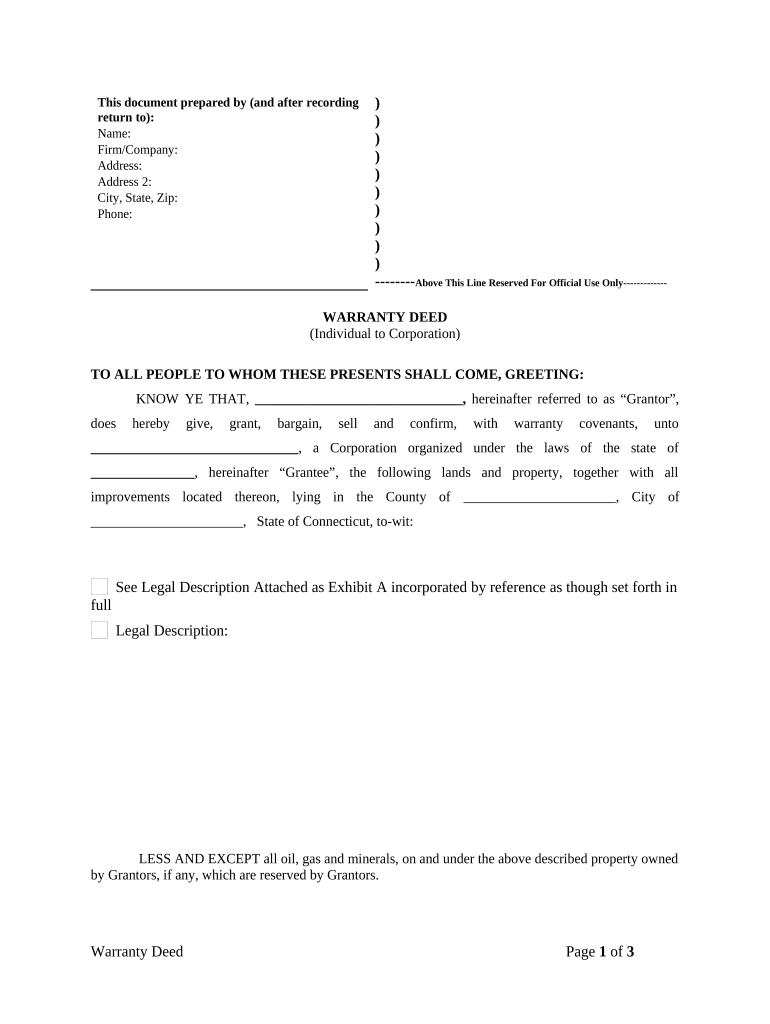
Click ‘Get Form’ to open the Warranty Deed in the editor.
Begin by filling in the Grantor's name, firm/company, address, and contact information at the top of the form. This identifies who is transferring the property.
In the section labeled 'TO ALL PEOPLE TO WHOM THESE PRESENTS SHALL COME', enter the name of the Grantee (the corporation receiving the property) and its state of incorporation.
Provide a detailed legal description of the property being transferred. If you have an Exhibit A, ensure it is attached and referenced correctly.
Fill in any exceptions regarding oil, gas, and minerals if applicable, as well as any easements or rights-of-way that may affect the property.
Complete the acknowledgment section by entering the date and having a notary public witness your signature. Ensure all parties sign where indicated.
Start using our platform today to easily complete your Warranty Deed for free!
Fill out Warranty Deed from Individual to Corporation - Connecticut online It's free
To change the owners name on a property, you should consult an attorney. Most likely, the attorney will prepare a certificate, deed or other legal document or the Probate Court will issue a document to distribute or transfer the property.
What are the disadvantages of a warranty deed?
Disadvantages of Warranty Deeds Title companies will research the chain of deeds, past court judgments, and unpaid taxes before green-lighting the transfer. The grantor also remains on the hook long after the sale. If a forgotten lien surfaces, the buyer can pull the grantor into court for damages and legal fees.
Can I sell my house with a warranty deed?
You can sell as a warranty deed but this means you are warranting clean title and the buyer can come back to you, you should only provide a warranty deed if theres a title company/title insurance being purchased.
What is the main purpose of a warranty deed?
A warranty deed is one that helps ensure the lawful transfer of ownership between a seller (the grantor) and the buyer (the grantee). Warranty deeds are meant to protect the buyer from any issues that may arise with their new home, particularly with the title.
What are the different types of deeds in CT?
Understanding the Different Types of Deeds in Connecticut There are three main types of deeds: the general warranty deed, the special warranty deed, and the quitclaim deed.
Related Searches
Warranty deed from individual to corporation connecticut templateWarranty deed from individual to corporation connecticut sampleWarranty deed from individual to corporation connecticut pdfWarranty deed from individual to corporation connecticut exampleWarranty deed from individual to corporation connecticut formFree warranty deed from individual to corporation connecticutQuitclaim deed CTConnecticut quit claim deed requirements pdf
Security and compliance
At DocHub, your data security is our priority. We follow HIPAA, SOC2, GDPR, and other standards, so you can work on your documents with confidence.
Understanding a Warranty Deed It signifies the legal transfer of property ownership from the seller to the buyer. Unlike other types of deeds, it guarantees that the property title is clear, which means its free from any legal claims or encumbrances, ensuring a smooth transaction.
Is a warranty deed proof of ownership?
No, a warranty deed does not prove ownership. A title search is the best way to prove that a grantor rightfully owns a property. The warranty deed is a legal document that offers the buyer protection. In other words, the property title and warranty deed work in tandem together.
Related links
After-Acquired Property and the Title Search
On February 2, 1934 said corporation, when it was not seized of the property, conveyed the specific property in question by full covenant and warranty deed.
Cookie consent notice
This site uses cookies to enhance site navigation and personalize your experience.
By using this site you agree to our use of cookies as described in our Privacy Notice.
You can modify your selections by visiting our Cookie and Advertising Notice.