Arkansas tenant landlord 2026

Get Form
arkansas tenant rights handbook Preview on Page 1

Here's how it works

01. Edit your arkansas tenant rights handbook online
Type text, add images, blackout confidential details, add comments, highlights and more.
02. Sign it in a few clicks
Draw your signature, type it, upload its image, or use your mobile device as a signature pad.
03. Share your form with others
Send it via email, link, or fax. You can also download it, export it or print it out.

How to use or fill out Arkansas Tenant Landlord Notice with Our Platform

Form edit decoration
9.5
Ease of Setup
DocHub User Ratings on G2
9.0
Ease of Use
DocHub User Ratings on G2
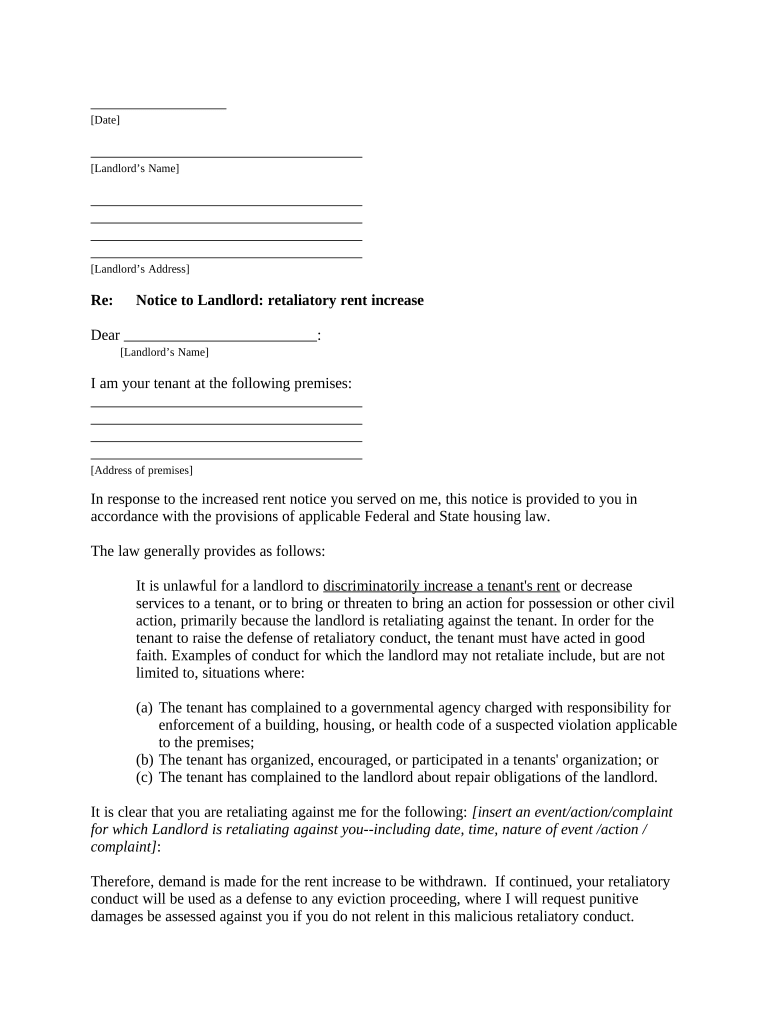
  1. Click ‘Get Form’ to open the Arkansas Tenant Landlord Notice in the editor.
  2. Begin by entering the date at the top of the form. This is essential for record-keeping and legal purposes.
  3. Fill in the landlord’s name and address in the designated fields. Ensure accuracy to avoid any miscommunication.
  4. In the body of the letter, clearly state your name and address as the tenant. This identifies you as the sender of this notice.
  5. Detail the retaliatory action taken by your landlord. Be specific about dates, events, and nature of complaints to strengthen your case.
  6. Sign and date at the bottom of the form where indicated. This confirms your acknowledgment and intent regarding this notice.
  7. Complete the Proof of Delivery section by selecting how you delivered this notice to your landlord, ensuring it is documented properly.

Start using our platform today for free to streamline your document editing and signing process!

be ready to get more

Complete this form in 5 minutes or less

Get form

Got questions?

We have answers to the most popular questions from our customers. If you can't find an answer to your question, please contact us.
Contact us
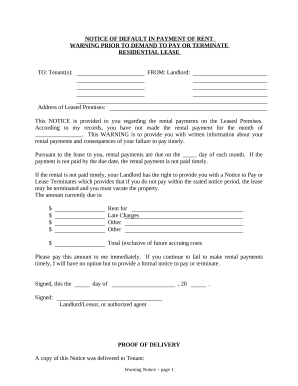
In Arkansas, a landlord may pursue a tenant in a civil action for an unlawful detainer. Unlawful detainer actions require a landlord to provide you with a three days written notice to vacate. If you do not leave, the landlord can sue by filing a complaint against you in court.
You will need to go thru the formal eviction process. This will include giving him a notice to quit, going to courthouse and filing eviction, showing up to court on your courtdate to testify to the judge. The judge if all steps are followed will grant the eviction and order him to be out by a date.
Landlords can expect to pay an average fee of $263 for all filing, court, and service fees. The service fee, paid to a sheriff or private process server, covers the cost of delivering the eviction notice to the tenant. This fee may vary depending on the county and the type of process server used.
Violation of Lease Terms: A 10-day notice to quit is typical if theres a violation of lease conditions other than rent payment. No Lease or End of Tenure: When there is no lease or the lease term has ended, a 30-day notice to vacate may be given.
Is Arkansas Considered a Landlord-Friendly State? Unlike other states, Arkansas is considered a heavily landlord-friendly area. It doesnt impose many regulations for Arkansas landlords, meaning that they may manage their rental agreement as they please.

Security and compliance

At DocHub, your data security is our priority. We follow HIPAA, SOC2, GDPR, and other standards, so you can work on your documents with confidence.

Learn more
ccpa2
pci-dss
gdpr-compliance
hipaa
soc-compliance
be ready to get more

Complete this form in 5 minutes or less

Get form

People also ask

Steps in the eviction process in Arkansas Step 1: File an eviction lawsuit. Step 2: Summons and complaint. Step 3: Tenant response. Step 4: Court hearing. Step 5: Writ of possession. Step 6: Enforcement of the eviction order. Step 7: Tenants personal property. Monetary compensation.
In Arkansas, the line between being a guest and becoming a tenant isnt marked by a specific number of days. Unlike in some states where the law clearly states after how many days a guest automatically becomes a tenant, Arkansas doesnt have such a rule set in stone.
Unlawful detainer actions require a landlord to provide you with a three days written notice to vacate. If you do not leave, the landlord can sue by filing a complaint against you in court. After you receive a summons to appear in court, you have five days to object in writing to the eviction.

Related links