







Definition & Meaning
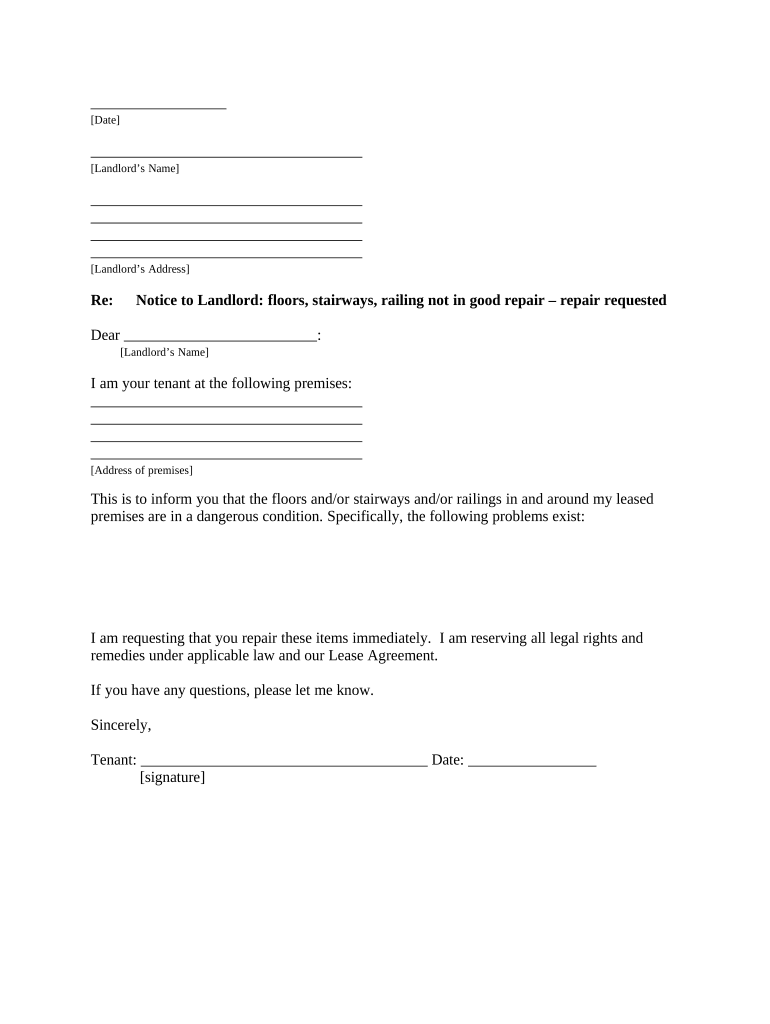
The "Letter from Tenant to Landlord with Demand that landlord repair floors, stairs or railings - Arkansas" is a formal notice issued by a tenant to their landlord detailing specific repair demands for issues related to floors, stairs, or railings within a rental property. This document serves not only to communicate the need for urgent maintenance but also to formally record the tenant's request. In Arkansas, this letter can enforce the tenant's legal rights to a safe living environment, aligning with state-specific tenant-landlord laws.
Importance in Tenant-Landlord Relationships
The letter plays a crucial role in facilitating clear communication between tenants and landlords. In the context of Arkansas property laws, landlords have specific responsibilities to maintain the safety and habitability of the units they rent. By submitting this letter, tenants can ensure these obligations are being met and can provide documented proof of their request if further legal action becomes necessary.
Legal Implications
Sending this letter also holds legal weight. It documents the tenant's concerns and requests, which is essential if disputes escalate to legal proceedings. Arkansas law mandates certain habitability standards, and failure to address repairs mentioned in this letter can result in penalties for the landlord.
How to Obtain the Letter
Tenants can obtain the letter template from various online legal document services, such as DocHub. These platforms provide customizable templates that can be tailored to fit specific circumstances. It's essential to ensure the template chosen complies with Arkansas state laws to validate the letter's enforceability.
Online Resources
- Several legal aid websites offer free downloads.
- Paid platforms might provide templates with additional features like personalization options and legal guidance.
Steps to Complete the Letter
Completing the letter involves several precise steps. It's essential to accurately detail the issues at hand and any correspondence or attempts made previously to rectify the situation. Here’s a step-by-step guide:
- Identify the Issues: Clearly indicate specific repairs necessary for floors, stairs, or railings.
- Include Details: Mention dates and times of previous communications about the issues.
- Use Specific Language: Refer to relevant state laws or lease agreements supporting your request.
- State a Deadline: Provide a reasonable timeframe for the landlord to complete the repairs.
- Review and Sign: Ensure accuracy, then sign before sending a copy to the landlord.
Key Elements of the Letter
The letter must contain fundamental elements to be effective and recognized legally:
- Tenant Information: Name, address, and contact details.
- Landlord Information: Name and address of the landlord or property management.
- Description of Repairs Needed: Thorough explanation of the issues.
- Request for Action: Clear request for specific repairs to be addressed.
- Deadline for Completion: Reasonable time allocated for repairs to be made.
State-Specific Rules for Arkansas
In Arkansas, both tenants and landlords must adhere to the state's specific rules surrounding property maintenance:
- Habitability Standards: Landlords must maintain premises in habitable conditions.
- Notice Requirement: Tenants often need to provide notice of necessary repairs before any legal action.
- Repair and Deduct: Although not all states allow, in some cases, tenants may be able to repair separately and deduct from rent after notice.
Practical Examples of Using the Letter
This letter has been effectively used in various scenarios:
- Routine Wear and Tear: Requesting repairs for worn-out flooring over time.
- Safety Hazards: Addressing impromptu issues like loose railings or compromised stair safety.
These situations underline the letter’s importance in ensuring a safe and livable environment.
Who Typically Uses the Letter
Primarily, tenants in residential properties use this letter. However, commercial tenants can also issue similar demands to landlords when the premises are unsafe or do not meet legal standards for business operations.


Typical Users
- Individuals in Rental Properties: For personal safety and living conditions.
- Commercial Tenants: Ensuring business premises are safe for employees and customers.
Legal Use of the Letter
The letter’s legal standing is bolstered by the inclusion of state law references and lease clauses. It establishes a tenant’s due diligence in notifying a landlord of necessary repairs, creating a foundation for potential legal recourse if the demands are not met. Tenants are advised to retain copies of all correspondences to provide evidence of their efforts in maintaining a dialogue with the landlord regarding property maintenance issues.




