




01. Edit your us customs commercial invoice template online
Type text, add images, blackout confidential details, add comments, highlights and more.

Type text, add images, blackout confidential details, add comments, highlights and more.

Draw your signature, type it, upload its image, or use your mobile device as a signature pad.

Send us customs invoice via email, link, or fax. You can also download it, export it or print it out.
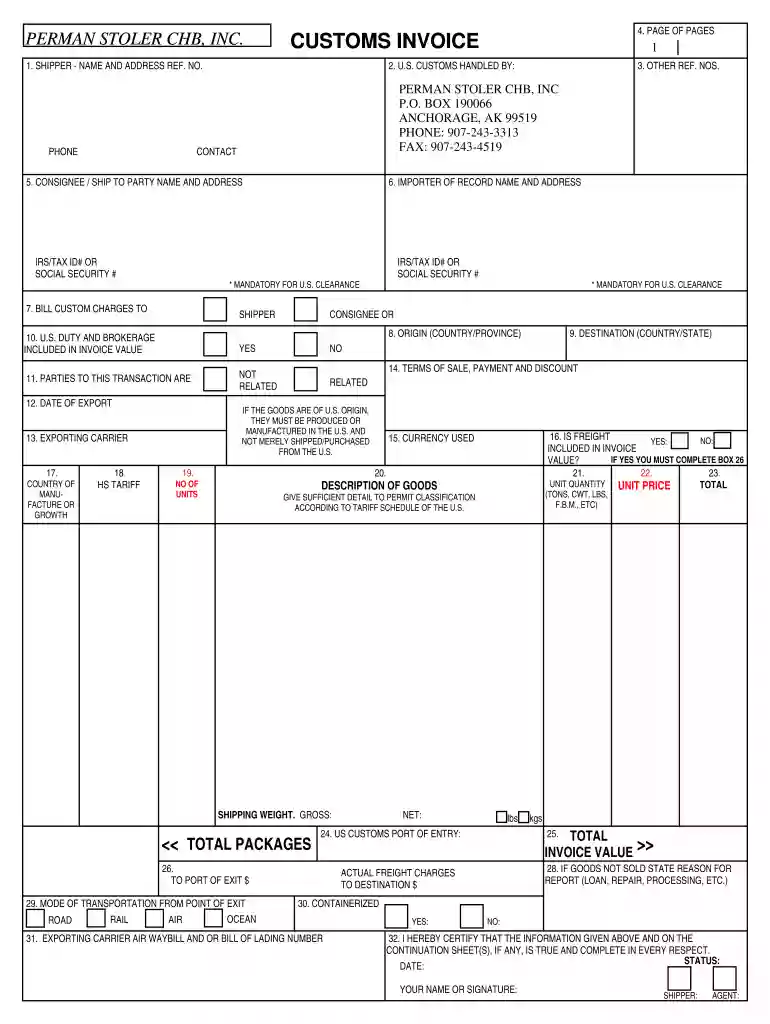
The U.S. customs invoice form, often referred to as a fillable customs invoice, is a critical document used to provide detailed information about goods being shipped internationally. This form plays an essential role in customs clearance for imports into the United States, ensuring that the shipment complies with U.S. regulations and accurately accounts for tariffs and duties.
A fillable U.S. customs invoice includes specific sections for the shipper's and consignee's details, the description of the goods, and relevant shipping and brokerage information. It captures key data such as the invoice value, tax identification numbers, and shipping weights, which are necessary for calculating applicable duties and taxes.
Accurate completion of this form helps facilitate the smooth processing of shipments through U.S. Customs and Border Protection (CBP). It minimizes delays and ensures compliance with legal requirements, thereby safeguarding both the importer and the shipper. Understanding the nuances of this form is essential for anyone involved in international shipping, whether they are businesses or logistics providers.
The U.S. customs invoice form contains several key elements crucial for proper documentation and compliance. Understanding each component is essential for ensuring an effective shipping process.
Shipper Information: This section includes the name, address, and contact information of the individual or company sending the goods. Accurate details are vital for reaching out in case of inquiries.
Consignee Information: Similar to the shipper section, this includes the recipient's name and address. Here, precise information is equally important to avoid shipping inaccuracies.
Description of Goods: This detail outlines what the shipment contains. Each item must be clearly defined, including quantity and unit of measure. Providing accurate descriptions helps avoid customs delays and potential fines.
Value of Goods: This consists of the total value declared for the goods being imported. It's essential for determining duty assessments. Ensuring that this value reflects actual market prices is crucial to avoid legal complications.
Shipping Method: Indicating whether the goods are sent via air, sea, or another medium can affect customs processing. This piece of information will help customs officials determine how to inspect and process the shipment efficiently.
Each of these components plays a critical role in the overall effectiveness and legality of the customs invoice, making understanding their significance vital for compliance with customs regulations.
Completing the U.S. customs invoice form fillable requires careful attention to detail to ensure compliance with U.S. Customs regulations. Here is a step-by-step guide to filling out the form properly:
Gather Required Information: Before starting the form, collect all necessary details, including the shipper's and consignee's information, description of each item, and their respective values.
Input Shipper and Consignee Details: Clearly fill in the names, addresses, and contact information for both the sender and receiver. Ensure that this information is accurate, as errors can lead to delays.
Describe Each Item in Detail: For every item, provide a detailed description, including quantity, unit of measure, and any relevant serial numbers. This level of detail assists customs in efficiently processing the goods.
Declare the Value: Sum the values of all items included in the shipment. It's important that this total reflects the true market value to avoid potential penalties.
Review and Verify: Once the form is filled out, review it thoroughly to ensure that all information is correct and complete. Errors can lead to delays in processing or even fines.
Secure Necessary Signatures: Depending on your company's policy, ensure that the form is signed by the parties required for compliance.
Completing these steps diligently ensures efficient processing of shipments through U.S. customs, minimizing the risk of issues in transit.
Utilizing the U.S. customs invoice form fillable offers several advantages for businesses involved in international shipping. The benefits include:
Efficiency in Customs Clearance: Filling out the customs invoice accurately helps to streamline the customs clearance process, minimizing delays and potential fines that may arise from incomplete or inaccurate paperwork.
Legal Compliance: Completing the form correctly ensures compliance with U.S. customs regulations. This compliance reduces the risk of audits or penalties from customs authorities.
Data Organization: The fillable form facilitates organized data entry. Using a standardized format helps make the information more accessible for both the sender and the recipient.
Ease of Collaboration: Having a fillable format makes it easier for multiple parties to collaborate on completing the necessary documentation, ensuring that everyone’s input is included.
Time-Saving: Using a digital fillable form often provides a quicker alternative to traditional paper forms. This saves time during both the filing and processing stages.
These benefits highlight the importance of this specific form in facilitating seamless international trade and compliance with customs regulations.
The U.S. customs invoice form fillable serves a significant legal role in international shipping. Understanding its legal implications is critical for any entity participating in cross-border transactions.
Compliance with Regulations: The form must comply with U.S. Customs and Border Protection regulations. Inaccuracies or omissions can lead to fines or the seizure of goods.
Legal Documentation: The customs invoice acts as a legal document that provides proof of transaction. It can be crucial in the event of disputes over duties, taxes, or responsibilities for shipments.
Record Keeping: U.S. regulations require that entities keep accurate records related to international shipments. The customs invoice assists in maintaining these records, which may be audited or requested by authorities.
Liability Protection: Properly completed forms help protect shippers and consignees from potential legal liability should issues arise regarding the shipment.
International Trade Agreements: For goods subject to trade agreements, the customs invoice supports claims for duty reduction or exemption, hence must be accurately completed to leverage such benefits legally.
Understanding these legal components underlines the significance of utilizing the fillable customs invoice correctly to mitigate risks associated with international shipping.
At DocHub, your data security is our priority. We follow HIPAA, SOC2, GDPR, and other standards, so you can work on your documents with confidence.
Jul 25, 2024 Form 6059B Customs Declaration in English and Fillable. This form can be now be filled out prior to or during your travel and be filled out by typing.Read more
I DECLARE ALL THE INFORMATION CONTAINED IN THIS INVOICE TO BE TRUE AND CORRECT. EXPORT CONTROL OFFICER. SIGNATURE OF AUTHORIZED PERSON. TITLE. DATE.Read more


