Fl tenant landlord 2026

Get Form
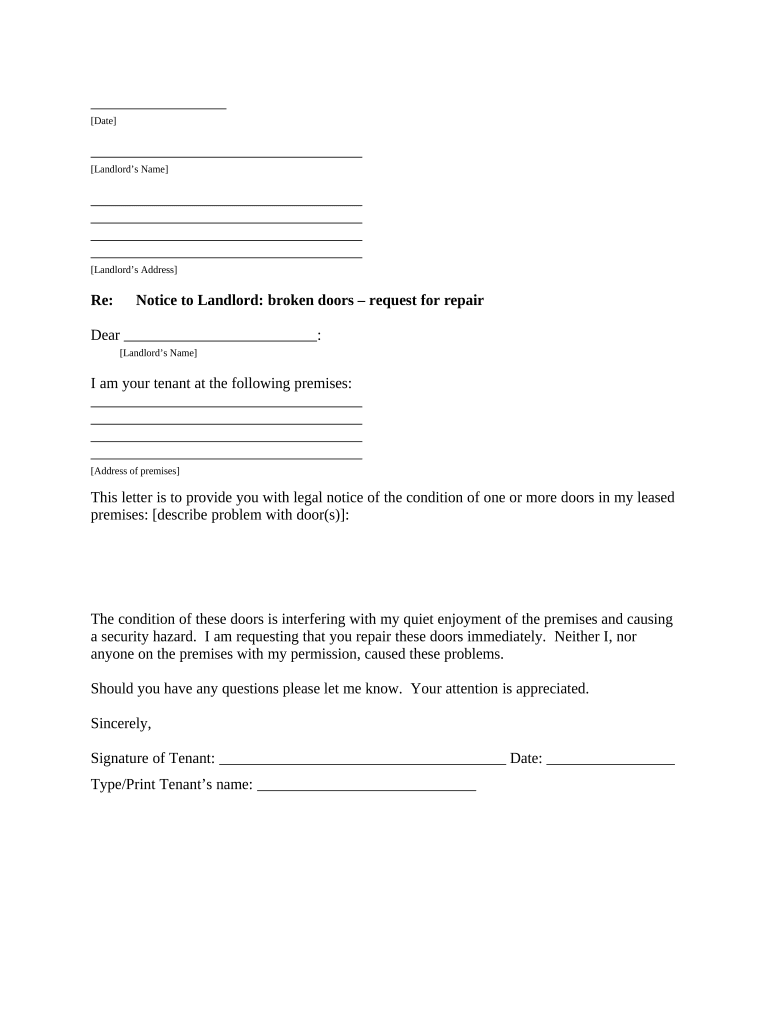
what a landlord cannot do in florida Preview on Page 1

Here's how it works

01. Edit your what a landlord cannot do in florida online
Type text, add images, blackout confidential details, add comments, highlights and more.
02. Sign it in a few clicks
Draw your signature, type it, upload its image, or use your mobile device as a signature pad.
03. Share your form with others
Send what a landlord cannot do florida via email, link, or fax. You can also download it, export it or print it out.

How to use or fill out fl tenant landlord with our platform

Form edit decoration
9.5
Ease of Setup
DocHub User Ratings on G2
9.0
Ease of Use
DocHub User Ratings on G2
  1. Click ‘Get Form’ to open the fl tenant landlord document in the editor.
  2. Begin by entering the date at the top of the form. This is essential for record-keeping and establishing a timeline for your request.
  3. Fill in your landlord’s name and address in the designated fields. Ensure accuracy to avoid any miscommunication.
  4. In the body of the letter, clearly state your issue regarding the broken doors. Describe the problem succinctly, emphasizing how it affects your living conditions.
  5. Sign the document in the provided space and type or print your name below it. This confirms your identity as the tenant making the request.
  6. Complete the 'Proof of Delivery' section by selecting how you will deliver this notice to your landlord. Choose from personal delivery, certified mail, or another method as per your lease agreement.
  7. Finally, sign and date this section to validate that you have delivered this notice appropriately.

Start using our platform today to easily fill out and manage your tenant-landlord communications for free!

be ready to get more

Complete this form in 5 minutes or less

Get form

Got questions?

We have answers to the most popular questions from our customers. If you can't find an answer to your question, please contact us.
Contact us
Florida Statute 83.56 states a tenant should write to the rental unit owner or property manager outlining that you need the mold problem fixed (or other problems with the unit), and that if it is not fixed within 7 days, then you intend to terminate the rental agreement and move out.
A month-to-month tenancy, whether written or not, is when you pay the rent monthly without agreement as to how long you will stay. For month-to-month tenancies, the landlord or tenant must deliver a notice at least 30 days before the next time the rent is due informing the other party that the lease will be terminated.
A code enforcement officer does not have to provide the person with a reasonable time period to correct the violation prior to issuing a citation and may immediately issue a citation if a repeat violation is found or if the code enforcement officer has reason to believe that the violation presents a serious threat to
For example, if the rent is due weekly, seven days notice is required. For monthly rental payments, 15 days notice is required. Send all correspondence relating to your intentions to the landlord by mail or deliver it by hand and insist on a receipt. It is usually a good idea to speak with the landlord in person too.
Public housing tenants or tenants receiving rent subsidies are required to deposit only that portion of the full rent for which they are responsible pursuant to the federal, state, or local program in which they are participating.

Security and compliance

At DocHub, your data security is our priority. We follow HIPAA, SOC2, GDPR, and other standards, so you can work on your documents with confidence.

Learn more
ccpa2
pci-dss
gdpr-compliance
hipaa
soc-compliance
be ready to get more

Complete this form in 5 minutes or less

Get form

People also ask

New Florida Housing Law: Landlords Can No Longer Charge 3 Times Rent. Florida Landlords can now ask for a fee instead of a security deposit.
Section 83.53(1), F.S. The tenant shall not unreasonably withhold consent to the landlord to enter the dwelling unit from time to time in order to inspect the premises. Section 83.53(2), F.S. ■ The landlord may enter the dwelling unit at any time for the protection or preservation of the premises.

Related links