
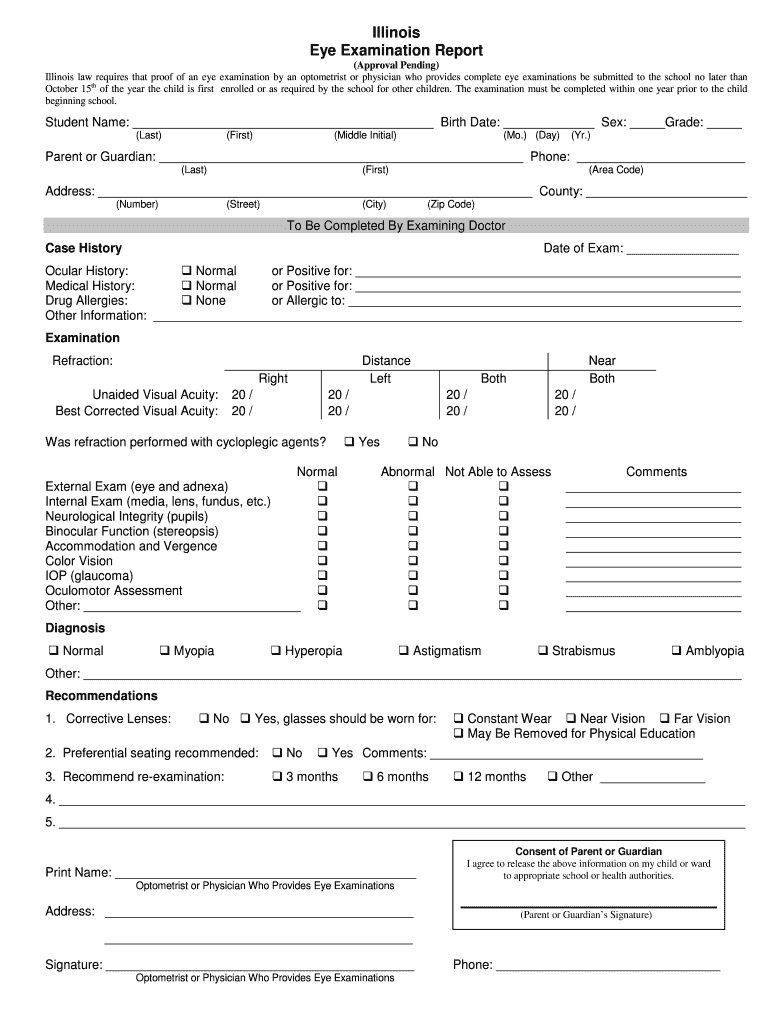







Overview of the Eye Examination Form
The eye examination form is a crucial document used to record the results of a vision assessment, especially for students before entering school. This form is typically required by educational institutions in the United States, including Illinois, where state law mandates that children submit a comprehensive eye examination report. The report serves to ensure that students have received proper eye care, identifying any potential vision issues that could hinder their educational experience.
Essential Components of the Eye Examination Form
The eye examination form generally includes several key sections:
- Student Information: This section collects basic details about the student, including name, date of birth, and grade level.
- Examination Details: Here, the optometrist or physician documents the date of the examination, their credentials, and practice information.
- Ocular and Medical History: This part records any previous eye conditions or relevant medical history that might affect the student's vision.
- Visual Acuity Results: This section details the results of various vision tests performed during the examination, typically using a Snellen chart.
- Diagnosis and Recommendations: The form includes a diagnosis of any detected issues and recommendations for corrective lenses or follow-up examinations.
- Parental Consent: A signature section for parents or guardians is included, giving consent for the examination and its findings to be submitted to the school.
Importance of Completing the Eye Examination Form
Completing the eye examination form is essential for several reasons:
- Educational Requirement: Many states, including Illinois, require proof of an eye examination for school enrollment to ensure that all students have adequate vision for learning.
- Early Detection of Issues: Regular eye examinations help in the early detection of vision problems, which can significantly impact a child's educational performance.
- Access to Appropriate Care: The form facilitates communication between parents, schools, and healthcare providers regarding the child's vision needs.
Process for Completing the Eye Examination Form
To properly fill out the eye examination form, follow these steps:
- Schedule an Eye Exam: Parents should schedule an appointment with a licensed optometrist or ophthalmologist for their child's eye examination.
- Gather Necessary Information: Prior to the appointment, collect any relevant medical histories, including previous eye exams or treatments.
- Complete the Examination: During the appointment, the eye care professional will conduct a series of tests to assess vision and eye health.
- Fill Out the Form: After the examination, the professional will complete the eye examination form, documenting all necessary details and findings.
- Review and Sign: Parents should review the completed form for accuracy and sign the parental consent section before submission to the school.
Legal Considerations for the Eye Examination Form
In Illinois, the law mandates that the eye examination report must be submitted by a specific deadline—October 15 of the enrollment year. If not submitted, children may be barred from attending school until the form is completed. The form must be accurately filled to avoid compliance issues, which can lead to unnecessary delays in enrollment.
Variants of the Eye Examination Form
Different versions of the eye examination form may exist based on specific requirements set by various states or school districts. For instance, some jurisdictions may have their own customized versions of the Illinois eye examination report, while still adhering to state regulations. It’s essential for parents to verify that they are using the correct form required by their child's school or the relevant local education authority.
Practical Examples and Scenarios
For many parents, the eye examination form is a routine requirement that can be easily managed. For example, a parent with multiple children may schedule eye exams during school vacation periods, ensuring that all required forms are submitted on time. Additionally, a child diagnosed with amblyopia may require special considerations documented on the form, further reinforcing the importance of comprehensive eye care.
Maintaining proactive communication with both healthcare providers and educational institutions is vital for ensuring that a child’s vision health is adequately addressed.




