Landlord pets 2026

Get Form
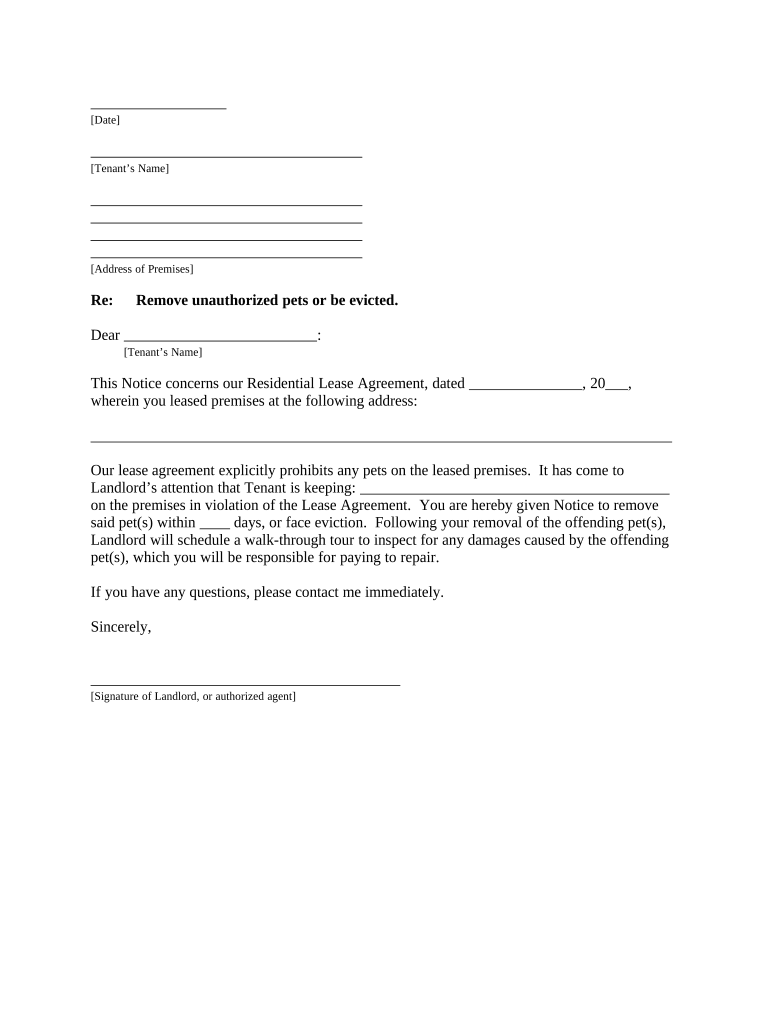
landlord pet permission letter template Preview on Page 1

Here's how it works

01. Edit your landlord pet permission letter template online
Type text, add images, blackout confidential details, add comments, highlights and more.
02. Sign it in a few clicks
Draw your signature, type it, upload its image, or use your mobile device as a signature pad.
03. Share your form with others
Send landlord pet consent letter via email, link, or fax. You can also download it, export it or print it out.

How to use or fill out landlord pets with our platform

Form edit decoration
9.5
Ease of Setup
DocHub User Ratings on G2
9.0
Ease of Use
DocHub User Ratings on G2
  1. Click ‘Get Form’ to open the landlord pets document in the editor.
  2. Begin by entering the date at the top of the form. This is essential for record-keeping and establishes when the notice was issued.
  3. Fill in the tenant’s name and their address in the designated fields. Ensure accuracy to avoid any confusion regarding the recipient of this notice.
  4. In the section that addresses unauthorized pets, clearly specify what pet(s) are being kept on the premises. This detail is crucial for compliance with your lease agreement.
  5. Indicate a deadline for pet removal by filling in the number of days allowed before eviction proceedings may begin. This provides clarity and urgency to your notice.
  6. Sign off on the document by adding your signature or that of an authorized agent at the bottom, ensuring it is legally binding.
  7. Finally, choose how you will deliver this notice to your tenant by checking one of the options provided under 'Proof of Delivery'.

Start using our platform today to streamline your document management and ensure effective communication with tenants!

be ready to get more

Complete this form in 5 minutes or less

Get form

Got questions?

We have answers to the most popular questions from our customers. If you can't find an answer to your question, please contact us.
Contact us
In New York, landlords can charge separate pet deposits for each animal. These may be non-refundable, so tenants should check the terms. Additionally, monthly pet fees can be charged. These fees contribute to extra cleaning and maintenance costs related to hosting pets in rental units.
A tenant may keep a pet at the dwelling-house if the tenant asks to do so and the landlord consents; The landlord must not unreasonably refuse to give consent; and. The landlord must give or refuse consent in writing by a specified deadline (which is normally the 28th day after the date of the tenants request).
A landlord may refuse to consent to a tenant keeping a pet if keeping the pet would contravene a law, by-law or rule that applies to the premises. If the landlord wishes to refuse permission for any other reason, they must seek permission from the Commissioner.
Landlords can generally decide whether to allow pets in their rental properties. Some developments, particularly those that are affordable housing, may have different rules under state laws. More information on restrictions can be found at KQEDs coverage on pet laws.
Why was New Yorks law changed? New York Governor Kathy Hochul signed a law prohibiting the retail sale of dogs, cats and rabbits, which went into effect on December 15, 2024.

Security and compliance

At DocHub, your data security is our priority. We follow HIPAA, SOC2, GDPR, and other standards, so you can work on your documents with confidence.

Learn more
ccpa2
pci-dss
gdpr-compliance
hipaa
soc-compliance

People also ask

How does New York States 90-day pet rule work? This rule allows tenants to keep pets for 90 days without penalty, even if the lease says no pets. This period gives tenants time to demonstrate responsible pet ownership. The rule is part of the 90-day pet law in New York.
Under the Pet Law a landlord has waived their right to enforce a no-pet clause if: (1) the tenant has kept a pet openly and notoriously; (2) the landlord or their agent (super) has known or should have known of the pet for three (3) months or more; and (3) the landlord does not begin court proceedings within three

landlord pet permission letter