
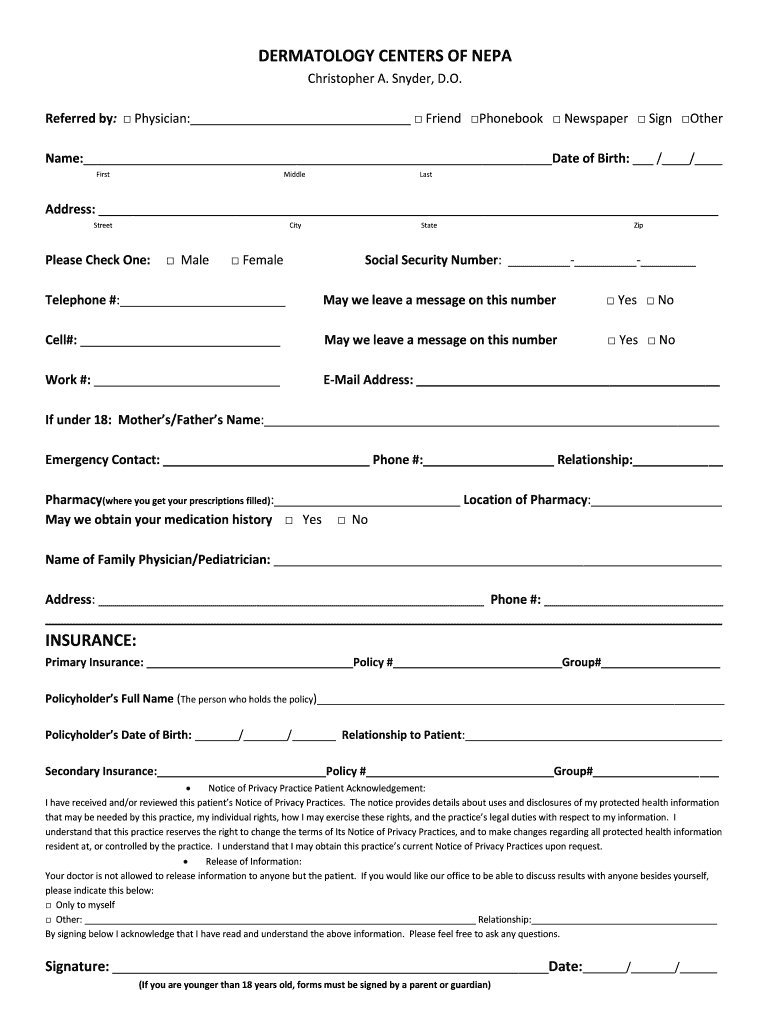







Definition and Meaning of the Demographic Form
A demographic form is a document designed to collect various types of demographic information from individuals. This information typically includes personal identifiers such as name, age, gender, marital status, race, ethnicity, and contact information. In addition to basic personal details, a demographic form may also gather data related to education, employment, income levels, and health status, depending on the purpose for which it is being utilized. The significance of this form lies in its utility for research, marketing, health assessments, and various administrative purposes. Understanding what constitutes a demographic form is crucial for both collectors and respondents to ensure accurate data gathering and compliance with data privacy regulations.
The demographic form serves myriad purposes across different sectors:
- Research Studies: Utilized to gather baseline data for scientific studies.
- Healthcare Providers: Assists in collecting patient information for treatment and insurance purposes.
- Human Resources: Used by companies to assess the diversity of their workforce and ensure compliance with equal employment opportunity regulations.
- Marketing: Helps businesses segment their audience and tailor campaigns to specific demographic groups.
How to Use the Demographic Form Effectively
Using the demographic form effectively involves understanding its layout and the specific information that needs to be collected. Here are the steps generally involved in the effective usage of a demographic form:
- Identify the Purpose: Determine what data is needed and why. This may vary from research objectives to compliance with legal standards.
- Tailor the Form: Customize the demographic form by including relevant questions specific to your needs. This may involve using a demographic form template that can be adjusted as required.
- Communicate Clearly: Provide clear instructions to respondents about how to fill out the form, ensuring they understand its importance and the confidentiality of their information.
- Collect Responses: Gather completed forms digitally or in print. Make sure to inform respondents about submission methods and deadlines to maximize response rates.
- Analyze Data Collected: After collecting responses, analyze the data to draw insights that impact decision-making or strengthen compliance.
Steps to Complete the Demographic Form
Completing a demographic form requires careful attention to detail. Here are the steps to ensure accurate completion:
- Personal Information: Fill out fields such as name, address, and contact information accurately. This is essential for identification and follow-up.
- Demographic Questions: Answer demographic questions truthfully. This can include age range, gender identity, ethnic background, and education level.
- Additional Information: If applicable, provide employment status or income levels. Some forms may also inquire about health status or insurance details, especially in healthcare settings.
- Double-Check Responses: Review all responses for accuracy. Discrepancies can affect data validity and outcomes of research or administrative processes.
- Submit the Form: Ensure that the form is submitted by the specified deadline, via the designated method, to ensure it is processed correctly.
Who Typically Uses the Demographic Form
Demographic forms are widely used in various fields for different purposes. Here is a breakdown of typical users:
- Academic Researchers: Use demographic forms to collect data on participants in studies, which is critical for ensuring diversity and representation in research findings.
- Healthcare Institutions: Collect patient demographic information to better serve their patient population and ensure equitable treatment.
- Government Agencies: Utilize demographic data to inform policy and allocate resources effectively.
- Businesses and Marketers: Use demographic forms for market research, allowing companies to understand their audience better, thus improving their marketing strategies and product offerings.
- Educational Institutions: Collect demographic data from students and staff to promote inclusivity and track educational outcomes across different demographics.


Key Elements of the Demographic Form
Understanding the key elements of a demographic form helps in its design and administration. The following elements are typically included:
- Identification Section: Includes fields for name, contact information, and sometimes identification numbers relevant to the organization.
- Demographic Questions: Standard questions on age, gender, marital status, race, and education level.
- Health Information: In healthcare forms, questions may focus on medical history, insurance status, and previous treatments.
- Response Confidentiality Notice: A statement ensuring respondents that their information will be kept confidential and used solely for stated purposes.
- Submission Instructions: Clear guidelines on how and where to submit the completed form, including deadlines and any necessary follow-up.
By understanding these elements, organizations can create a comprehensive demographic form that captures all necessary information while being respectful of respondents' privacy.
Legal Use and Compliance of the Demographic Form
Legal use of demographic forms hinges on compliance with various regulations regarding data privacy and protection. Here are some important considerations:
- Data Protection Laws: Organizations must adhere to laws like the Health Insurance Portability and Accountability Act (HIPAA) for healthcare-related demographic forms or the General Data Protection Regulation (GDPR) if operating internationally.
- Informed Consent: It is critical to inform respondents about how their data will be used and obtain their consent before data collection.
- Retention Policies: Organizations should outline how long demographic data will be kept and the conditions under which it will be destroyed.
- Accessibility: Forms should be accessible to individuals with disabilities, ensuring inclusivity in data collection.
Ethical use of demographic forms not only fosters trust but also enhances the quality of collected data, leading to more reliable outcomes.
Examples of Using the Demographic Form
Demographic forms can be tailored to a variety of contexts. Here are specific examples of their application:
- Healthcare Settings: A patient demographic form used at a clinic might ask for personal information, insurance details, medical history, and consent for treatment, facilitating patient management and insurance claims.
- Market Research: A marketing firm may deploy a demographic survey to gather information about potential customers, including income, educational background, and preferences, to refine target audience profiles.
- Educational Institutions: Schools may use demographic forms to collect information from students regarding their background, which aids in demographic studies related to educational performance.
- Workplace Environment: Companies might administer demographic forms during the hiring process to gauge the diversity of applicants, ensuring compliance with equal opportunity employment practices.
These examples illustrate how demographic forms adapt to meet the specific needs of different sectors while collecting vital information.




