What is permitted by the most important clause of the Uniform Anatomical Gift Act?
The most important clause of the Uniform Anatomical Gift Act (UAGA) permits individuals to make a voluntary decision to donate their organs and tissues upon death. This act emphasizes that donations must be made through a written or witnessed document, ensuring clear consent from the donor.
Can I change my mind on being a donor?
If you registered in the National Donate Life Registry, you can access your donor record by tapping/clicking on the Edit Registration button at RegisterMe.org. You will be asked to enter a few key data fields (e.g., name, address) to log in to your donor record.
Can you remove an organ donor from an ID card?
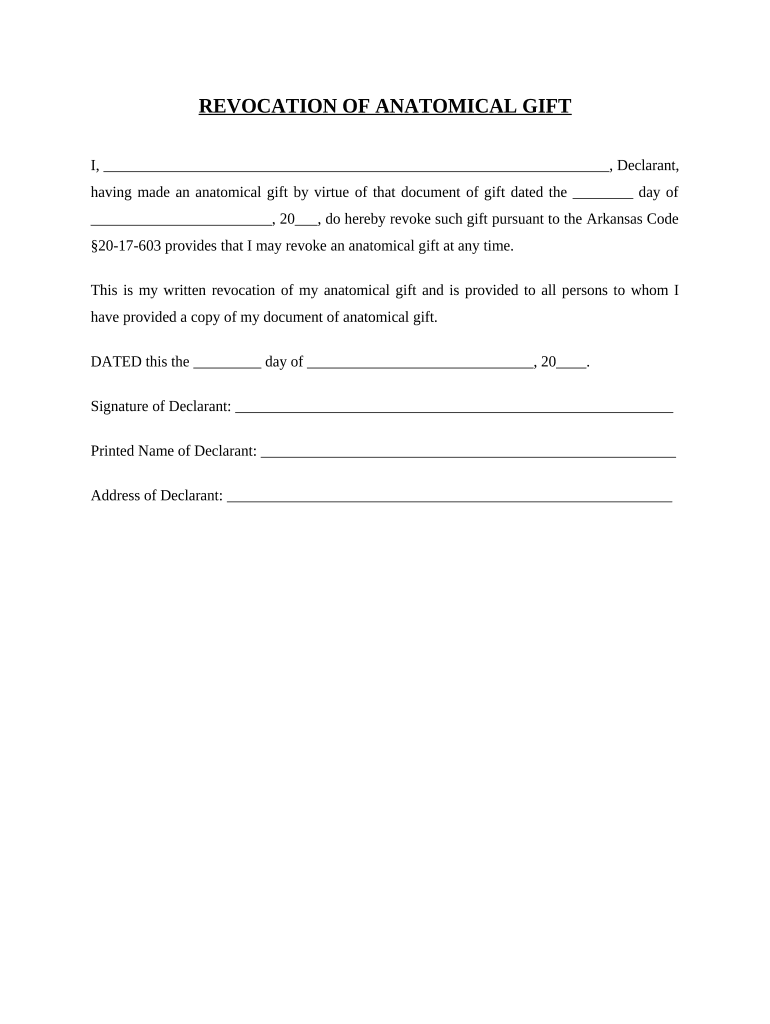
Can I remove myself from the registered donors list? Yes. You can change your donor status at any time. Look for an option such as updating your status on your states site.
What is the Uniform Anatomical Gift Act?
The act allows a decedent or surviving relatives to donate certain parts of the decedents organs for certain purposes, such as giving to those in need or for medical research. The act was revised in 1987 and again in 2006. The revisions made in 2006 aimed to address shortages and encourage donation.
How to change organ donor status in Arkansas?
Update Registration Information: If you have already registered online to become an organ, tissue and eye donor you can update your registration information by entering your information below and clicking Login.
Related Searches
organ donor on license
Security and compliance
At DocHub, your data security is our priority. We follow HIPAA, SOC2, GDPR, and other standards, so you can work on your documents with confidence.
If you registered as a donor on your drivers license or state ID card. You will need to visit your local DMV to remove the status from your drivers license. You will need to request a duplicate license and write the word REMOVE on the application where you indicate your donation decision.
What is the 90 minute rule for organ donation?
If the patient does not expire within 60-90 minutes, the medical staff moves the patient to a location as outlined in Step Four and continues to administer palliative care. Organs are recovered to ultimately give life to patients in need. Through DCD donation, as many as six lives can be saved with one patients gift.
Related links
ACHE Anatomical Donor Program
After death, revocation of the anatomical gift may also be made under A.C.A. 20-17-1209 and 1210. However, the revocation must occur before the initialRead more
Apr 9, 2025 (a) Notwithstanding any other provision of this subchapter to the contrary, a donors prior anatomical gift may be modified, amended, or revokedRead more
Cookie consent notice
This site uses cookies to enhance site navigation and personalize your experience.
By using this site you agree to our use of cookies as described in our Privacy Notice.
You can modify your selections by visiting our Cookie and Advertising Notice.