Landlord Tenant Closing Statement to Reconcile Security Deposit - Idaho 2026

Get Form
Landlord Tenant Closing Statement to Reconcile Security Deposit - Idaho Preview on Page 1

Here's how it works

01. Edit your form online
Type text, add images, blackout confidential details, add comments, highlights and more.
02. Sign it in a few clicks
Draw your signature, type it, upload its image, or use your mobile device as a signature pad.
03. Share your form with others
Send it via email, link, or fax. You can also download it, export it or print it out.

How to use or fill out Landlord Tenant Closing Statement to Reconcile Security Deposit - Idaho with our platform

Form edit decoration
9.5
Ease of Setup
DocHub User Ratings on G2
9.0
Ease of Use
DocHub User Ratings on G2
  1. Click ‘Get Form’ to open the Landlord Tenant Closing Statement in the editor.
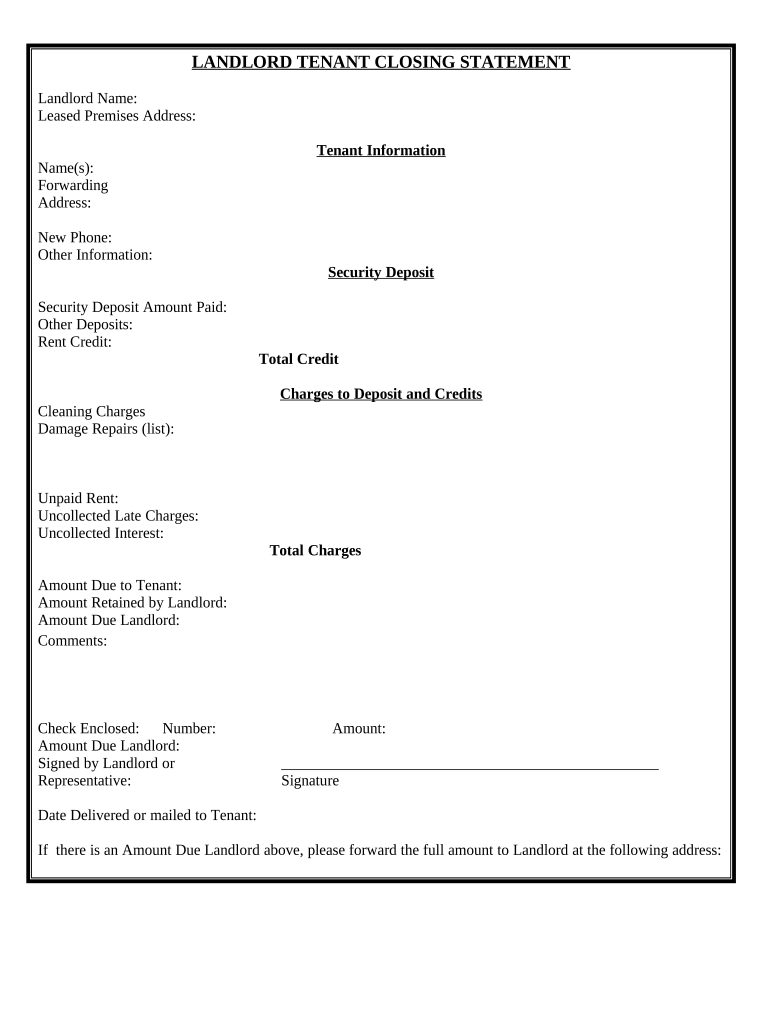
  2. Begin by entering the Landlord's name and the leased premises address at the top of the form. This information is crucial for identifying the parties involved.
  3. Fill in the tenant's information, including names, forwarding address, and new phone number. This ensures that all communication regarding the security deposit is directed appropriately.
  4. In the Security Deposit section, input the total amount paid by the tenant, along with any other deposits or rent credits applicable. This will help in calculating total credits.
  5. List any cleaning charges, damage repairs, unpaid rent, uncollected late charges, and uncollected interest under Charges to Deposit and Credits. Be thorough to avoid disputes later.
  6. Calculate and enter the total charges and determine amounts due to both tenant and landlord. Ensure accuracy here for a smooth reconciliation process.
  7. Finally, sign and date the document before delivering it to the tenant. If there’s an amount due to landlord, include payment details as well.

Start using our platform today for free to streamline your document editing and signing process!

be ready to get more

Complete this form in 5 minutes or less

Get form

Got questions?

We have answers to the most popular questions from our customers. If you can't find an answer to your question, please contact us.
Contact us
Normal wear and tear refers to the expected decline in condition that occurs naturally through standard usage and aging. Things like minor scuffs on the wall, worn carpet, and faded paint are considered normal wear and tear in Idaho. Landlords cannot deduct for normal wear and tear when refunding the security deposit.
A landlord may deduct money from the security deposit for any reason agreed upon in the lease. If the lease is silent about the security deposit, however, then a landlord may deduct for any damages to the property, but cannot deduct for normal wear and tear.
Property in General 55-208. Termination of tenancy at will. (2) By the tenant giving notice in writing to the landlord that the tenant will be vacating the premises, on a date as specified in the notice, but not less than one (1) month from the date of notice.
Your landlord has three days after the day s/he receives the letter to return the deposit (not counting weekends or holidays). If the landlord received your letter after the 21 day (or 30 day) period ended, s/he must return the entire deposit, regardless of damage you may have caused to the place.
In a real estate closing statement, security deposits are typically listed as a credit to the Buyer. This is because the security deposit functions as a form of assurance that the buyer will meet their obligations, such as making timely rental payments or maintaining the property.

Security and compliance

At DocHub, your data security is our priority. We follow HIPAA, SOC2, GDPR, and other standards, so you can work on your documents with confidence.

Learn more
ccpa2
pci-dss
gdpr-compliance
hipaa
soc-compliance
be ready to get more

Complete this form in 5 minutes or less

Get form

People also ask

Fair Deposit Deductions and Effective Negotiation with Tenants Understand Deposit Deduction Criteria: Conduct a Detailed Check-Out Inspection: Provide Evidence for Deductions: Communicate Openly with the Tenant: docHub an Agreement: Put Agreements in Writing: If No Agreement Can Be docHubed:
Discrimination Against Tenants Under federal and Idaho state law, landlords are prohibited from discriminating against potential or current tenants based on race, color, religion, sex, national origin, disability, or familial status.
At the end of your tenancy Your landlord must return your deposit within 10 days of you both agreeing how much youll get back. If youre in a dispute with your landlord, then your deposit will be protected in the TDP scheme until the issue is sorted out.

Related links