Quitclaim Deed from Individual to LLC - Idaho 2026

Get Form
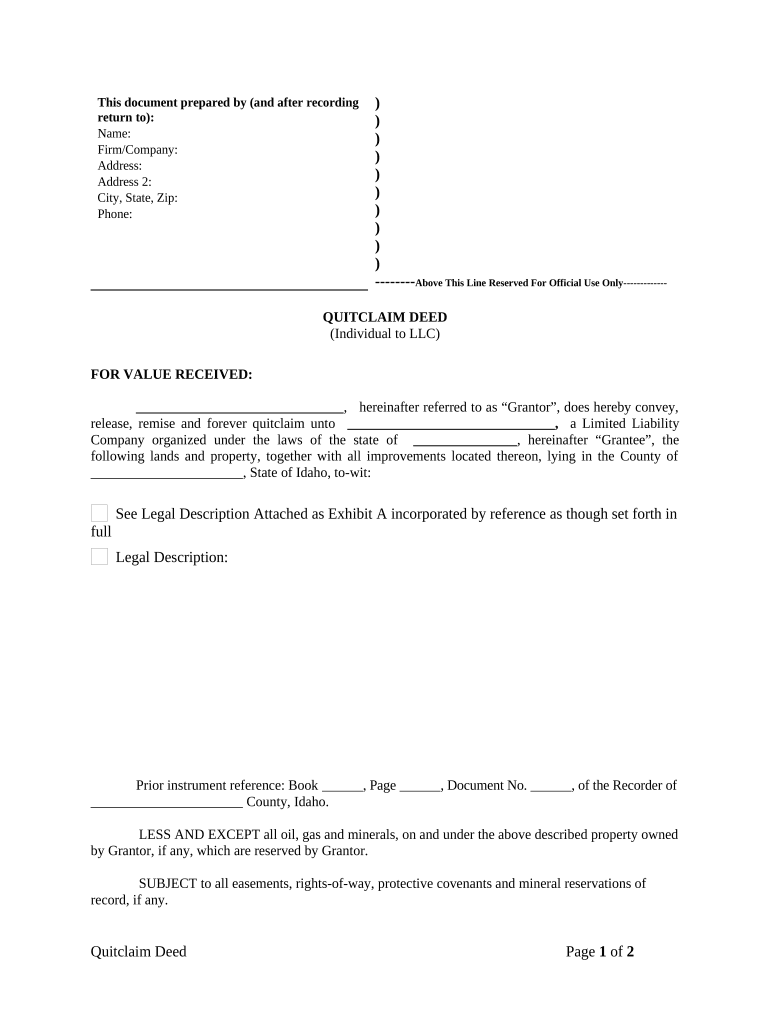
idaho quit claim deed Preview on Page 1

Here's how it works

01. Edit your idaho quit claim deed online
Type text, add images, blackout confidential details, add comments, highlights and more.
02. Sign it in a few clicks
Draw your signature, type it, upload its image, or use your mobile device as a signature pad.
03. Share your form with others
Send how to file a quitclaim deed via email, link, or fax. You can also download it, export it or print it out.

How to use or fill out Quitclaim Deed from Individual to LLC - Idaho with our platform

Form edit decoration
9.5
Ease of Setup
DocHub User Ratings on G2
9.0
Ease of Use
DocHub User Ratings on G2
  1. Click ‘Get Form’ to open the Quitclaim Deed in the editor.
  2. Begin by filling in the Grantor's information, including their name, firm/company, address, city, state, zip code, and phone number. This identifies who is transferring the property.
  3. Next, enter the Grantee's details. This should include the name of the LLC receiving the property and its state of organization.
  4. In the section for property description, provide a detailed legal description of the property being transferred. If necessary, attach Exhibit A for clarity.
  5. Complete any prior instrument references if applicable. This includes book and page numbers from previous deeds related to this property.
  6. Sign and date the document where indicated as Grantor(s). Ensure that all signatures are completed before proceeding.
  7. Finally, have a Notary Public witness your signature and complete their section to validate the deed.

Start using our platform today to easily fill out your Quitclaim Deed for free!

be ready to get more

Complete this form in 5 minutes or less

Get form

Got questions?

We have answers to the most popular questions from our customers. If you can't find an answer to your question, please contact us.
Contact us
Follow these steps to transfer property to LLC business structures. Make sure your LLC is registered. Review the property title and LLC operating agreement. Draft a deed of transfer. Notarize and file the deed. Notify your mortgage company. Update tax records. Transfer utilities and insurance. Plan for tax complications.
Since a quitclaim deed doesnt guarantee clear ownership, you might unknowingly transfer property with liens or other claims against it. This can lead to estate planning problems, especially if the grantor doesnt fully own the property or other family members dispute the transfer.
The average cost (i.e., legal fees) for a lawyer to prepare and file a quitclaim deed is $520.00. This cost point come from recent quitclaim projects on the ContractsCounsel platform across all US states. Note, this does not include any fees to file at the county clerks office, which can range from $10 to $100.
A deed, of course, is a legal document representing property ownership. But you might be wondering if an owner can transfer a deed to another person without a real estate lawyer. The answer is yes. Parties to a transaction are always free to prepare their own deeds.
How to Transfer Your Real Property to an LLC Step 1: Contact Your Lender; Contact Your Title Insurance Company; Contact Your Homeowners Insurance Company. Step 2: Create an LLC and Maintain Corporate Formalities. Step 3: Open a Bank Account in the Name of the LLC. Step 4: Fill Out and Record Deed. Step 5: Change the Lease.

Security and compliance

At DocHub, your data security is our priority. We follow HIPAA, SOC2, GDPR, and other standards, so you can work on your documents with confidence.

Learn more
ccpa2
pci-dss
gdpr-compliance
hipaa
soc-compliance

People also ask

The main purpose of an LLC is to limit the owners personal liabilities for (and protect personal assets like your home from) the LLCs business, and most real estate investors will hold each property in a separate LLC so that any liability that arises on one property will not affect any other property.
However, while separating personal and business liabilities is appealing, there are factors to consider. Disadvantages of LLCs for Rental Property Ownership. Disadvantages of LLCs for Rental Property. Cost and Complexity. Financing and Loan Limitations. Administrative and Compliance Burdens. Lack of Personal Tax Benefits.

quitclaim deed from llc to individual