




01. Edit your iowa sellers disclosure form online
Type text, add images, blackout confidential details, add comments, highlights and more.

Type text, add images, blackout confidential details, add comments, highlights and more.

Draw your signature, type it, upload its image, or use your mobile device as a signature pad.

Send iowa property disclosure form via email, link, or fax. You can also download it, export it or print it out.
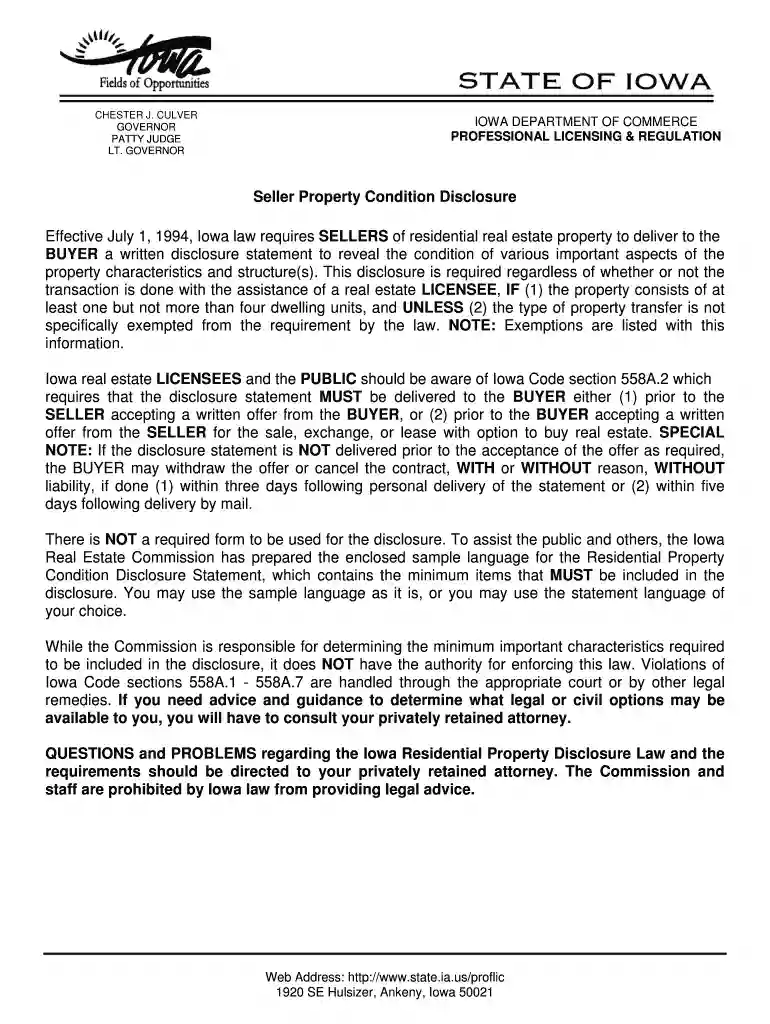
The Iowa real estate disclosure form is a legally mandated document that requires sellers of residential real estate to provide a comprehensive property condition disclosure to prospective buyers. This form serves as a critical tool in ensuring transparency during real estate transactions, allowing buyers to be informed about any known defects or issues with the property before a sale is finalized. The requirement became effective on July 1, 1994, under Iowa law, highlighting the state's commitment to clear communication between sellers and buyers and minimizing potential disputes post-sale. Sellers are obligated to disclose all material defects that they are aware of, in areas such as the structure's condition, systems, and any environmental hazards.
To effectively use the Iowa real estate disclosure form, sellers should begin by obtaining the most current version of the form, which can typically be accessed through real estate agencies, legal advisors, or state websites. The form requires detailed information on various aspects of the property, including structural integrity, plumbing, heating, electrical systems, and any history of pest infestations. Sellers should fill out the form accurately and honestly, ensuring they disclose all known conditions that might affect the property's value or desirability. It is important to provide full explanations in the designated spaces on the document, rather than brief or vague responses. Finally, the completed form must be delivered to the prospective buyer before any offer is accepted to comply with legal requirements.
Using the Iowa real estate disclosure form is essential for several reasons. Primarily, it helps protect both parties in a real estate transaction. For sellers, it provides a clear record of the disclosed property condition, potentially shielding against future legal claims if discrepancies arise. For buyers, it serves as an important resource to understand the true condition of the property, aiding in making informed purchasing decisions. Moreover, compliance with the disclosure form is a legal requirement in Iowa, with non-compliance potentially resulting in penalties or nullification of the sale contract.
The legal framework surrounding the Iowa real estate disclosure form is designed to enforce transparency and accuracy in property transactions. Iowa law mandates that this document be completed honestly to prevent misrepresentation and fraud in real estate sales. Misleading or withholding information can lead to legal ramifications including lawsuits or penalties for the seller. The form is also a way for buyers to have explicit evidence of disclosures, giving them a basis to seek remediation if post-purchase issues arise that were previously undisclosed.
Iowa's real estate disclosure laws emphasize the importance of informed consent in real estate transactions. Sellers in Iowa must provide the disclosure form before accepting an offer, a stipulation that is strictly enforced to protect potential buyers. Exemptions may apply to certain types of sales such as court orders, transfers between family members, or transfers relating to inheritance. It's vital for sellers and their agents to understand these specifics to ensure adherence to legal requirements and avoid penalties.
Consider a scenario where a seller is aware of a leaky roof but fails to disclose this on the form. Post-sale, the buyer faces significant water damage repair costs. In this case, the seller may be held liable for failing to disclose known problems. Another example might involve an older property with outdated electrical systems; full disclosure on the form allows potential buyers to factor in repair costs upfront and negotiate appropriately. Proper use of this form ensures that both parties’ expectations align and reduces the risk of post-transaction disputes.
At DocHub, your data security is our priority. We follow HIPAA, SOC2, GDPR, and other standards, so you can work on your documents with confidence.




Buyer(s) acknowledges receipt of a copy of this Real Estate Disclosure Statement. This statement is not intended to be a warranty or to substitute for anyRead more
Jul 1, 1994 There is NOT a required form to be used for the disclosure. To assist the public and others, the Iowa. Real Estate Commission has prepared theRead more
Jan 31, 2012 real estate activity is reported on Form. 8825 and is used in arriving at net. Line 12. Taxes and Licenses. Line 9. Repairs and income (loss)Read more


