
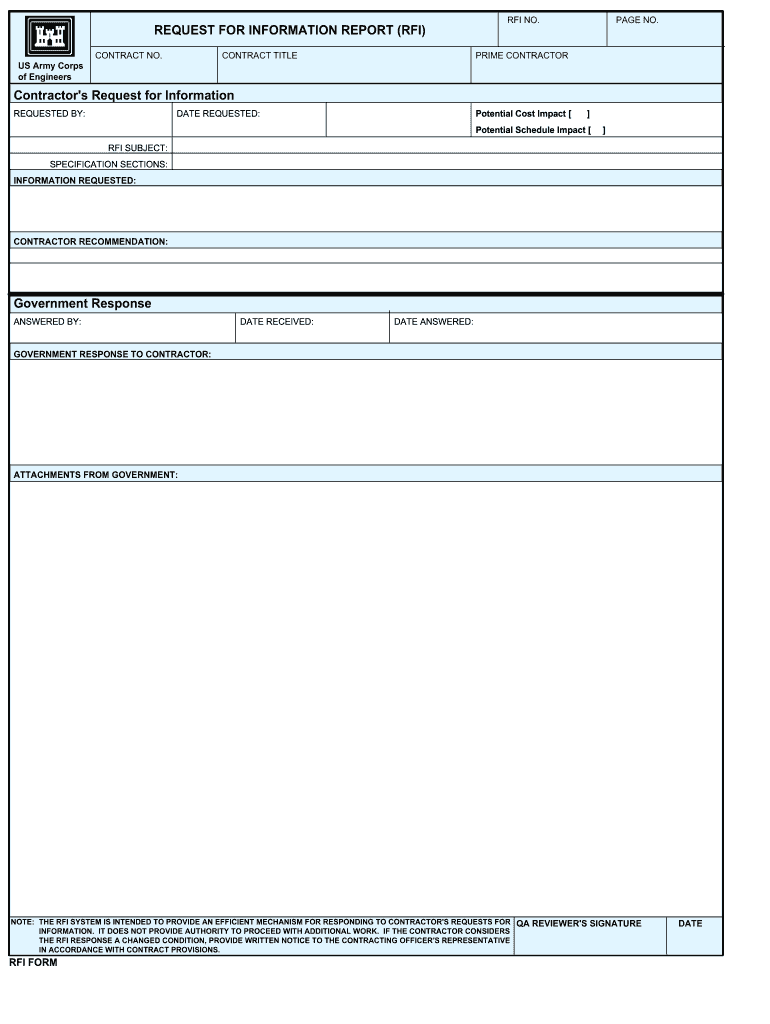







Understanding the RFI Form
The Request for Information (RFI) form serves as a crucial component in various projects, primarily within the construction and contracting sectors. It facilitates communication between parties involved in a contract, ensuring clarity and efficiency in addressing inquiries related to contract specifications.
Key Purposes of the RFI Form
An RFI form aims primarily to:
- Clarify specifications: The form helps contractors seek clarification on confusing or ambiguous aspects of a project. This clarity prevents costly delays due to misunderstandings.
- Document inquiries and responses: By recording questions and answers, the RFI becomes part of the project documentation, promoting transparency and accountability.
- Facilitate project adjustments: In instances where specifications need altering based on received information, the RFI presents a formal process to initiate necessary changes.
Components of an RFI Form
An effective RFI form typically includes the following sections:
- Project Information:
- Project name and number
- Contractor's name and contact details
- RFI Details:
- Subject: Brief description of the inquiry
- Information requested: Specific details or clarifications needed
- Potential impacts on cost or schedule: Assessment of how the inquiry may affect the project timeline or budget
- Responses:
- Government or project manager's responses, along with any recommended actions, if applicable.
Completing the RFI Form
To effectively fill out an RFI form, follow these steps:
- Identify the issue: Recognize the specific aspect of the contract or project that requires clarification.
- Provide detailed context: Explain why clarification is needed, including references to relevant sections of the contract or plans.
- Specify information sought: Clearly articulate what information or action is being requested.
- Consider impacts: Assess and document how the inquiry may influence project costs or timelines.
- Submit the form: Send the completed RFI form to the appropriate contact, typically the project manager or contract administrator.
Who Uses the RFI Form?
The RFI form is utilized by various stakeholders, primarily:
- Contractors: To seek clarifications during the construction phase.
- Project managers: To address queries, facilitate contractor communications, and ensure project compliance.
- Architects and engineers: To respond to inquiries related to design specifications and plans.
- Consultants: For ensuring adherence to regulatory requirements during project execution.
Variants and Related Forms
There are several variants of the RFI form tailored for specific contexts, including:
- Construction RFI Form: Designed specifically for construction projects, focusing on technical inquiries.
- USACE RFI Form: Utilized within the framework of the U.S. Army Corps of Engineers, emphasizing military project specifications.
- NAVFAC RFI Form: Used by the Naval Facilities Engineering Systems Command, addressing naval construction specifications.
By leveraging the RFI form appropriately, stakeholders can maintain effective communication throughout project timelines, minimize misunderstandings, and enhance overall efficiency in project execution.




