




01. Edit your urgent care forms online
Type text, add images, blackout confidential details, add comments, highlights and more.

Type text, add images, blackout confidential details, add comments, highlights and more.

Draw your signature, type it, upload its image, or use your mobile device as a signature pad.

Send urgent care paperwork via email, link, or fax. You can also download it, export it or print it out.
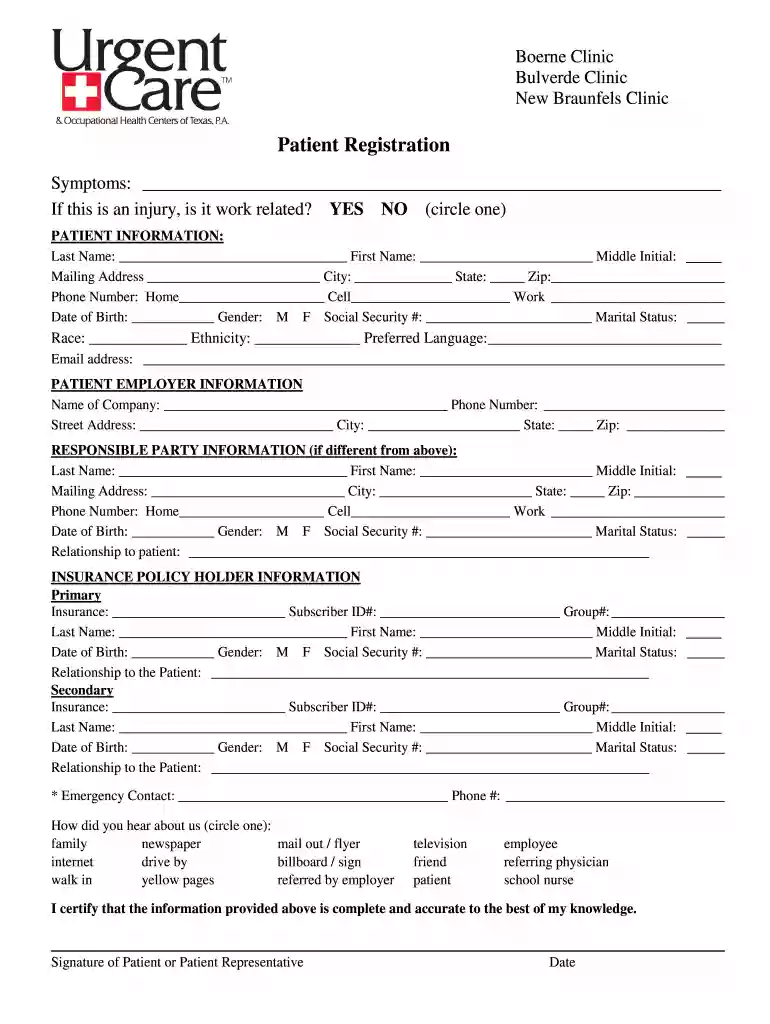
New patient forms are essential in urgent care settings as they facilitate the collection of necessary patient information for efficient service delivery. These forms serve multiple functions, including patient registration, medical history documentation, and consent for treatment. By utilizing printable formats, urgent care facilities can streamline the onboarding process, ensuring that critical data is gathered promptly.
Personal Information: The form typically begins with fields for the patient's personal details, such as name, date of birth, address, and contact number. Accurate entry of this information is vital for creating patient profiles.
Insurance Information: Patients are often required to provide their insurance details, which include policy numbers and claims information. This section helps in verifying coverage and facilitating billing processes.
Medical History: A comprehensive medical history section collects details about past illnesses, surgeries, allergies, and current medications. This data is crucial for the healthcare providers to make informed decisions about treatment.
Emergency Contacts: Including emergency contact information allows urgent care providers to reach out to designated individuals in critical situations. This section typically requests the name, relationship, and contact details of the emergency contact.
Consent and Acknowledgment: Forms usually feature sections for patients to provide consent for treatment and acknowledgment of financial responsibilities. This consent is integral for legal and compliance issues in healthcare.
The availability of new patient forms in a printable format enhances the experience for both patients and providers.
Convenience: Patients can complete their forms at home, minimizing wait times and expediting the check-in process at the urgent care facility. This is particularly beneficial during peak hours when time is of the essence.
Reduced Errors: By allowing patients to fill out forms at their own pace, the potential for rushed or incorrect entries decreases. When patients have the chance to review their responses, it leads to more accurate and complete documentation.
Accessibility: Providing these forms in a printable format ensures that individuals without reliable internet access can still acquire necessary medical services. It broadens the reach of urgent care facilities to underserved populations.
For optimal use of new patient forms, both patients and urgent care providers should adhere to established best practices:
Thorough Review: Patients should carefully read each section to ensure all information is accurately filled out. Double-checking can prevent delays in treatment due to incomplete data.
Seek Assistance if Needed: Patients who encounter difficulties in filling out their forms should feel encouraged to seek help from staff. Urgent care facilities can have guides or personnel available for this purpose.
Timely Submission: Patients should arrive at the facility with their completed forms before their scheduled appointment. This proactive approach assists providers in preparing for the patient's specific medical needs.
Despite their benefits, there are several challenges related to new patient forms in urgent care:
Data Privacy Concerns: Patients may be apprehensive about sharing personal health information. Facilities must reassure patients of their commitment to confidentiality and secure handling of sensitive data.
Changes in Insurance: Patients may not always have up-to-date insurance information at hand. Educating patients about the importance of having current details can improve the administrative process.
Complex Medical Histories: Some patients may have intricate medical histories that are difficult to convey adequately on standard forms. Providers may need to follow up with additional questions or intake interviews.
New patient forms printable for rapid urgent care are vital assets that not only improve the patient experience but also enhance operational efficiencies in healthcare settings. By understanding the key elements, benefits, best practices, and challenges associated with these forms, both patients and providers can work together to ensure a smooth and effective clinical process.
At DocHub, your data security is our priority. We follow HIPAA, SOC2, GDPR, and other standards, so you can work on your documents with confidence.
This brochure provides information about facilities that provide health care services in either an emergency department or urgent care center setting.Read more
Obtain authorizations for all inpatient and selected outpatient services as listed on the current. Prior Authorization List, except for emergency services up toRead more
Copies of our registration and new patient forms are available below for download. Please print and complete the forms relevant to your visit and bring themRead more


