
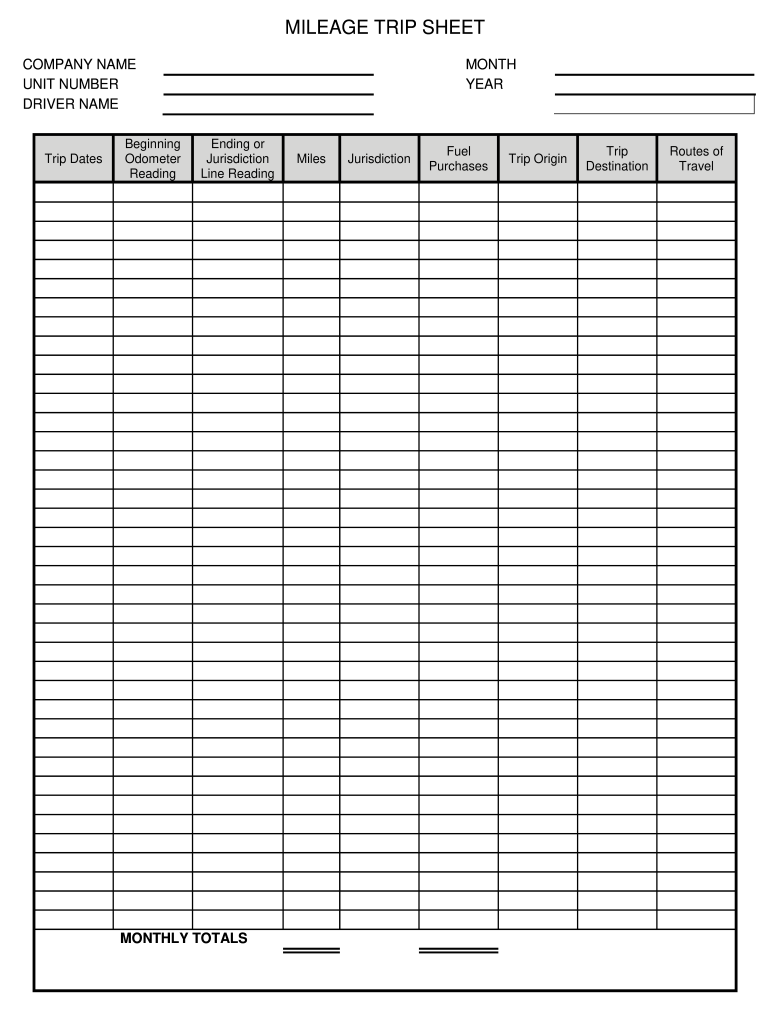







Definition and Meaning of Trip Sheet
A trip sheet is a detailed document used primarily in the transportation and trucking industries to record essential information related to vehicle usage during a trip. This includes data on mileage, routes taken, fuel purchases, and other operational details. The purpose of a trip sheet is to maintain accurate records for management, reporting, and audit purposes.
Key Components of a Trip Sheet
- Driver Information: This section typically captures the driver's name, license number, and contact information.
- Trip Details: Information such as trip dates, starting and ending locations, and odometer readings are recorded.
- Mileage Tracking: Documentation of total miles traveled during a trip, often separated by different jurisdictions or routes.
- Fuel Purchases: A log of fuel receipts, including cost, type of fuel, and locations of fuel purchases.
- Monthly Totals: Summaries of miles traveled, fuel expenses, and any other relevant metrics to provide a comprehensive view of vehicle usage.
These components are crucial for fleet management, ensuring compliance with regulations, and aiding in vehicle maintenance tracking.
How to Use a Trip Sheet Effectively
Using a trip sheet effectively involves a structured process that ensures all vital information is accurately recorded and can be easily interpreted later.
Step-by-Step Process
- Preparation: Before starting a trip, ensure you have a blank trip sheet available, either in printed form or on a digital platform.
- Fill in Driver Information: Begin by entering your name and any other required personal information.
- Record Trip Details: Document the trip’s starting and ending odometer readings, along with the specific routes taken.
- Log Fuel Purchases: Keep all fuel receipts and note details such as the dates, gallons purchased, and costs on the trip sheet.
- Calculate Mileage: At the end of the trip, compute the total miles traveled and any other relevant statistics.
- Review and Submit: Double-check all entries for accuracy, and submit the completed trip sheet to your supervisor or fleet manager for record keeping.
Correctly following these steps will ensure that you have a reliable account of your journeys, providing insight into vehicle efficiency and operational costs.
Importance of Maintaining a Trip Sheet
Maintaining an accurate trip sheet is crucial for several reasons, particularly for businesses that rely on transportation.
Benefits of Keeping a Trip Sheet
- Expense Monitoring: Documenting fuel purchases and mileage helps in tracking operational costs and budget management.
- Regulatory Compliance: Many jurisdictions require transportation companies to maintain accurate records for inspections and audits.
- Performance Analysis: By analyzing trip sheets, managers can identify patterns in fuel efficiency and driver performance and make informed decisions for improvements.
- Tax Preparation: Trip sheets can provide essential documentation for preparing tax returns, especially for self-employed drivers or businesses that manage a fleet.
Implementing a routine for trip sheet management not only aids in adhering to regulations but also enhances overall operational efficiency.
Examples of Trip Sheets in Different Industries
Various industries utilize trip sheets, each adapting the format to suit specific operational needs.
Sector-Specific Examples
- Trucking Industry: Drivers typically use a detailed format, including jurisdiction tracking, which involves logging miles in different states for regulatory compliance.
- Taxi Services: Taxi drivers often have simplified trip sheets focusing on trip duration, fare income, and passenger details. The trip sheet format may also involve capturing service-related interactions.
- Delivery Services: Companies use trip sheets to monitor logistics, starting with the driver’s route, delivery times, and vehicle condition at the end of each route.
- Personal Vehicle Use: Individuals utilizing their vehicles for business purposes may also maintain personal trip sheets to document mileage and monitor vehicle maintenance schedules.
These examples illustrate how trip sheet applications vary across sectors, addressing unique requirements while retaining core functionalities.
Trip Sheet Formats and Templates
Having a variety of trip sheet formats or templates readily available can enhance efficiency in record-keeping.
Types of Trip Sheet Formats
- Excel Templates: Many businesses opt for trip sheet templates in Microsoft Excel, allowing easy calculations and data manipulation. Users can customize fields based on specific needs.
- Printable Forms: Physical trip sheets are still in use, especially among drivers who prefer to keep paper records. These formats are often straightforward and easily accessible.
- PDF Formats: Trip sheets available in PDF format provide a standardized layout that can be filled in digitally or printed if necessary.
- Online Solutions: Some platforms offer online trip sheet solutions that allow for real-time updating and collaboration among team members in a fleet.
By choosing the appropriate format, users can optimize their trip sheet workflows, enhancing accuracy and ease of use in recording essential trip details.




