Letter from Landlord to Tenant as Notice of Default on Commercial Lease - Wisconsin 2026

Get Form
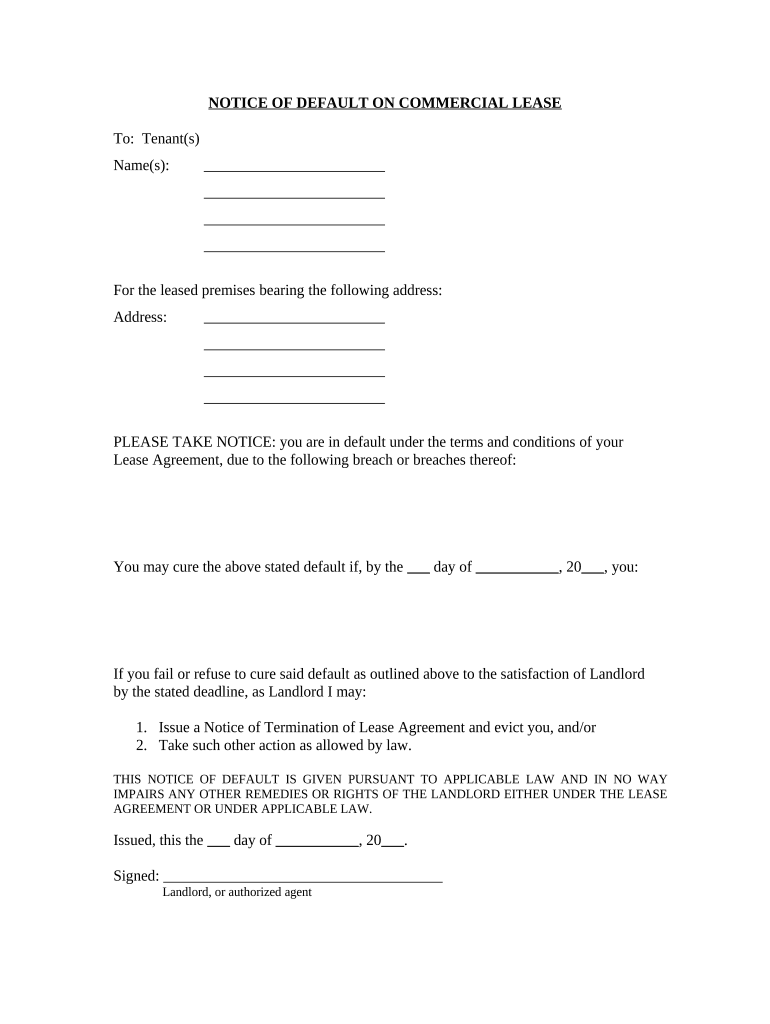
Letter from Landlord to Tenant as Notice of Default on Commercial Lease - Wisconsin Preview on Page 1

Here's how it works

01. Edit your form online
Type text, add images, blackout confidential details, add comments, highlights and more.
02. Sign it in a few clicks
Draw your signature, type it, upload its image, or use your mobile device as a signature pad.
03. Share your form with others
Send it via email, link, or fax. You can also download it, export it or print it out.

How to use or fill out Letter from Landlord to Tenant as Notice of Default on Commercial Lease - Wisconsin

Form edit decoration
9.5
Ease of Setup
DocHub User Ratings on G2
9.0
Ease of Use
DocHub User Ratings on G2
  1. Click ‘Get Form’ to open it in the editor.
  2. Begin by entering the tenant's name(s) in the designated field. This ensures that the notice is correctly addressed.
  3. Next, input the address of the leased premises where the default has occurred. This is crucial for clarity and legal accuracy.
  4. In the section detailing the breach, specify the reasons for default under the Lease Agreement. Be clear and concise to avoid misunderstandings.
  5. Fill in the deadline by which the tenant must cure the default. Use a specific date to provide a clear timeframe for compliance.
  6. Finally, sign and date the document at the bottom. Ensure that your signature is legible and matches your name as listed above.

Start using our platform today to streamline your document editing and ensure your notices are professionally completed!

be ready to get more

Complete this form in 5 minutes or less

Get form

Got questions?

We have answers to the most popular questions from our customers. If you can't find an answer to your question, please contact us.
Contact us
Written notice should be given to the tenant three months before the lease term expires or before the landlord would like the tenant to vacate the property. It should state any final rental payments due and the conditions against which any deposit paid at the start of the tenancy will be returned.
The landlord can also pursue damages against the tenant as compensation for financial losses which were a result of the tenants default. Damages may include unpaid rent, repair costs, and other expenses incurred because of the tenants actions. The tenant also has rights and defenses in the event of a default.
Defaulting on a lease means failing to fulfill your responsibilities as outlined in the agreement. This could involve missed rent payments or violating other terms, like subletting without permission. Defaulting on a lease often leads to legal consequences, including eviction.
A collaborative approach often yields the best results when exiting a commercial lease. Even without a formal termination clause, landlords may agree to an early release if market conditions favor re-leasing and you offer a fair financial settlement, assist in finding a replacement tenant, and provide ample notice.
Common Reasons Leases Get Terminated Often, unexpected circumstances might prompt a necessary change. A few reasons you might be considering ending your commercial lease agreement early include: Financial hardship. Relocation of your business.

Security and compliance

At DocHub, your data security is our priority. We follow HIPAA, SOC2, GDPR, and other standards, so you can work on your documents with confidence.

Learn more
ccpa2
pci-dss
gdpr-compliance
hipaa
soc-compliance

People also ask

Yes, a tenant can give up their right to a lease by negotiating the surrender terms with the landlord. The terms must be agreed to by both parties, otherwise the surrender cannot take place. Often, landlords can be reluctant to agree to lease surrender, as theyll lose rental income, even if only for a short period.
To evict a commercial tenant who has fallen behind on rent, landlords must issue a Section 8 notice. If the tenant does not leave by the specified date, landlords can then apply to a court to enforce it.
A notice of default can result when a homeowner fails to pay as required under his mortgage or deed of trust. In a lease situation, a notice of default can be sent by either the landlord or tenant, claiming that one of them has violated a condition of the lease.

Related links