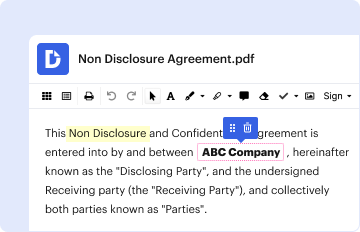
Type text, add images, blackout confidential details, add comments, highlights and more.
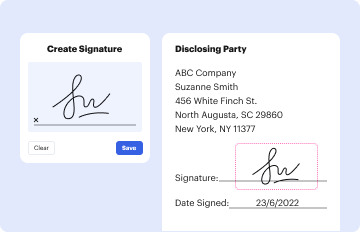
02. Sign it in a few clicks
Draw your signature, type it, upload its image, or use your mobile device as a signature pad.
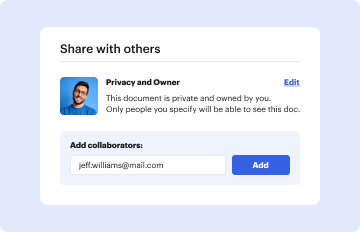
03. Share your form with others
Send it via email, link, or fax. You can also download it, export it or print it out.
How to use or fill out Warranty Deed from two Individuals to LLC - Wisconsin
Ease of Setup
DocHub User Ratings on G2
Ease of Use
DocHub User Ratings on G2
Click ‘Get Form’ to open it in the editor.
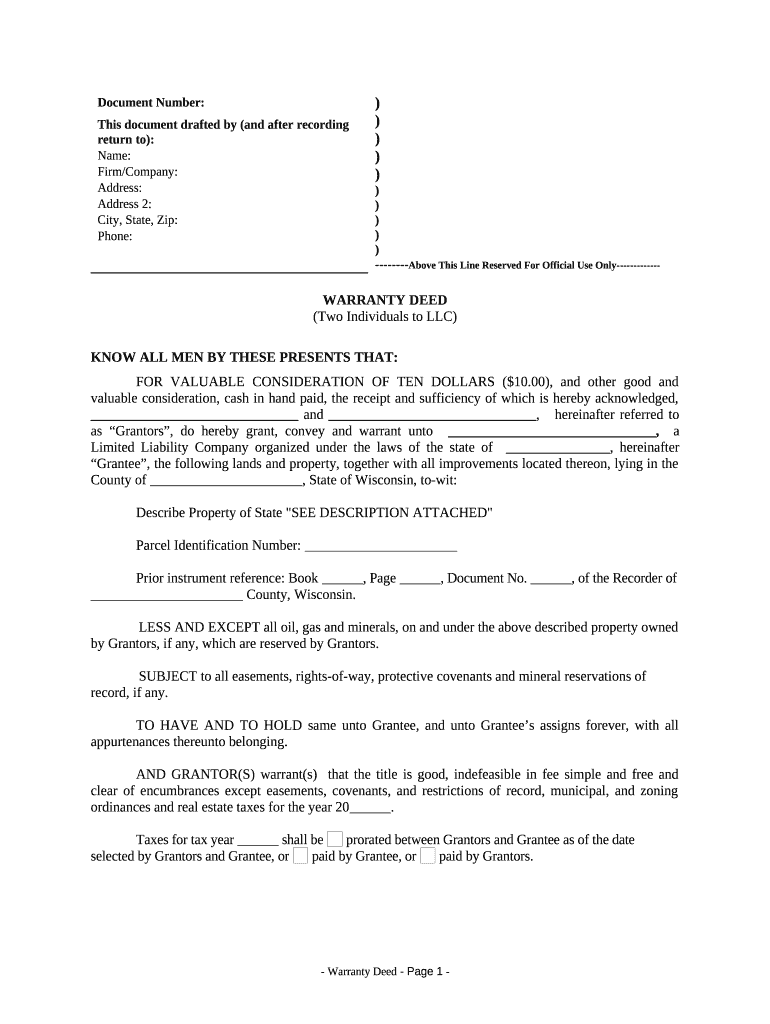
Begin by entering the names of the Grantors (the individuals transferring the property) in the designated fields. Ensure that both names are clearly typed.
Next, input the name of the Grantee, which is the LLC receiving the property. Include any necessary details about its organization under Wisconsin law.
In the property description section, either provide a detailed description of the property or indicate 'SEE DESCRIPTION ATTACHED' if an attachment is included.
Fill in the Parcel Identification Number and prior instrument reference details as required for accurate record-keeping.
Complete any additional sections regarding taxes and encumbrances, ensuring clarity on how taxes will be handled between Grantors and Grantee.
Finally, have both Grantors sign and date the document. If notarization is required, ensure that a notary public completes their section accordingly.
Start using our platform today to easily complete your Warranty Deed online for free!
Fill out Warranty Deed from two Individuals to LLC - Wisconsin online It's free
Warranty deed from two individuals to llc wisconsin templateWarranty deed from two individuals to llc wisconsin sampleWarranty deed from two individuals to llc wisconsin formWarranty deed from two individuals to llc wisconsin onlineFree warranty deed from two individuals to llc wisconsinWisconsin quit Claim Deed formQuit claim Deed Dane County wiWisconsin Warranty Deed
Security and compliance
At DocHub, your data security is our priority. We follow HIPAA, SOC2, GDPR, and other standards, so you can work on your documents with confidence.
Although ISM sample collection may be performed by a single individual, a two-person team is often the most efficient method: ideally one person collects theRead more
May 18, 2020 warranty deed. The return indicated a transfer fee due of $0 by claiming a transfer fee exemption. The Wisconsin Department of Revenue disagreed.Read more
Either one or two deeds can be used. If two deeds are used, each requires a separate transfer return. The developers return should indicate the property type
Cookie consent notice
This site uses cookies to enhance site navigation and personalize your experience.
By using this site you agree to our use of cookies as described in our Privacy Notice.
You can modify your selections by visiting our Cookie and Advertising Notice.