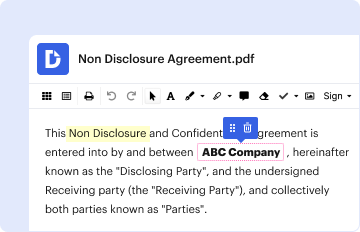
Type text, add images, blackout confidential details, add comments, highlights and more.
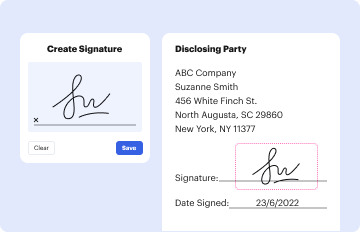
02. Sign it in a few clicks
Draw your signature, type it, upload its image, or use your mobile device as a signature pad.
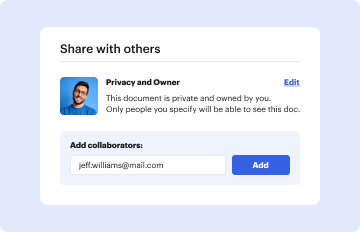
03. Share your form with others
Send it via email, link, or fax. You can also download it, export it or print it out.
How to use or fill out Quitclaim Deed from Individual to Corporation - Utah with our platform
Ease of Setup
DocHub User Ratings on G2
Ease of Use
DocHub User Ratings on G2
Click ‘Get Form’ to open the Quitclaim Deed in the editor.
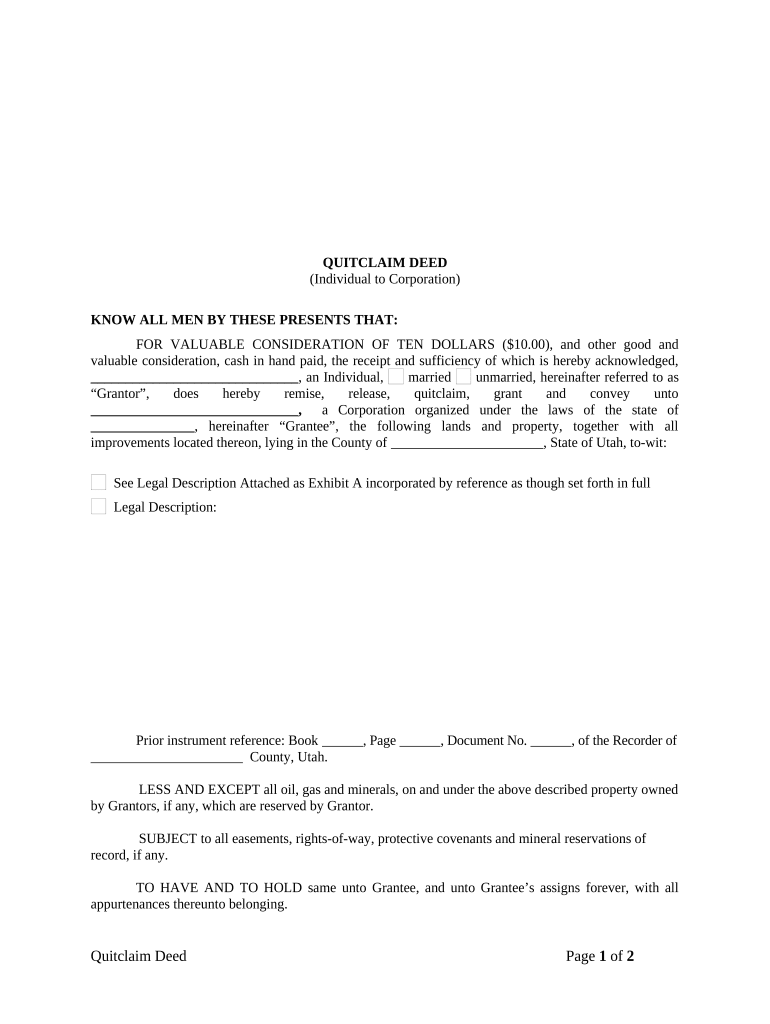
Begin by entering the Grantor's name and marital status in the designated fields. Ensure accuracy as this identifies the individual transferring property rights.
Next, input the Grantee's name, which is the corporation receiving the property. Specify the state of incorporation for clarity.
Fill in the legal description of the property being transferred. This may require referencing an attached Exhibit A for detailed information.
Complete any prior instrument references, including Book, Page, and Document numbers, if applicable.
Sign and date the document where indicated. Ensure that all Grantors sign if there are multiple parties involved.
Have a Notary Public witness your signature and complete their section to validate the deed.
Finally, provide contact information for both Grantor(s) and Grantee(s), ensuring tax statements are directed appropriately.
Start using our platform today to easily complete your Quitclaim Deed online for free!
Fill out Quitclaim Deed from Individual to Corporation - Utah online It's free
Because of the lack of title guarantees, quitclaim deeds are most often used to transfer property between two parties who know and trust each other, such as family members.
When a corporation transfers ownership of property the deed must be signed?
0:18 2:05 It proves ownership and gets updated when property changes hands when a corporation transfersMoreIt proves ownership and gets updated when property changes hands when a corporation transfers property. They sign a deed this deed needs to be as official as a referees whistle.
What situations could a quitclaim deed not be used?
Because a quitclaim deed offers no protection for buyers, it should not be used during traditional real estate sales. There is no guarantee of a clear title. Instead, quitclaim deeds are used when there is a property transfer outside of a real estate sale.
What are the problems with a quit claim deed?
Since a quitclaim deed doesnt guarantee clear ownership, you might unknowingly transfer property with liens or other claims against it. This can lead to estate planning problems, especially if the grantor doesnt fully own the property or other family members dispute the transfer.
What are the downsides of a quitclaim deed?
3 Red Flags of Quitclaim Deeds Lack of Guarantee and Legal Protections. Using a quitclaim deed means accepting uncertainties about the ownership and limited legal protections. Inadequate Due Diligence. Due diligence plays a crucial role in any property transaction. Limited Recourse and Legal Remedies.
Related Searches
Quitclaim deed from individual to corporation utah templateQuitclaim deed from individual to corporation utah sampleQuitclaim deed from individual to corporation utah pdfQuitclaim deed from individual to corporation utah onlineQuitclaim deed from individual to corporation utah formQuitclaim deed from individual to corporation utah exampleQuitclaim deed from individual to corporation utah costUtah Quit Claim deed form pdf
Security and compliance
At DocHub, your data security is our priority. We follow HIPAA, SOC2, GDPR, and other standards, so you can work on your documents with confidence.
Self-filing the deed without an attorney is the most economical option for transferring real property title. However, it requires careful attention to detail. The Registers Office wont provide assistance or highlight mistakes in the paperwork.
Can a will override a quit claim deed?
A Valid Quitclaim Overrides the Wills Instructions The property was no longer Letitias to bequeath, regardless of anything written in a will before or after the quitclaim.
What is the quit claim deed law in Utah?
A quitclaim deed when executed as required by law shall have the effect of a conveyance of all right, title, interest, and estate of the grantor in and to the premises therein described and all rights, privileges, and appurtenances thereunto belonging, at the date of the conveyance.
Related links
UTAH v. UNITED STATES. | Supreme Court - Law.Cornell.Edu
349, which both authorized the Secretary of the Interior to issue a quitclaim deed to the State for the entire federal interest in the lake properties and
by W Deed Cited by 2 Quitclaim Deed - A quit claim deed conveys to the grantee and the grantees heirs and assigns in fee all of the legal or equitable rights the grantor has in
Cookie consent notice
This site uses cookies to enhance site navigation and personalize your experience.
By using this site you agree to our use of cookies as described in our Privacy Notice.
You can modify your selections by visiting our Cookie and Advertising Notice.