Type text, add images, blackout confidential details, add comments, highlights and more.
02. Sign it in a few clicks
Draw your signature, type it, upload its image, or use your mobile device as a signature pad.
03. Share your form with others
Send utah hvac contractor license via email, link, or fax. You can also download it, export it or print it out.
How to use or fill out HVAC Contract for Contractor - Utah with our platform
Ease of Setup
DocHub User Ratings on G2
Ease of Use
DocHub User Ratings on G2
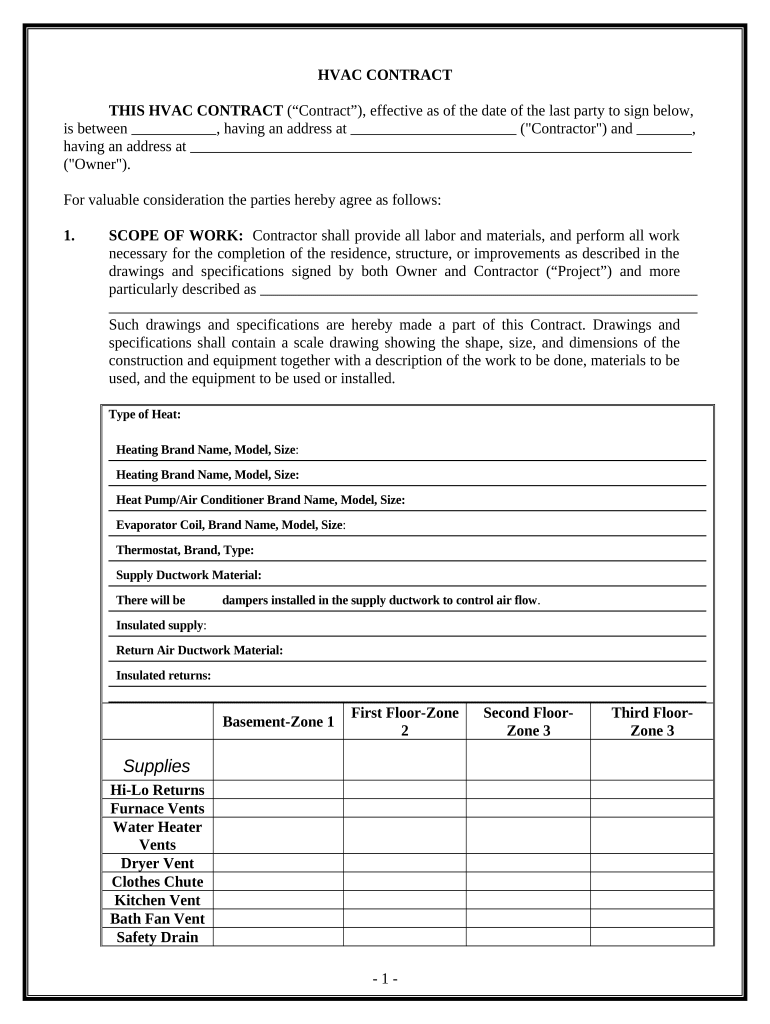
Click ‘Get Form’ to open the HVAC Contract for Contractor - Utah in the editor.
Begin by filling in the Contractor's name and address at the top of the form. This identifies who will be performing the work.
Next, enter the Owner's name and address. This section is crucial as it specifies who is hiring the contractor.
In the 'SCOPE OF WORK' section, detail all labor and materials required for the project. Be specific about equipment brands and models to avoid confusion later.
Fill in the 'WORK SITE' address where the project will take place, ensuring accuracy to prevent any legal issues.
Specify start and completion dates in the 'TIME OF COMPLETION' section, allowing both parties to have clear expectations.
Review sections on permits, insurance, and changes to scope carefully. Ensure you understand your obligations regarding these areas.
Finally, sign and date at the bottom of the contract. Both parties should retain a copy for their records.
Start using our platform today to streamline your HVAC contract process for free!
Fill out HVAC Contract for Contractor - Utah online It's free
Whats Required: Qualifiers must hold RMGA or equivalent certification Passage of the Utah Business and Law Exam and HVAC (H100) Exam through Prov Two (2)Read more
Aug 18, 2025 The goal of this contract is to ensure all covered equipment operates safely, efficiently, and in compliance with applicable health, safety, andRead more
Early incorporation of a green remediation strategy into project documents such as a feasibility study and cleanup service contract can help attain costRead more
Cookie consent notice
This site uses cookies to enhance site navigation and personalize your experience.
By using this site you agree to our use of cookies as described in our Privacy Notice.
You can modify your selections by visiting our Cookie and Advertising Notice.