




Definition and Meaning of Statutory Declaration
A statutory declaration is a legally binding document made by an individual to affirm the truthfulness of certain statements. Unlike an affidavit, which is sworn before an authorized person, a statutory declaration generally requires the declarant to sign the document in front of an eligible witness. The purpose of a statutory declaration is to provide a formal assertion of facts, often used for legal or administrative purposes.
Importantly, the content of a statutory declaration must be truthful, as false declarations can lead to legal penalties. In the United States, statutory declarations are recognized at both state and federal levels, and each jurisdiction may have specific requirements regarding format and witness eligibility. The core elements typically included are:
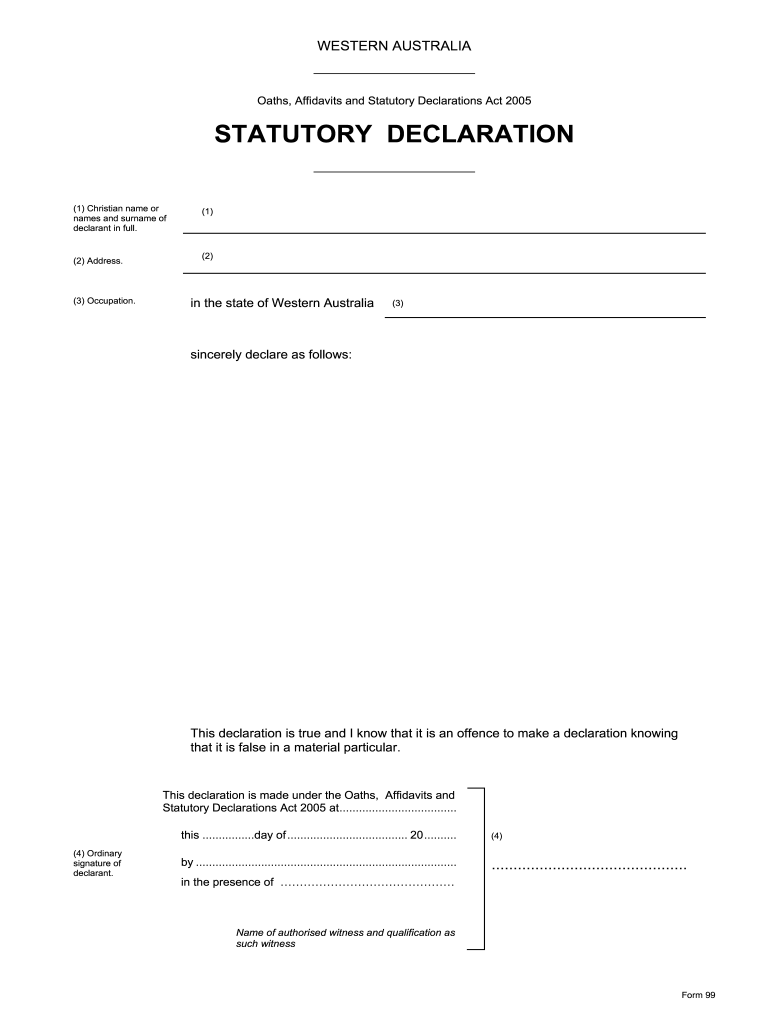
- Declarant's full name and address
- The factual statements being affirmed
- The signature of the declarant
- The signature and details of the witness
Understanding the definition of a statutory declaration is vital for ensuring compliance with legal requirements and for the effective use of this document in various contexts, such as legal proceedings, proving identity, or fulfilling administrative obligations.
Steps to Complete a Statutory Declaration
Completing a statutory declaration involves several important steps to ensure its validity. These steps may vary slightly depending on state-specific guidelines, but the core process remains consistent.
-
Gather Necessary Information: Collect all pertinent details that need to be declared, including facts supporting your assertion. Ensure that the information is accurate and complete.
-
Choose the Right Format: Depending on your state, use a designated template or statutory declaration form. Many jurisdictions offer specific formats for statutory declarations, which can often be found online.
-
Draft the Declaration: In the document, state the facts clearly and succinctly. It's crucial to avoid vague language. For instance, instead of saying "I know the area well," specify "I have lived in the area for five years."
-
Sign in Presence of a Witness: You must sign the declaration in front of an authorized witness who can confirm your identity. Eligible witnesses typically include lawyers, notaries public, or specific professionals as defined by local laws.
-
Finalize and Retain Copies: After signing, retain copies of the signed document for your records. This is important for future reference or in case the declaration is required by another party.
Understanding these steps is essential for anyone needing to use a statutory declaration in legal or administrative contexts, ensuring that the declaration holds validity when submitted for use.
Important Terms Related to Statutory Declaration
Understanding the terminology associated with statutory declarations is critical for accurately completing and utilizing them. Here are several key terms and their meanings:
-
Declarant: The individual making the declaration. They are responsible for ensuring the accuracy and truthfulness of the statements made.
-
Witness: An authorized individual who observes the declarant sign the declaration. Their role is to verify the identity of the declarant and attest to the legitimacy of the document.
-
Affidavit: A written statement confirmed by oath or affirmation, which can be similar in function to a statutory declaration but typically requires notarization.
-
Legal Penalties: Consequences faced if the declarant provides false information. These can include fines or criminal charges, depending on the jurisdiction.
-
Format: The prescribed structure or template for statutory declarations, which may vary by state but usually includes specific fields for information.
Awareness of these terms can clarify any confusion about the statutory declaration process and ensure better compliance with legal standards.
Legal Use of the Statutory Declaration
Statutory declarations serve various legal purposes and can be utilized in numerous scenarios. Recognizing these uses is valuable for determining when to leverage this document effectively.
-
Proof of Identity: In situations requiring identity verification, statutory declarations can serve as a credible source of personal verification when conventional forms of identification are unavailable.
-
Affirming Facts in Court: A statutory declaration can be presented in court as evidence to affirm specific facts, although it typically carries less weight than an affidavit.
-
Application Procedures: Many governmental and non-governmental applications require a statutory declaration, such as applications for licenses, permits, or in claims for welfare benefits.
-
Real Estate Transactions: In conveyancing or property transactions, statutory declarations may be used to disclose relevant information about property ownership or title.
Understanding the legal avenues where a statutory declaration may be applicable can empower individuals to utilize this document for their legal needs efficiently.
State-Specific Rules for the Statutory Declaration
Each state in the United States has different regulations and requirements concerning statutory declarations. It is essential to be aware of these variations to ensure compliance. Here are some notable aspects:
-
Witness Eligibility: The professionals permitted to witness a statutory declaration can differ by state. While a notary public may be acceptable in one state, others may require specific roles, such as a judge or attorney.
-
Format Specifics: Some states offer particular forms that must be used to create a valid statutory declaration. It is crucial to check the state’s official resources to obtain the correct template.
-
Filing Procedures: The methods for submitting a statutory declaration can vary. While some documents may simply require submission by mail, others may have electronic filing options or require in-person submission at designated offices.
-
Legal Applicability: The scope of situations in which a statutory declaration can be used legally may differ, with certain states limiting this document’s acceptance compared to others.
Being informed about state-specific rules can enhance the effectiveness of a statutory declaration and ensure adherence to local legal standards, reducing the risk of future complications.
Examples of Using the Statutory Declaration
Examples illustrate how a statutory declaration can be applied in real-world scenarios. Here are common situations where this document plays a crucial role:
-
Name Change Documentation: When an individual undergoes a name change, a statutory declaration may be used to affirm the change for legal purposes, such as updating identification documents or bank accounts.
-
Address Verification: Individuals may be required to provide proof of residence for various activities, such as enrolling children in school or applying for local government services. A statutory declaration can serve this purpose effectively.
-
Inheritance Claims: Family members asserting their rights to an inheritance may use a statutory declaration to confirm their relationship to the deceased and affirm the facts surrounding the inheritance.
-
Legal Statements in Court: In certain cases, individuals might use a statutory declaration to provide evidence for court proceedings when they are unable to provide a sworn affidavit.
Providing these examples can clarify the practical uses of statutory declarations across different situations, enhancing understanding of their significance in both personal and legal matters.