






Definition & Meaning of Waiver and Release From Liability for Adult for Individual Four-Wheeling
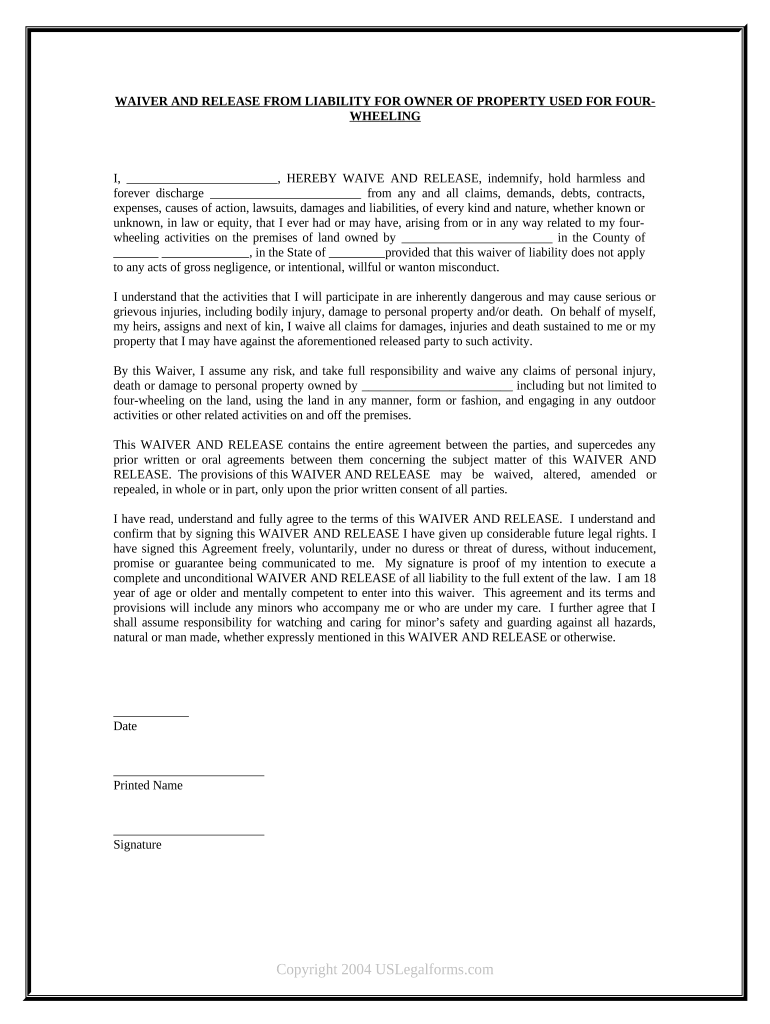
A Waiver and Release From Liability for Adult for Individual Four-Wheeling is a legal document that protects property owners and organizers of off-road activities from legal claims associated with accidents, injuries, or damages that may occur during these recreational pursuits. Participants voluntarily agree to relinquish their rights to sue the property owner or event organizer, acknowledging that four-wheeling carries inherent risks such as potential vehicle malfunction, rough terrain, and unpredictable weather conditions. This waiver is especially relevant in jurisdictions where recreational liability might otherwise hold property owners responsible for injuries that stem from activities on their land.
Key components of this waiver typically include:
- A clear statement outlining the intent to assume all associated risks.
- An acknowledgment that the participant is over the age of eighteen and has the capacity to enter into a binding agreement.
- A disclaimer that the waiver does not apply to cases of gross negligence or willful misconduct.
- Signature and date fields to validate the agreement.
How to Use the Waiver and Release From Liability for Adult for Individual Four-Wheeling
To effectively use the Waiver and Release From Liability for Adult for Individual Four-Wheeling, follow these essential steps:
- Read Thoroughly: Participants should carefully review the entire document, ensuring they understand the risks involved in four-wheeling and the extent to which they are waiving their legal rights.
- Discuss Concerns: If there are any uncertainties or concerns regarding the waiver's terms, participants should discuss it with the organizer or seek legal advice to clarify any questions.
- Complete Required Information: Participants must enter their personal information accurately, including full name, address, and emergency contact details, where required.
- Sign and Date: The last step involves signing and dating the waiver to affirm the participant's acknowledgment of the risks and agreement to the terms.
This process protects both the participant and the event organizers, ensuring that all parties are aware of the risks involved.
Steps to Complete the Waiver and Release From Liability for Adult for Individual Four-Wheeling
Completing the Waiver and Release From Liability for Adult for Individual Four-Wheeling is vital for both participants and organizers. The steps to ensure a thorough completion are as follows:
- Obtain the Waiver: Get the most up-to-date version of the waiver form from a reliable source, such as an event organizer or legal resource.
- Fill in Your Information: Provide necessary personal details, which may include:
- Full legal name
- Address
- Phone number
- Email address
- Acknowledgment of Risks: Read the section outlining the risks associated with four-wheeling. Confirm your understanding by initialing next to this statement, if required.
- Signature: Clearly sign the waiver, indicating that you agree to the terms. Ensure your signature matches any identification you may present.
- Date the Form: Write the date of signing to provide a timestamp of when the agreement was made.
Following these steps helps mitigate misunderstandings and legal complications that could arise from the participant's involvement in four-wheeling activities.
Important Terms Related to Waiver and Release From Liability for Adult for Individual Four-Wheeling
Familiarity with specific legal terms within the Waiver and Release From Liability for Adult for Individual Four-Wheeling can enhance understanding and ensure legal effectiveness. Important terms include:
- Assumption of Risk: A principle indicating that the participant acknowledges and accepts the inherent dangers of the activity.
- Liability: The legal responsibility of an individual or organization to compensate for harm or injury.
- Negligence: Failure to take proper care resulting in damage or injury to another. This waiver excludes claims arising from negligence or willful misconduct on the part of the property owner.
- Informed Consent: A process through which participants are provided with sufficient information about risks to make a knowledgeable decision.
- Binding Agreement: A legal contract that is enforceable in a court, provided the terms are lawful and agreed to by all parties.
Understanding these terms aids participants in making informed decisions and recognizing the seriousness of the waiver they are signing.
Legal Use of the Waiver and Release From Liability for Adult for Individual Four-Wheeling
The legal enforceability of a Waiver and Release From Liability for Adult for Individual Four-Wheeling is contingent upon several factors:
- Clarity of Language: The waiver must be written in clear and understandable language, allowing participants to comprehend their rights and the legal implications of signing.
- No Coercion: Participants must enter into the agreement voluntarily, without any pressure or coercive tactics from event organizers.
- Compliance with State Laws: Varying state laws may dictate specific requirements for liability waivers. It is crucial for the waiver to adhere to these rules to be enforceable.
- Not Covering Gross Negligence: Waivers generally do not protect against claims of gross negligence or willful misconduct. The document should specifically state this limitation.
By ensuring compliance with these legal aspects, property owners and event organizers can enhance the protective value of the waiver while safeguarding their interests in potential legal disputes.