Interrogatories personal injury sample 2026

Get Form
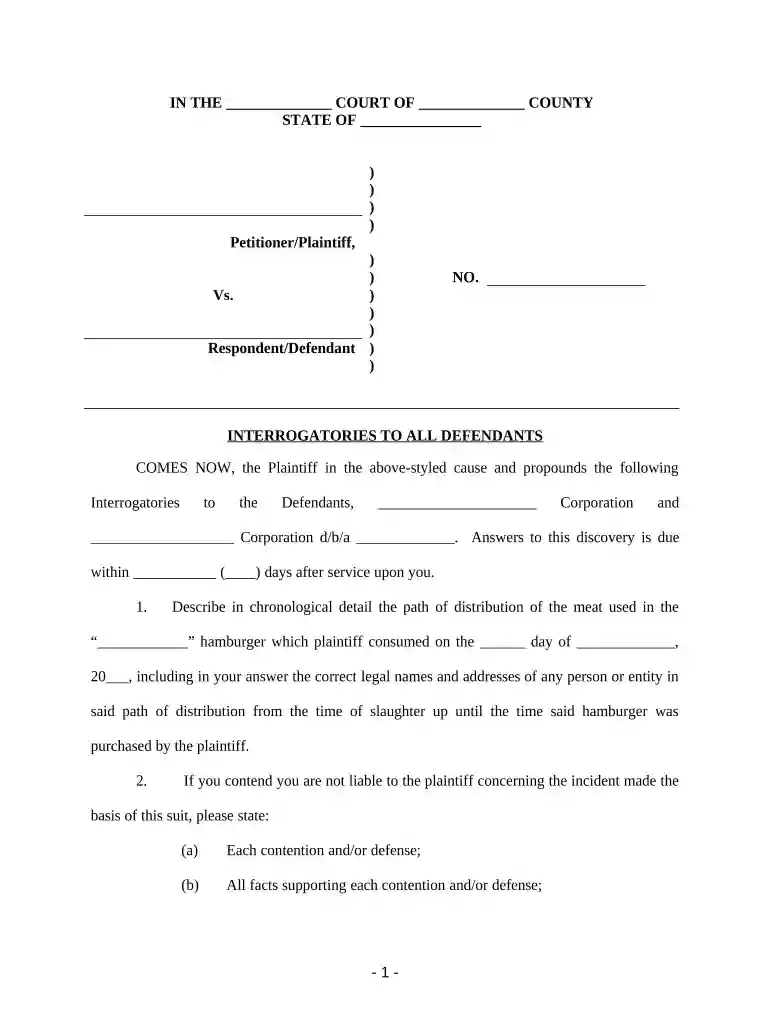
interrogatory examples Preview on Page 1

Here's how it works

01. Edit your interrogatory examples online
Type text, add images, blackout confidential details, add comments, highlights and more.

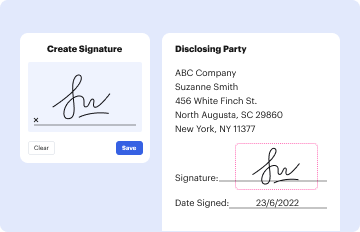
02. Sign it in a few clicks
Draw your signature, type it, upload its image, or use your mobile device as a signature pad.

03. Share your form with others
Send interrogatory questions examples via email, link, or fax. You can also download it, export it or print it out.

Definition and Purpose of Interrogatories in Personal Injury Cases

Interrogatories are a critical part of the discovery process in civil litigation, particularly in personal injury cases. Defined as a set of written questions directed at one party from another, they are designed to gather information relevant to the case. The responses to these interrogatories can inform legal strategies, assist in discovering facts, and establish potential evidence critical for trial preparation.

The purpose of using interrogatories in personal injury cases includes several key aspects:

  • Fact Gathering: Interrogatories can uncover essential details about the incident, behavior of the parties involved, and any prior claims related to the case.
  • Establishing Liability: They help clarify the responsibilities of each party, determining who may be held liable for damages.
  • Evidence Collection: Responses serve as documentation that can be used in court to support or contest claims.

How to Use the Interrogatories Personal Injury Sample

Using a personal injury interrogatories sample effectively requires careful consideration. Here’s how to maximize its utility:

  1. Customization: Modify the sample to reflect the specific circumstances of your case. Tailor the questions to target incidents, parties, and relevant facts unique to the situation.
  2. Clarity and Brevity: While ensuring comprehensiveness, keep questions clear and to the point. Ambiguity may lead to incomplete or evasive responses.
  3. Prioritize Relevance: Ensure that each question directly pertains to the incident or damages being claimed. Irrelevant questions can be seen as harassing or frivolous.

Utilizing examples of well-structured interrogatory questions can further aid in drafting queries that yield useful responses.

Types of Interrogatory Questions to Consider

  • Incident Details: Describe the events surrounding the injury. What were the conditions at the time?
  • Witness Information: Provide names and contact details of any witnesses.
  • Prior Claims: Have there been any previous claims related to similar incidents? Explain any outcomes.

Steps to Complete the Interrogatories Personal Injury Sample

Completing interrogatories requires a systematic approach to ensure thoroughness. Follow these steps:

  1. Review the Sample: Familiarize yourself with the provided interrogatories sample to understand the format and the type of information requested.
  2. Draft Responses: Begin answering each question, ensuring you respond completely and truthfully. If you do not have information, indicate so clearly.
  3. Include Supporting Documentation: Where applicable, reference any accompanying documents that substantiate your claims or responses.
  4. Proofread: Review the completed interrogatories for consistency and clarity. Errors can undermine the credibility of your responses.
  5. Submission: Follow the appropriate procedures for serving the interrogatories, which may involve filing them with the court or sending them directly to opposing counsel.

Important Terms Related to Interrogatories in Personal Injury Cases

Understanding key terminology surrounding interrogatories is crucial to navigating personal injury litigation successfully. Common terms include:

  • Interrogatories: Written questions posed by one party to another as part of the discovery process.
  • Plaintiff: The party initiating the lawsuit, typically the person claiming to have suffered an injury.
  • Defendant: The party being accused of causing the injury.
  • Discovery: The pre-trial phase in which parties exchange information through various methods, including interrogatories.
  • Evasive Response: An answer that does not fully address the question asked, often leading to additional legal complications.

Legal Use of Interrogatories in Personal Injury Cases

Interrogatories serve a legal purpose within the context of civil litigation. They adhere to established rules governed by the jurisdiction and can be pivotal in preparing for trial. Considerations regarding legal use include:

  • Compliance with Court Rules: Each state has specific regulations regarding the length, number, and form of interrogatories. Be sure to familiarize yourself with your state’s rules.
  • Admissibility: Responses provided in interrogatories can be used as evidence in court, especially if they lead to admissions or relevant disclosures.
  • Limits on Disclosure: There may be certain protections regarding attorney-client privilege or sensitive information that could limit the scope of inquiry.

Examples of Using Interrogatories in Personal Injury Cases

Practical applications of personal injury interrogatories can help illustrate their significance:

  1. Automobile Accident Cases: A plaintiff can ask the defendant to describe their speed, the sequence of events leading up to the crash, and their actions immediately following the accident.
  2. Slip and Fall Cases: Interrogatories could require the defendant to provide maintenance records for the premises where the incident occurred, shedding light on safety practices that may be relevant to liability.
  3. Product Liability Cases: In situations involving defective products, interrogatories can inquire about prior complaints related to the product or design changes made after the incident in question.

These examples reveal how tailored questions can gather critical information needed for resolving disputes in personal injury litigation.

be ready to get more

Complete this form in 5 minutes or less

Get form

Got questions?

We have answers to the most popular questions from our customers. If you can't find an answer to your question, please contact us.
Contact us
Draft Interrogatories Strategically Heres how to make your interrogatories more effective: Be specific Avoid general questions that invite objections or unclear answers. If youre using form interrogatories, customize them to fit your case instead of relying solely on standard templates.
Usually, lawyers use interrogatories to obtain detailed information about persons, corporations, facts, witnesses, and identity and locations of records and documents. Court rules usually limit the number of questions included in an interrogatory.
Interrogatories are lists of questions sent to the other party that s/he must respond to in writing. You can use interrogatories to find out facts about a case but they cannot be used for questions that draw a legal conclusion.
Interrogatories are written questions sent by one party in a lawsuit to another party in that same suit, which the responding party must answer under penalty of perjury. Interrogatories allow the parties to ask who, what, when, where and why questions, making them a good method for obtaining new information.
Interrogatories allow the parties to ask who, what, when, where and why questions, making them a good method for obtaining new information.

Security and compliance

At DocHub, your data security is our priority. We follow HIPAA, SOC2, GDPR, and other standards, so you can work on your documents with confidence.

Learn more

People also ask

How to fill out Form Interrogatories Fill in basic information at the top of the form. Provide basic information about your case. Select the questions. On Page 2, check the box next to each question you want to ask your spouse to answer. Make copies. Make 1 copy of the completed Form Interrogatories Family Law.
Clear and Succinct Language: Writing in an easy-to-understand way without using complex legal terms. Leading Questions: Questions that suggest the desired answer and can be seen as an attempt to influence the partys response. Motion to Compel: A legal request to force the opposing party to answer the interrogatories.
Ask for a court order If the other person does not respond, or their response is still incomplete, you can ask the court to order them to respond. You have 45 days from the service of the most recent responses to ask the court to make an order requiring an answer.

Related links