
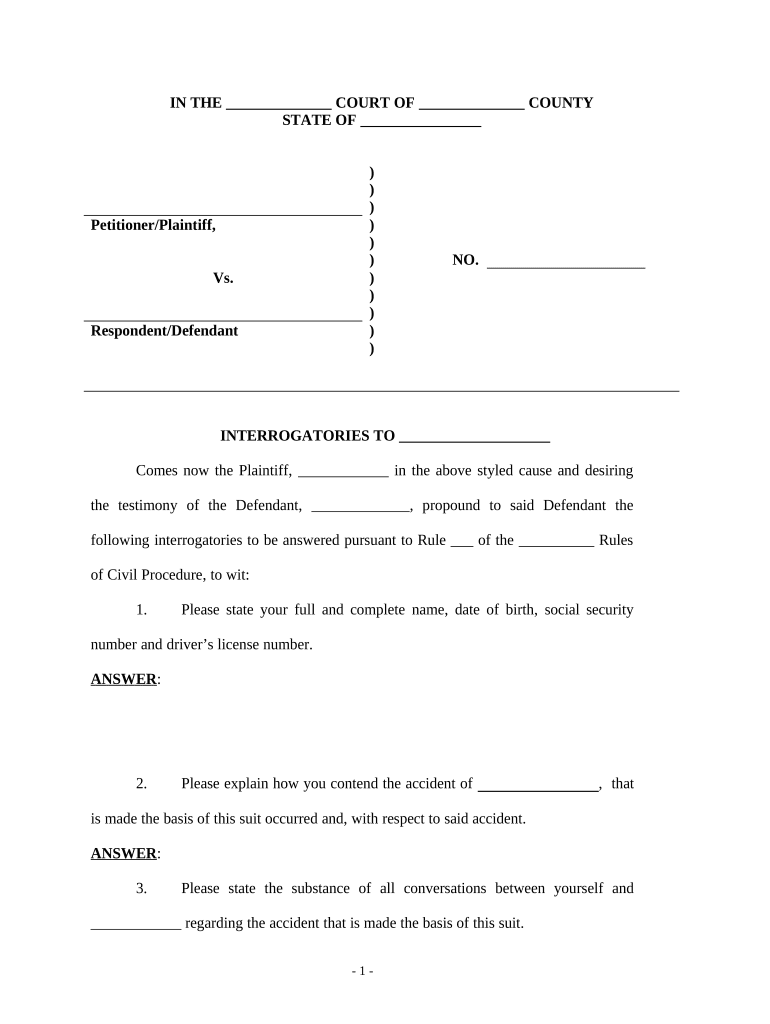







Definition and Purpose of the Interrogatories Defendant Form
The interrogatories defendant form is a legal document used in civil litigation that requires a defendant to respond to a series of questions posed by the plaintiff. These questions typically seek to gather information relevant to the case, enabling the plaintiff to build a stronger argument by obtaining facts directly from the defendant. The items covered in such questions can include personal background details, specifics about the incident in question, witness information, and any prior legal disputes that may be relevant.
This form is essential for the discovery phase of a lawsuit, where parties exchange information to prepare for trial. By using the interrogatories defendant form, plaintiffs can compel defendants to provide clarifying information that may not be readily available through other means. Each response must be made under oath, giving the answers legal weight that can impact the case's outcome.
How to Use the Interrogatories Defendant Form
To effectively use the interrogatories defendant form, one must follow several steps:
- Select Relevant Interrogatories: Choose questions that are pertinent to your case. Tailor them to gather essential details that support your legal position.
- Provide Identification Information: Clearly state the parties involved, including the plaintiff and defendant names, case number, and court details.
- Draft the Form: Fill out the form with the appropriate interrogatories, ensuring clarity and legal language.
- Serve the Interrogatories: Deliver the completed form to the defendant, typically through their attorney. This may be done via mail or electronic delivery, depending on local rules.
- Await Responses: The defendant is generally required to respond within a specified time frame, often 30 days. Review their answers closely for completeness and accuracy.
The process of utilizing this form plays a crucial role in striving for a favorable resolution in legal matters.
Key Elements of the Interrogatories Defendant Form
Understanding the key elements of the interrogatories defendant form is vital for effective legal practice. Key components typically include:
- Case Information: Details about the lawsuit, including jurisdiction, court, and associated parties.
- Interrogatory Questions: Each question must be clear, concise, and relevant to the case.
- Response Space: Ample space should be provided for defendants to articulate their answers thoroughly.
- Verification Clause: A statement confirming that the responses are made under penalty of perjury.
- Signature Lines: Spaces for signatures of the responding party and their legal representative, affirming the legitimacy of the responses.
These components ensure that the form meets legal requirements and facilitates the exchange of information.
Who Typically Uses the Interrogatories Defendant Form?
The interrogatories defendant form is primarily used within the legal context by the following parties:
- Plaintiffs: Individuals or entities starting litigation who need to gather information from the defendant to substantiate their claims.
- Defense Attorneys: Legal representatives who receive these forms and are responsible for advising their clients on how to respond accurately and comprehensively.
- Judges: In cases where disputes arise over the responses, judges may review the form and the completeness of the answers as part of pre-trial rulings.
Understanding who utilizes this form helps clarify its importance in the discovery process and its role in civil litigation.


Examples of Using the Interrogatories Defendant Form
Practical examples illustrate how the interrogatories defendant form can be employed within various contexts:
- Personal Injury Case: In a car accident lawsuit, the plaintiff may ask the defendant to describe the circumstances surrounding the accident, any traffic violations, and the identities of witnesses.
- Contract Disputes: In a breach of contract scenario, one party might request the other to detail all communications relating to the agreement and specify the reasons for non-compliance with the contract terms.
- Property Disputes: When disputing property boundaries, the plaintiff might seek information about any prior ownership claims or relevant agreements concerning land use.
These examples highlight the form’s versatility in addressing diverse legal questions, providing essential disclosures that aid in case building.
Legal Use of the Interrogatories Defendant Form
The interrogatories defendant form must be used in accordance with established legal protocols to ensure compliance and validity. It is governed by the rules of civil procedure relevant to the jurisdiction where the case is filed. Key considerations include:
- Timeliness: Adhering to deadlines for serving and responding to interrogatories is critical. Failure to respond on time may result in penalties, including court sanctions.
- Relevance: All questions must be relevant to the claims and defenses in the case. Irrelevant questions can lead to objections and may be stricken from the record.
- Limitations on Number of Questions: Some jurisdictions impose limits on the number of interrogatories that can be served. Awareness of these limits helps prevent overreach and ensures that the process remains manageable.
Following these legal guidelines is essential for the interrogatories defendant form to serve its purpose effectively in litigation.




