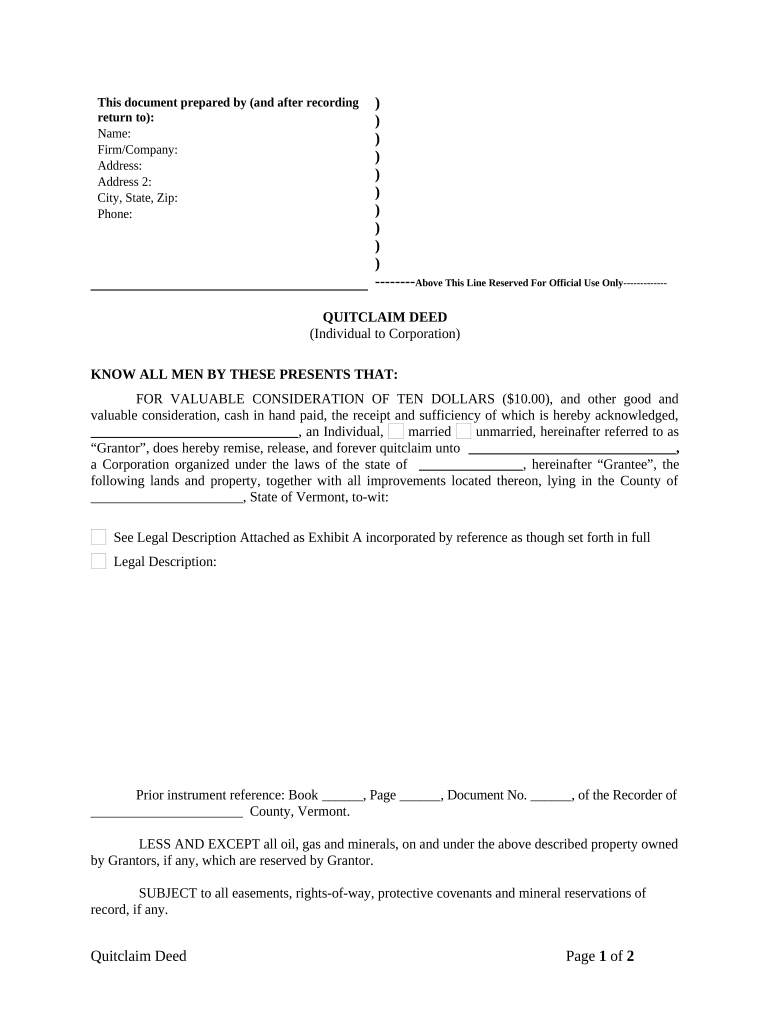
How to File a Quitclaim Deed in Vermont Step 1: List the Introductory Details. Step 2: Note the Consideration. Step 3: Write Both Parties Information. Step 4: Add the Propertys Legal Description. Step 5: Sign the Deed. Step 6: Complete the Transfer Tax Form. Step 7: File the Deed.
What is the usual reason for using a quitclaim deed?
The average cost (i.e., legal fees) for a lawyer to prepare and file a quitclaim deed is $520.00. This cost point come from recent quitclaim projects on the ContractsCounsel platform across all US states. Note, this does not include any fees to file at the county clerks office, which can range from $10 to $100.
What are the disadvantages of a quit claim deed?
The quitclaim deed simply transfers any interest they may have to the other party. Because of the lack of title guarantees, quitclaim deeds are most often used to transfer property between two parties who know and trust each other, such as family members.
When a corporation transfers ownership of property the deed must be signed?
0:18 2:05 It proves ownership and gets updated when property changes hands when a corporation transfersMoreIt proves ownership and gets updated when property changes hands when a corporation transfers property. They sign a deed this deed needs to be as official as a referees whistle.
Related Searches
Quitclaim deed from individual to corporation vermont templateQuitclaim deed from individual to corporation vermont sampleQuitclaim deed from individual to corporation vermont pdfQuitclaim deed from individual to corporation vermont exampleQuitclaim deed from individual to corporation vermont formQuitclaim deed from individual to corporation vermont costVermont Quit claim deed form
Security and compliance
At DocHub, your data security is our priority. We follow HIPAA, SOC2, GDPR, and other standards, so you can work on your documents with confidence.
(Include here, if any, a) Quit Claim Deed of (Person) dated (Date) and recorded in (Location). The following Rights of Way and Easements are annotated in the
This explanation applies only to the underlying legal right
The basic covenants contained in all Vermont warranty deeds are as follows: seisin, right to convey, freedom from encumbrances and defense of title. These terms
Cookie consent notice
This site uses cookies to enhance site navigation and personalize your experience.
By using this site you agree to our use of cookies as described in our Privacy Notice.
You can modify your selections by visiting our Cookie and Advertising Notice.