




01. Edit your ct pardon application online
Type text, add images, blackout confidential details, add comments, highlights and more.

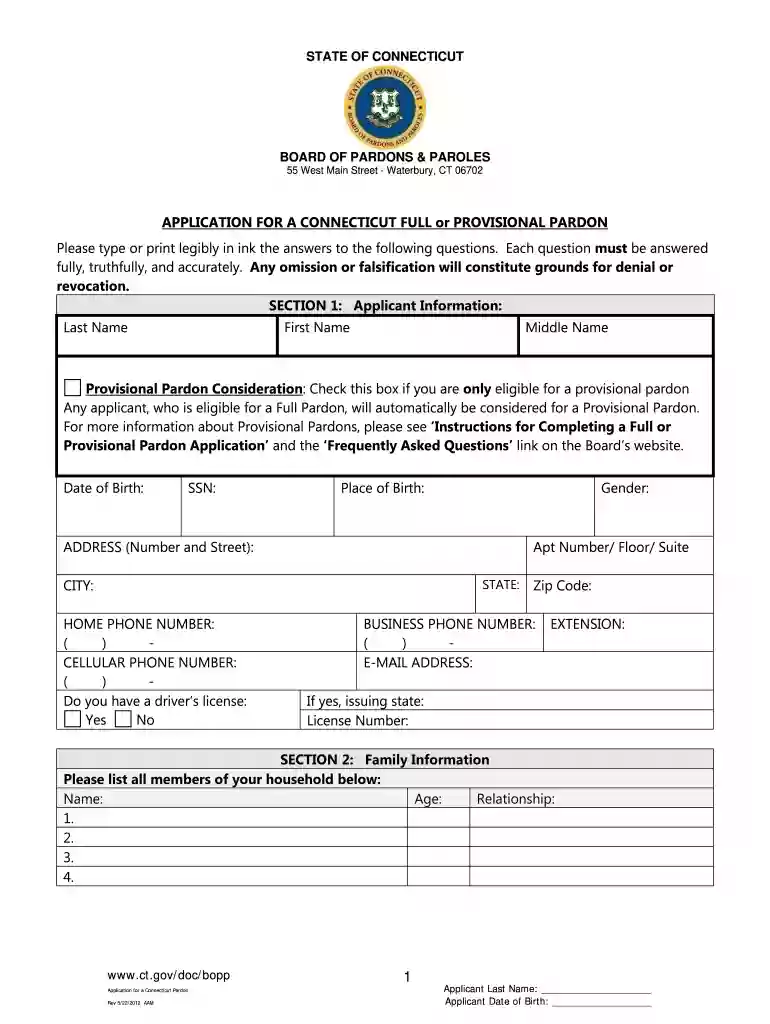
Type text, add images, blackout confidential details, add comments, highlights and more.

Draw your signature, type it, upload its image, or use your mobile device as a signature pad.

Send ct pardon portal login via email, link, or fax. You can also download it, export it or print it out.
The Connecticut pardon application is a formal request to the Connecticut Board of Pardons and Paroles seeking relief from the consequences of a criminal conviction. This application is crucial for individuals who seek to restore certain rights, such as voting or employment opportunities, that may have been lost due to their criminal history.
The application requires detailed personal information and reflections on the applicant's life post-conviction. Below are the critical sections included in the CT pardon application:
Personal Information: Applicants must provide their full name, address, date of birth, and social security number. This section establishes the identity of the individual seeking the pardon.
Criminal History: This part of the application requires a disclosure of all arrests and convictions, including dates and charges. Applicants must be transparent about their criminal record as it directly influences the review process.
Reasons for Seeking a Pardon: Applicants must articulate the reasons behind their request for a pardon. This narrative should express personal growth and how the pardon will positively impact their life.
Employment and Community Involvement: This section highlights the applicant’s contributions to society after their conviction, including job history, community service, and any rehabilitation efforts. This information is vital for the board to assess the applicant’s character.
In addition to the application form, several supporting documents are often required to bolster the request:
References: A list of people who can vouch for the applicant’s character and contributions to the community is essential. This could include employers, mentors, or community leaders.
Background Check Authorization: Applicants may need to authorize a background check as part of the review process, allowing the board to verify stated information.
Proof of Rehabilitation: Certificates from rehabilitation programs, educational achievements, or letters of support from counselors could be beneficial in demonstrating personal progress.
The CT pardon application can be submitted online. Here are the key steps involved:
After submission, the review process begins. The Connecticut Board of Pardons and Paroles will consider various factors:
The entire review and approval process may take several months. Applicants should consider following up through the CT pardon portal for updates on their application status.
While applying for a pardon may seem straightforward, applicants often face several challenges:
Being aware of these common pitfalls can help individuals prepare a more robust application and potentially increase their chances of receiving a pardon.
Understanding the specifics of the CT pardon application process enhances the chances of a successful outcome. Applicants should be diligent in providing accurate information, gathering supporting documentation, and clearly articulating their reasons for seeking a pardon. This thoroughness not only aids in effectively filing the application but also presents the applicant in the best light before the board.
At DocHub, your data security is our priority. We follow HIPAA, SOC2, GDPR, and other standards, so you can work on your documents with confidence.
Apply for an Absolute Pardon by visiting the Boards ePardons Portal below. IMPORTANT NOTES: Once you begin your application, you will have six (6) monthsRead more
You can apply for an expungement or absolute pardon 3 years after the date of your most recent misdemeanor conviction and/or 5 years after the date of your mostRead more
Entities Held To Be Agencies Subject to FOIA The Defense Nuclear Safety Board The Government Printing Office The Council on Environmental Quality The CostRead more


