Type text, add images, blackout confidential details, add comments, highlights and more.
02. Sign it in a few clicks
Draw your signature, type it, upload its image, or use your mobile device as a signature pad.
03. Share your form with others
Send it via email, link, or fax. You can also download it, export it or print it out.
How to use or fill out registration rights agreement with our platform
Ease of Setup
DocHub User Ratings on G2
Ease of Use
DocHub User Ratings on G2
Click ‘Get Form’ to open the registration rights agreement in the editor.
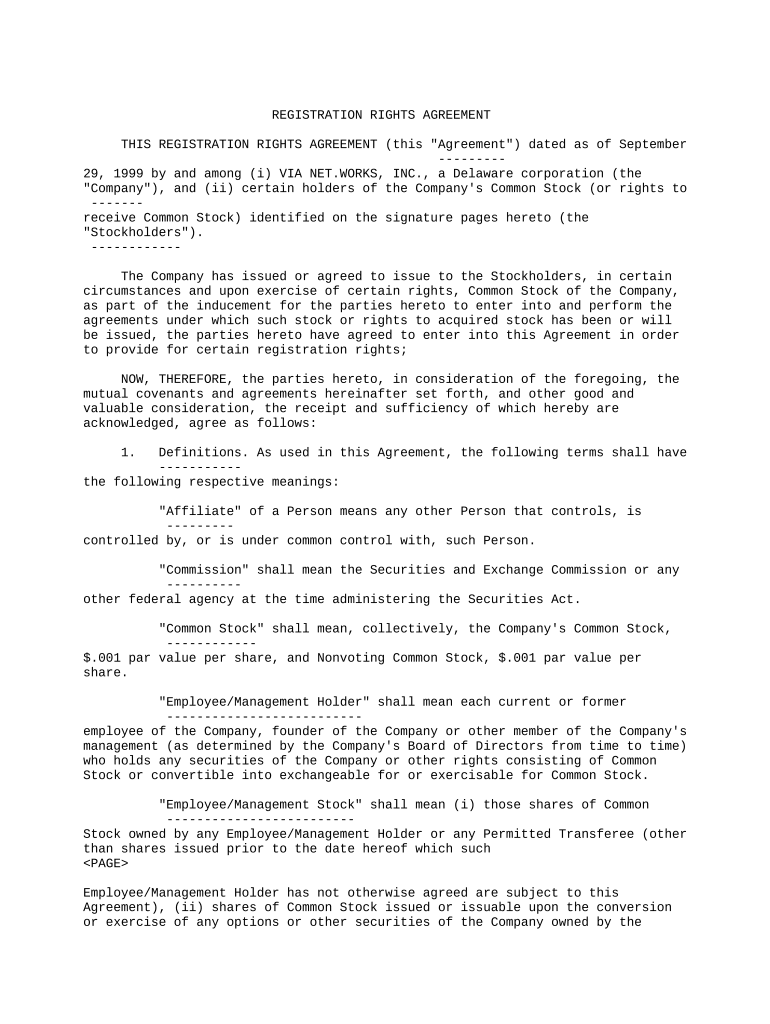
Begin by filling in the date at the top of the document. This is crucial as it establishes the effective date of the agreement.
Identify and enter the names of the parties involved, including 'VIA NET.WORKS, INC.' and the Stockholders listed on the signature pages.
Proceed to Section 1, where you will define key terms such as 'Common Stock' and 'Registrable Securities'. Ensure that all definitions are accurately filled out according to your specific context.
In Section 2, outline any requests for inclusion in Piggyback Registrations. Make sure to specify which securities you wish to include.
Review Sections 3 through 9 carefully, ensuring all obligations and rights are clearly understood and filled out as necessary.
Finally, sign and date at the end of the document. You can easily add signatures using our platform's signing feature.
Start editing your registration rights agreement online for free today!
Fill out registration rights agreement online It's free
Registration rights agreement templateRegistration rights agreement sampleRegistration rights agreement pdfRegistration rights agreement exampleDemand registration rightsPiggyback registration rightsRule 144
Security and compliance
At DocHub, your data security is our priority. We follow HIPAA, SOC2, GDPR, and other standards, so you can work on your documents with confidence.
Jan 8, 2018 (i) Subject to the terms and conditions of this Agreement, the Company covenants and agrees that as promptly as practicable after the closing ofRead more
Cookie consent notice
This site uses cookies to enhance site navigation and personalize your experience.
By using this site you agree to our use of cookies as described in our Privacy Notice.
You can modify your selections by visiting our Cookie and Advertising Notice.