




01. Edit your personal management merit badge worksheet online
Type text, add images, blackout confidential details, add comments, highlights and more.

Type text, add images, blackout confidential details, add comments, highlights and more.

Draw your signature, type it, upload its image, or use your mobile device as a signature pad.

Send personal management merit badge budget template via email, link, or fax. You can also download it, export it or print it out.
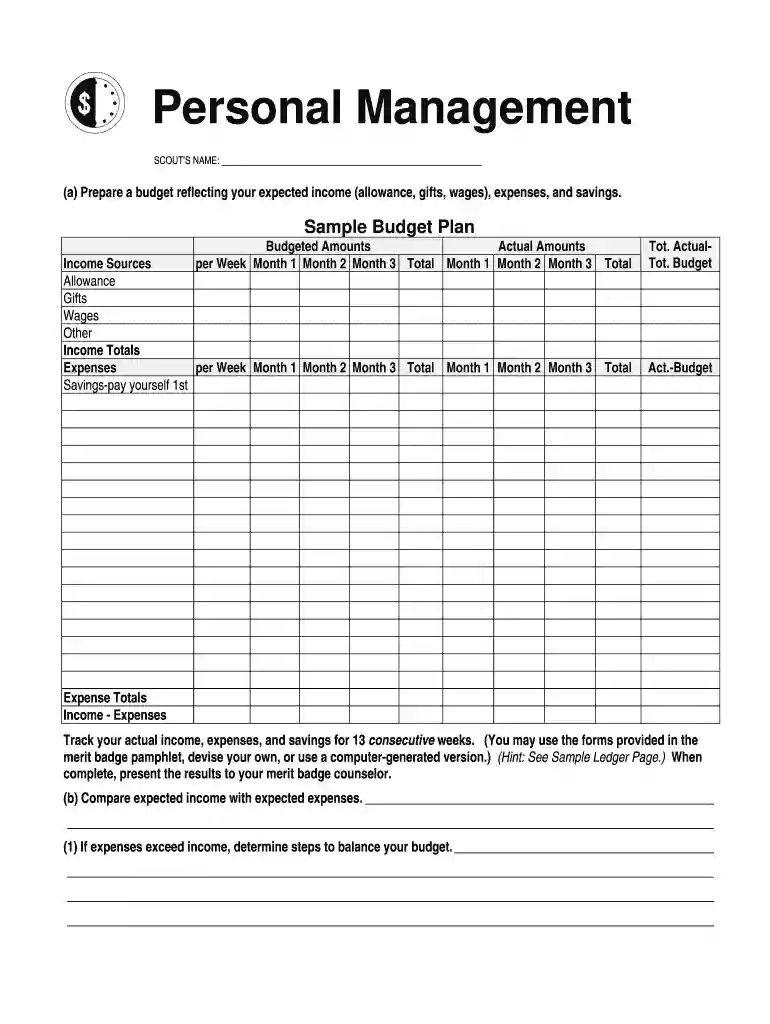
The personal management merit badge Excel spreadsheet serves as an essential tool for scouts pursuing financial literacy and responsibility. This structured approach allows scouts to track their income, expenses, and savings over a set period, enabling them to fulfill merit badge requirements effectively.
A primary function of the personal management merit badge spreadsheet is its budgeting capability. The template typically includes designated sections for both expected and actual financial activities, spanning categories such as:
This approach to budgeting fosters a proactive financial mindset, urging scouts to compare planned budgets against their real expenditures and adjust their spending or savings strategies accordingly.
In addition to forecasting budgets, scouts are tasked with documenting their actual financial activities for a period of thirteen weeks. This tracking process includes:
This hands-on engagement with personal finance helps scouts cultivate critical skills in financial tracking and management.
The merit badge requirements emphasize understanding how to respond when spending exceeds income. Scouts should consider:
This approach to managing finances helps prepare scouts for real-world financial challenges.
In addition to the budget tracking component, scouts can enhance their skills by creating fillable forms related to their personal management tasks. This aspect of the merit badge experience includes:
These elements make the budgeting process more accessible and engaging for youth.
While the merit badge typically focuses on financial management, it’s also essential for scouts to understand the legal implications of their financial practices. Key considerations include:
This knowledge aids scouts in building a foundation for responsible financial practices in their future endeavors.
Examples of successful budget planning using the personal management merit badge spreadsheet provide valuable learning opportunities. Scouts can look to:
Using these templates, scouts can model their budgeting efforts, building confidence in their financial literacy.
Along with the merit badge requirements, scouts benefit from supplementary materials that enhance their understanding of personal finance. Resources might include:
Such resources foster a comprehensive understanding of personal management skills necessary for navigating the complexities of adult financial responsibilities.
In summary, the personal management merit badge Excel spreadsheet serves as a foundational tool for scouts, empowering them with essential skills in budgeting, tracking expenses, and understanding financial outcomes. By diligently engaging with this tool, scouts can successfully navigate the requirements of the badge, preparing them for responsible financial management in adulthood.
At DocHub, your data security is our priority. We follow HIPAA, SOC2, GDPR, and other standards, so you can work on your documents with confidence.
The student (spouse/parents) should answer all questions on the Verification Worksheet if that is being used to document household size, number in college and.Read more
This spreadsheet provides an overall summary of IT spending, by agency or department, for FY2003, FY2004, and FY2005. Each agency name is hyperlinked theRead more


