




Here's how it works

01. Edit your sba form 1919 online
Type text, add images, blackout confidential details, add comments, highlights and more.

02. Sign it in a few clicks
Draw your signature, type it, upload its image, or use your mobile device as a signature pad.

03. Share your form with others
Send form 1919 via email, link, or fax. You can also download it, export it or print it out.
How to use or fill out SBA Form 1919 with our platform

- Click ‘Get Form’ to open SBA Form 1919 in the editor.
- Begin with Section I, where you will provide the Applicant Business Legal Name, DBA or Tradename, and Primary Business Address. Ensure all fields are filled accurately.
- Next, enter the Applicant Business Tax ID and Phone Number. Include the Project Address if it differs from the primary address.
- Indicate the number of existing employees, jobs to be created, and jobs retained due to the loan. Clearly state the Amount of Loan Request and its Purpose.
- List all owners in the Small Business Applicant Ownership section, ensuring that ownership percentages total 100%. Attach additional sheets if necessary.
- Complete Section II for each principal associated with your business. This includes providing personal details such as Social Security Number, Date of Birth, and Home Address.
- Review all responses for accuracy before signing and dating at the bottom of each section. Ensure compliance with all required certifications.
Start using our platform today to streamline your SBA Form 1919 completion for free!
Fill out sba form 1919 online
It's free
It's free
See more sba form 1919 versions
We've got more versions of the sba form 1919 form. Select the right sba form 1919 version from the list and start editing it straight away!
Got questions?
We have answers to the most popular questions from our customers. If you can't find an answer to your question, please contact us.
Contact us
What disqualifies you from an SBA loan?
Disqualifications for an SBA loan include poor credit/financial history (defaults, recent bankruptcies, tax liens), insufficient cash flow/ability to repay, involvement in illegal or ineligible industries, being able to get credit elsewhere easily, unresolved federal debt, and owners being incarcerated or on parole/probation, along with a lack of owner equity in the business and certain lender conflicts. Financial Credit Issues Past loan defaults: Especially on federal loans or prior SBA loans. Poor credit: Low personal or business credit scores. Tax delinquency: Unresolved federal, state, or local tax issues. Insufficient cash flow: Not enough income to cover debt payments. Excess liquid assets: Having DocHub personal funds to self-finance. Unresolved federal debt: Delinquent student loans or other government debts. Business Owner Character Incarceration/Criminal History: Owners incarcerated, on parole, or indicted for certain felonies. Illegal Activities: Business involved in gambling, lending, or other illegal ventures. Ineligible Industries: Non-profits, speculative businesses, real estate investment, etc. Lender Conflict: Lender or CDC having equity in the borrowing business. Lack of Equity: Owner not investing personal funds/time into the business. Loan Business Purpose Issues Not Unbankable: Being able to get financing easily from other sources. Weak Business Plan: Poor market standing, lack of experience, or no sound purpose for funds. Not meeting size standards: Business is too large. AI can make mistakes, so double-check responsesTerms, conditions, and eligibility | U.S. Small Business AdministrationDec 5, 2024 Be an operating business. Operate for profit. Be located in the U.S. Be small under SBA size requirements. Not be a typSmall Business Administration (.gov)SBA Loan Automatic Disqualifications - NerdWalletOct 1, 2025 Perhaps a clearer way to think about it is that you shouldnt be able to reasonably get the credit elsewhere. Your persNerdWallet
What are the 5 SBA requirements of a small business?
The SBA requires small businesses to be for-profit, U.S.-based, independently owned, not dominant nationally, and meet specific size standards (based on employees or revenue) for their industry, often requiring SAM.gov registration and a solid business plan for loans, emphasizing factors like repayment capacity and good character for funding. Here are 5 core SBA requirements for a small business: For-Profit U.S. Based: Must be organized for profit, have a place of business in the U.S., and operate primarily within the U.S. or its territories. Independent Not Dominant: Must be independently owned and operated, and not be dominant in its field nationally. Meet Size Standards: Must fit within SBAs size standards for its specific industry, determined by average annual receipts or number of employees, which vary DocHubly by sector. Good Character Viability: For loans, must demonstrate good character, a sound business purpose, and the ability to repay the loan (the 5 Cs: Capacity, Collateral, Capital, Condition, Cash Flow). Registration (for Contracting): Must be registered and active in the System for Award Management (SAM.gov) to be eligible for federal contracts. Key Takeaway: While these are general requirements, specific programs (like 8(a), VOSB, or loan types) have additional, stricter eligibility criteria. AI can make mistakes, so double-check responsesTable of size standards | U.S. Small Business AdministrationDec 26, 2024Small Business Administration (.gov)Terms, conditions, and eligibility | U.S. Small Business AdministrationDec 5, 2024 Eligibility requirements While the vast majority of businesses are eligible for financial assistance from SBA, some areSmall Business Administration (.gov)
Is the SBA form 1920 still required?
SBA Form 1920 has been retired as of August 1, 2023. This form remains posted for reference only.
Is it too late to apply for an SBA disaster loan?
WASHINGTON The U.S. Small Business Administration (SBA) is reminding eligible businesses, private nonprofits, and residents in California of the Feb. 9, 2026 deadline to apply for low interest federal disaster loans to offset physical damage caused by the Pack Fire occurring Nov. 13-Dec. 4, 2025.Jan 12, 2026
Do I need to pay back an SBA loan?
Yes, you must pay back most SBA loans, as they are legitimate loans with a legal obligation to repay principal and interest, similar to a bank loan, with terms and monthly payments. The main exception is the COVID-19 EIDL Advance, which was a grant and didnt need repayment, but standard SBA loans (like 7(a) or 504) and COVID EIDL loans require full repayment, with severe consequences for default, including asset seizure or Treasury collection. Standard SBA Loans (7(a), 504, Microloans) Repayment Structure: Paid back monthly with principal, interest, and fees until the loan matures (e.g., up to 30 years for some disaster loans). Interest: Varies by loan type and rate (fixed or variable). Default Consequences: Lender collects, can foreclose on collateral, and pursue personal guarantees; the SBA may also collect from the Treasury. COVID-19 Economic Injury Disaster Loans (EIDL) EIDL Advances: The initial advance funds were grants and did not need to be repaid. EIDL Loans: The actual loan portion does need to be repaid, with payment deferrals and assistance options available, but its a debt. If You Cant Pay Contact Lender: Immediately talk to your lender to set up a revised plan. Offer in Compromise (OIC): You can propose settling the debt for less than you owe, but you must prove inability to pay, and both lender and SBA must agree. Default Consequences: Can ruin credit, lead to legal action, and potentially seizure of assets or future income/benefits. AI can make mistakes, so double-check responses7(a) loans | U.S. Small Business Administration - SBAMay 30, 2025 How do I pay back my 7(a) loan? Loan repayment terms vary according to several factors. Most 7(a) term loans are repaiSmall Business Administration (.gov)Manage your EIDL | U.S. Small Business Administration - SBASep 15, 2025 View loan balance and make payments. Create an account in the MySBA Loan Portal to monitor your loan status or to makeSmall Business Administration (.gov)
Security and compliance
At DocHub, your data security is our priority. We follow HIPAA, SOC2, GDPR, and other standards, so you can work on your documents with confidence.
Learn more


Related forms
Leave form
The document is a Request for Leave Form from Logistics Applications Inc., allowing employees to formally request time o ...
Download File - Black Warrior Bay Homeowners Association
The Black Warrior Bay Declaration outlines the covenants, conditions, restrictions, and easements governing the Black Wa ...
Ncl medical form
The document is a communication from Norwegian Cruise Line to a travel agency outlining the requirements for setting up ...
Self employment report form dhs 3336
The document is a Self-Employment Report Form designed for participants who are self-employed, requiring them to record ...
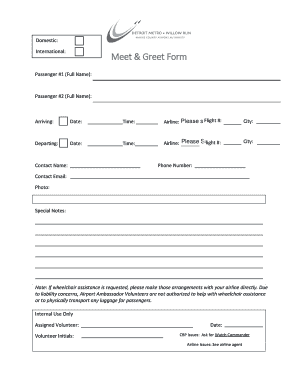
Meet and greet celebrity format
The document is a Meet & Greet Form designed for passengers arriving and departing from an airport. It collects essentia ...

Formulario 003 msp ecuador pdf
The document is a notification and epidemiological investigation form from the General Directorate of Health, specifical ...
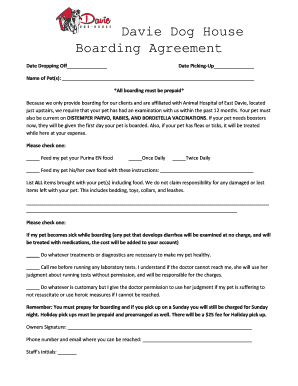
Davie dog house
The document is a boarding agreement for Davie Dog House, outlining the requirements and procedures for pet boarding. It ...
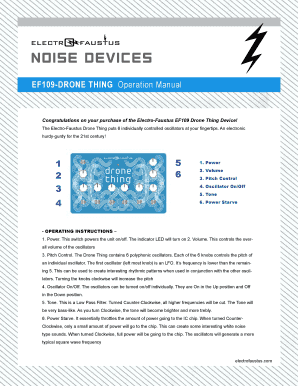
EF109-DRONE THING Operation Manual 1 2 3 4 5 6
The EF109-Drone Thing Operation Manual provides instructions for using the Electro-Faustus EF109 Drone Thing Device, whi ...
People also ask
What is the SBA form 1920?
The purpose of this form is to collect identifying information about the Lender, the Small Business Applicant (Applicant), the loan guaranty request, sources and uses of funds, the proposed structure and compliance with SBA Loan Program Requirements, as defined in 13 CFR 120.10.
Who needs to fill out the SBA form 1919?
Anyone applying for an SBA 7(a) loan will need to fill out SBA Form 1919. This includes all stakeholders or principals with at least 20% ownership in the business, trustors or anyone whos been hired to run the general operations of the business.May 9, 2025