221 disclosure 2026

Get Form
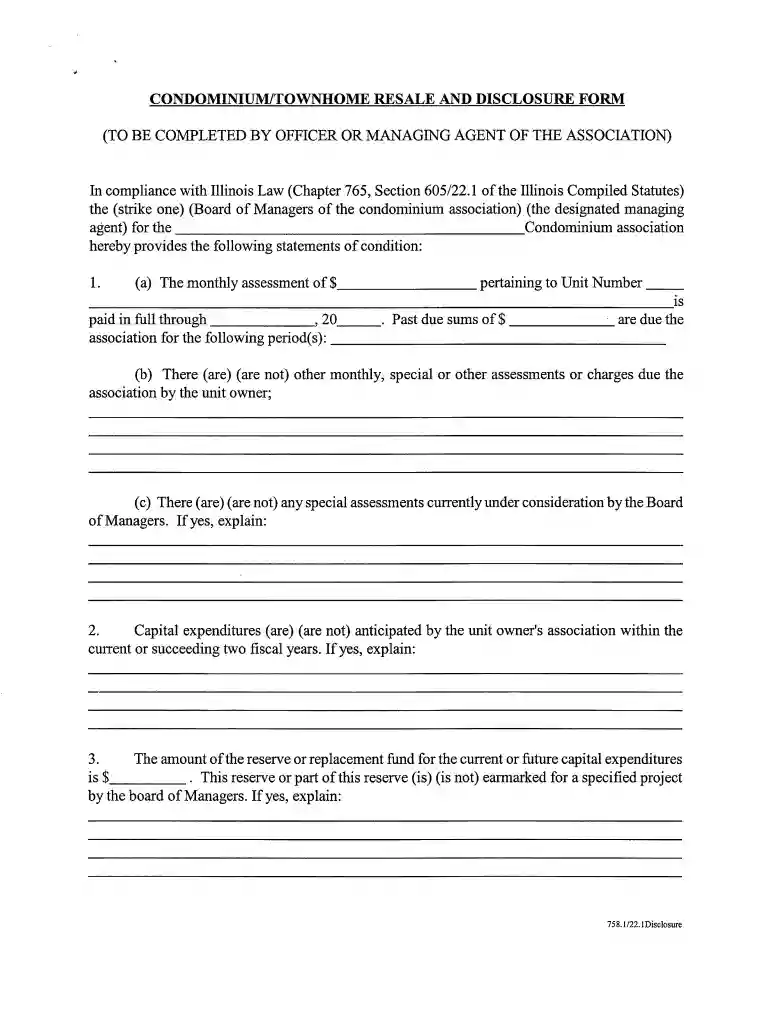
22 1 disclosure form illinois pdf Preview on Page 1

Here's how it works

01. Edit your 22 1 disclosure form illinois pdf online
Type text, add images, blackout confidential details, add comments, highlights and more.

02. Sign it in a few clicks
Draw your signature, type it, upload its image, or use your mobile device as a signature pad.

03. Share your form with others
Send illinois 22 1 disclosure form via email, link, or fax. You can also download it, export it or print it out.

Definition and Meaning of 221 Disclosure

The 221 disclosure, often referred to in certain contexts such as real estate transactions, serves as a detailed statement concerning the financial aspects and legal considerations relevant to a particular property or transaction. This form is crucial in ensuring transparency between parties involved in real estate deals, such as sellers, buyers, and agents. Typically, it includes various disclosures like property condition, any known issues, and specific obligations detailed under state law. The form aims to protect all parties by ensuring that pertinent information is shared upfront, reducing the risk of disputes post-transaction.

Key Components of the 221 Disclosure

  • Property Condition: This section details the current state of the property, including any repairs needed or issues that have been identified.
  • Legal Obligations: It outlines any restrictions or obligations tied to the property, affecting its use or future transactions.
  • Seller’s Representations: Sellers may declare their knowledge of specific defects or concerns, thus protecting themselves from potential legal repercussions.

How to Use the 221 Disclosure

Utilizing the 221 disclosure effectively requires an understanding of its purpose and components. The form should be filled out accurately and comprehensively to ensure all important details regarding the property are covered.

Steps to Effectively Use the 221 Disclosure

  1. Gather Information: Collect all relevant data regarding the property, including maintenance history and any legal obligations.
  2. Complete the Form: Be thorough while filling out each section to ensure that all necessary disclosures are made. Accuracy is paramount.
  3. Review with Legal Counsel: Especially in complex transactions, it's advisable to have a lawyer review the disclosures for compliance with state laws.
  4. Provide to All Relevant Parties: Ensure that buyers and agents receive copies of the completed form to maintain transparency.
  5. Keep Records: Maintain copies of the disclosure for your records and future reference, as it may be required in potential disputes.

Steps to Complete the 221 Disclosure

Completing the 221 disclosure requires careful attention to detail and an understanding of what information needs to be disclosed.

Detailed Breakdown of the Completion Process

  • Start with Basic Information: This includes the property address, ownership details, and the date of the disclosure.
  • Itemize Disclosure Items: Clearly state known issues, repairs needed, or past incidents that could impact the property’s value or safety. Examples include:
    • Roof repairs
    • Pest issues
    • Plumbing problems
  • Include Legal Obligations: Detail any zoning laws, easements, or other legal aspects affecting the property.
  • Sign and Date: Ensure that the seller signs and dates the disclosure to validate the information provided.

Why Should You Use the 221 Disclosure?

The 221 disclosure serves critical functions in real estate transactions, offering benefits to both buyers and sellers.

Importance of the 221 Disclosure

  • Transparency: It promotes honesty about the property, preventing misunderstandings and fostering trust between parties.
  • Legal Protection: Proper use of the form provides legal safeguards for sellers against potential future claims related to undisclosed issues.
  • Informed Decision-Making: Buyers benefit from having a comprehensive overview of the property’s status, enabling them to make informed purchasing decisions.

Who Typically Uses the 221 Disclosure?

The 221 disclosure is typically utilized by various stakeholders in real estate transactions.

decoration image ratings of Dochub

Common Users of the 221 Disclosure

  • Home Sellers: To disclose property conditions and any legal encumbrances to prospective buyers.
  • Real Estate Agents: To facilitate honest exchanges of information between clients.
  • Home Buyers: To obtain vital information that influences purchasing decisions.
  • Mortgage Lenders: They may require this form to ensure that buyers are fully aware of any potential issues before finalizing a loan.
decoration image

Important Terms Related to the 221 Disclosure

Understanding the terminology associated with the 221 disclosure is essential for proper usage.

Key Terms Defined

  • Disclosures: Required notifications about the property that must be shared with potential buyers.
  • Liability: Legal responsibility that sellers have for defects not disclosed before the sale.
  • Contingency: A condition that must be met for the sale to proceed, often involving the findings from the 221 disclosure.

State-Specific Rules for the 221 Disclosure

Regulations governing the 221 disclosure can vary significantly from state to state.

Overview of State Variations

  • Illinois: In Illinois, the 221 disclosure is mandated by law and includes specific items that must be reported to the buyer.
  • California: Different rules apply regarding what disclosures are required, reflecting state-specific legislation on real estate transactions.
  • Florida: Florida’s disclosures must align with unique regulatory requirements that differ from other states.

Understanding these state-specific rules ensures compliance and reduces risks associated with property transactions.

be ready to get more

Complete this form in 5 minutes or less

Get form

Got questions?

We have answers to the most popular questions from our customers. If you can't find an answer to your question, please contact us.
Contact us
What Must Be Listed In The Disclosure Statement When Selling A Property In Illinois? Plumbing Issues Defects. Structural Damage Repairs. Addressing HVAC Problems Concerns. Other Concerns That Require Disclosure. What To Do if Youve Discovered Problems After Purchasing a Home?
HOA disclosure documents are a collection of papers that outline the rules, regulations, financial health, and operational procedures of a homeowners association. These documents inform potential buyers about the community they are considering joining.
In Illinois, Section 22.1(a) of the Illinois Condominium Property Act describes the information that the owner must obtain from the board for inspection by a prospective purchaser, upon demand, in the event of any resale of a condominium unit by a unit owner other than the developer.
Illinois law requires sellers to disclose known defects, radon levels, and septic system conditions when selling as-is. Transparency in as-is sales builds buyer trust and prevents legal issues by sharing property condition and known problems.
The 22.1 Disclosure, a requirement under the Illinois Condominium Property Act, mandates that homeowners associations provide potential buyers with key information about the associations financial and operational health.

Security and compliance

At DocHub, your data security is our priority. We follow HIPAA, SOC2, GDPR, and other standards, so you can work on your documents with confidence.

Learn more
ccpa2
pci-dss
gdpr-compliance
hipaa
soc-compliance