Estate Planning Questionnaire and Worksheets - New York 2026

Get Form
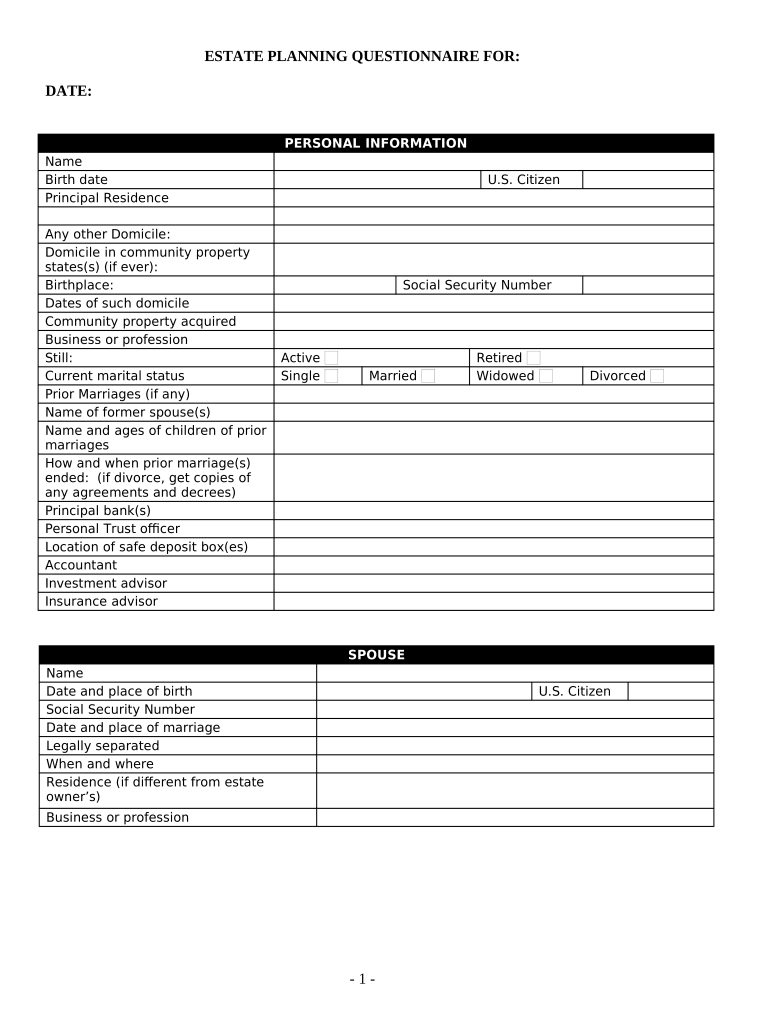
estate planning questionnaire Preview on Page 1

Here's how it works

01. Edit your estate planning questionnaire online
Type text, add images, blackout confidential details, add comments, highlights and more.
02. Sign it in a few clicks
Draw your signature, type it, upload its image, or use your mobile device as a signature pad.
03. Share your form with others
Send estate planning questionnaire and worksheets via email, link, or fax. You can also download it, export it or print it out.

How to use or fill out Estate Planning Questionnaire and Worksheets - New York with our platform

Form edit decoration
9.5
Ease of Setup
DocHub User Ratings on G2
9.0
Ease of Use
DocHub User Ratings on G2
  1. Click ‘Get Form’ to open the Estate Planning Questionnaire and Worksheets in the editor.
  2. Begin by filling out your personal information, including your name, birth date, and principal residence. Ensure accuracy as this data is crucial for your estate planning.
  3. Proceed to the section regarding your spouse's details. Input their name, date of birth, and social security number. If applicable, include any prior marriages.
  4. Next, detail your children and grandchildren. Specify relationships and any adoptions or stepchildren clearly to avoid confusion.
  5. In the 'Who Will Benefit Under Will' section, list beneficiaries along with their addresses and relationship to you. This ensures clarity in asset distribution.
  6. Complete the financial information sections meticulously. Document all assets such as real estate, stocks, bonds, and liabilities accurately for a comprehensive overview of your estate.
  7. Finally, review all entries for completeness before saving or sharing the document. Utilize our platform’s features to sign or distribute the completed form easily.

Start using our platform today to simplify your estate planning process for free!

be ready to get more

Complete this form in 5 minutes or less

Get form

Got questions?

We have answers to the most popular questions from our customers. If you can't find an answer to your question, please contact us.
Contact us
7 Common Inheritance Mistakes to Avoid Not Factoring in Potential Inheritance Taxes. Failing to Make a Budget. Spending Too Much. Not Paying Off Debts. Losing Other Income Sources. Not Saving Enough. Not Getting Expert Advice.
Beneficiaries of a trust typically pay taxes on distributions they receive from the trusts income. However, they are not subject to taxes on distributions from the trusts principal.
While placing your house in a trust offers many benefits, such as avoiding probate and planning for incapacity, there are potential drawbacks: Costs: Setting up and maintaining a trust can be expensive, requiring legal and administrative fees.
If thats what you thought, you would be wrong. Even if your will or other estate planning documents are more accurate and up to date, the beneficiary designation that you entered as part of your plan enrollment form takes precedence.
Estate Planning Questionnaire Preparation Family Information. The contact information for you, or you and your spouse, as well as the names and dates of birth for any children you and/or you spouse may have. Successor Trustee/Personal Representative. Beneficiaries. Powers of Attorney. Assets Debts.

People also ask

One of the biggest mistakes parents make when setting up a trust fund is choosing the wrong trustee to oversee and manage the trust. This crucial decision can open the door to potential theft, mismanagement of assets, and family conflict that derails your childs financial future.

Related links