Inventory checklist 2026

Get Form
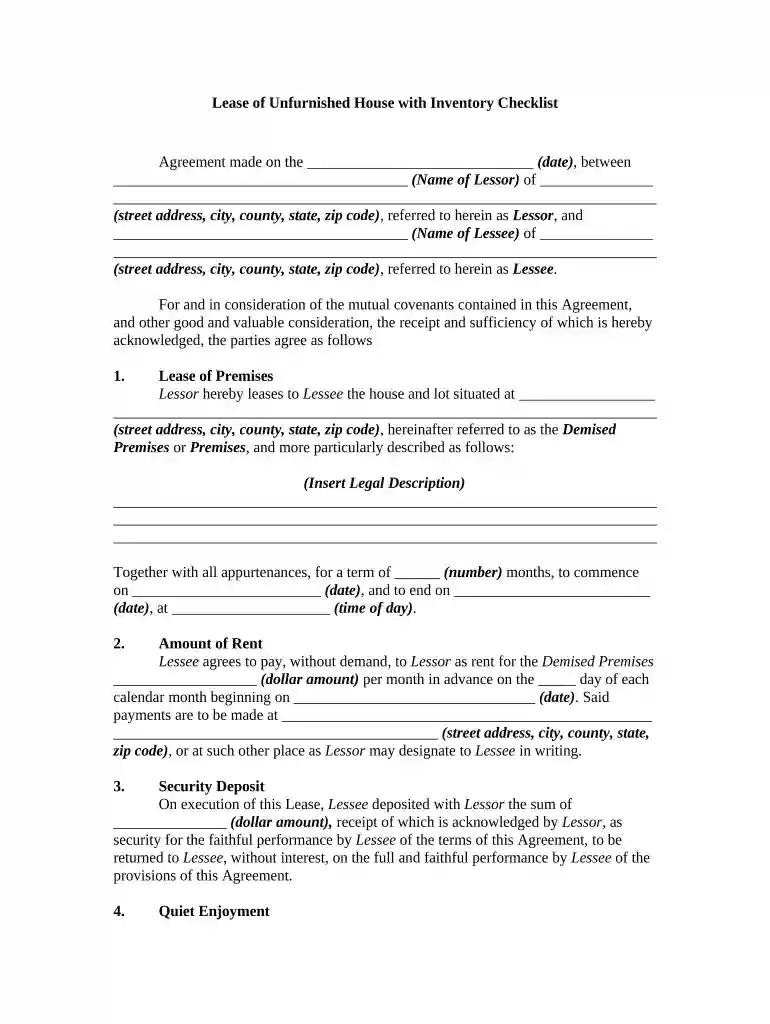
inventory checklist Preview on Page 1

Here's how it works

01. Edit your inventory checklist online
Type text, add images, blackout confidential details, add comments, highlights and more.

02. Sign it in a few clicks
Draw your signature, type it, upload its image, or use your mobile device as a signature pad.

03. Share your form with others
Send it via email, link, or fax. You can also download it, export it or print it out.

How to Use or Fill Out Inventory Checklist with Our Platform

Form edit decoration
9.5
Ease of Setup
DocHub User Ratings on G2
9.0
Ease of Use
DocHub User Ratings on G2
  1. Click ‘Get Form’ to open the inventory checklist in the editor.
  2. Begin by entering the date at the top of the checklist. This helps track when the inventory was assessed.
  3. In the 'Beginning Condition' section, assess each item listed (e.g., doors, carpets, walls) and note their condition. Use descriptive terms such as 'new', 'worn', or 'damaged'.
  4. Once you have moved in, revisit the checklist to fill out the 'Ending Condition' for each item. This will help document any changes that occurred during your tenancy.
  5. After completing both sections, ensure all entries are clear and accurate before saving your document.

Start using our platform today to streamline your inventory checklist process for free!

be ready to get more

Complete this form in 5 minutes or less

Get form

Got questions?

We have answers to the most popular questions from our customers. If you can't find an answer to your question, please contact us.
Contact us
An inventory list is a comprehensive, itemized list that details every product your company has in stock, including raw materials, work-in-progress items, and finished goods. In general, an inventory list should include the products name, SKU number, description, pricing, and quantity.
It should also say what is in the property, with details about the condition of: the walls, ceiling and floor. the paintwork. carpets and curtains. any furniture and appliances. fittings such as cupboards. windows and doors.
What to Include on Inventory Lists Name of the item. SKU (stock-keeping unit), serial number and/or barcode that identifies an item. Category and/or brief item description. Name of manufacturer or supplier. Unit cost. Sale price. Quantity in stock. Total value.
While inventory spans a variety of specific types, there are four major ones to make note of. These include raw materials and components, work-in-progress items, finished goods, and maintenance, repair, and operating (MRO) supplies.
An inventory list is a complete, itemized list of every product your business has in stock. This includes your raw materials, work-in-progress, and finished goods. An inventory list should include each items SKU number, name, description, cost, and quantity in stock.

Security and compliance

At DocHub, your data security is our priority. We follow HIPAA, SOC2, GDPR, and other standards, so you can work on your documents with confidence.

Learn more
ccpa2
pci-dss
gdpr-compliance
hipaa
soc-compliance

People also ask

An inventory list is a complete and itemized record of everything a company has in stock, be it for sale, for use or both. It can include raw materials, work-in-progress items and finished goods. Such a list helps to understand item availability and what the business is selling and has available to sell.
There are four different top-level inventory types: raw materials, work-in-progress (WIP), merchandise and supplies, and finished goods. These four main categories help businesses classify and track items that are in stock or that they might need in the future.

Related links