Definition and Meaning of the Contract to Install New Windows in a Dwelling
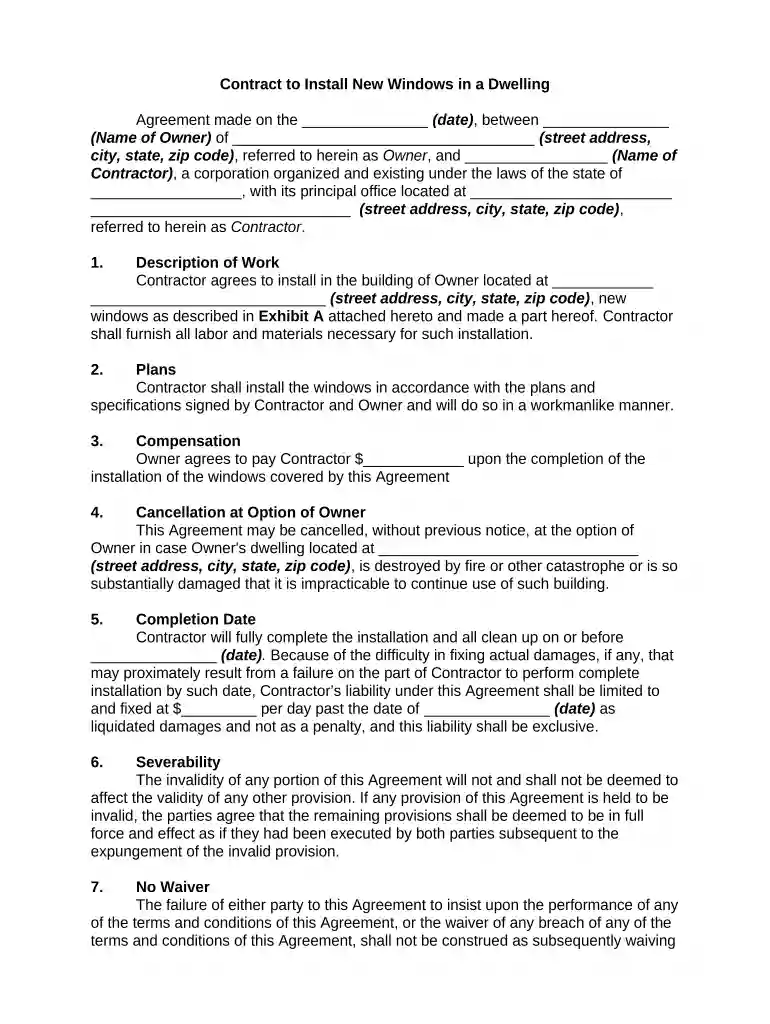
A contract to install new windows in a dwelling is a formal agreement between a property owner and a contractor that outlines the terms under which the contractor will provide window installation services. This document typically includes key details such as the scope of work, project timeline, payment terms, and responsibilities of both parties. The contract aims to protect the interests of both the owner and contractor by establishing clear expectations and guidelines.
Key Aspects of the Contract
- Parties Involved: Clearly define the property owner and the contractor's information, including names and contact details.
- Scope of Work: A detailed description of the installation services to be provided, which may include the number of windows, types of materials, and specific installation procedures.
- Payment Terms: Information about the total costs, payment schedule, and any deposit requirements. It may also outline any potential additional costs that the owner could incur if changes to the project arise.
- Completion Timeline: A specified timeframe in which the work will be completed, including start and end dates.
- Legal Provisions: Clauses that cover governing law, arbitration, and liability, providing a legal framework for addressing disputes.
Understanding these essential components helps ensure that both parties have a mutual understanding of their commitments, reducing the potential for conflicts during the project.
Important Terms Related to the Contract to Install New Windows in a Dwelling
In the context of a window installation contract, several key terms are critical for clarity and precision. These terms help both parties navigate their responsibilities and rights effectively.
Common Terms Defined
- Scope of Work: This defines the specific services and tasks the contractor is responsible for, including any detailed specifications about the windows being installed.
- Change Order: A formal request to alter the original agreement, which may include changes in materials, design, or project scope. Both parties must agree and sign any changes.
- Warranty: A guarantee from the contractor regarding the materials and workmanship. This often covers issues that arise after installation for a defined period.
- Liability Insurance: Insurance coverage that protects both the contractor and owner from potential financial loss due to accidents or damages occurring during installation.
Familiarity with these terms can facilitate better communication and understanding, minimizing misunderstandings throughout the project.
How to Use the Contract to Install New Windows in a Dwelling
Using a contract for window installation involves several steps that ensure both the owner and contractor are aligned on project expectations. Proper usage of the contract fosters a productive partnership and enhances the likelihood of a successful installation.
Steps to Effectively Use the Contract
- Detail All Specifications: Clearly specify the types of windows, installation methods, and any additional requirements in the scope of work.
- Establish Payment Terms: Agree on the total project cost, payment milestones, and any conditions for additional costs in case of changes.
- Set Deadlines: Include specific start and completion dates, along with provisions for potential delays due to unforeseen circumstances.
- Include Dispute Resolution: Incorporate protocols for addressing disagreements, such as mediation or arbitration procedures.
- Review and Sign: Both parties should carefully review the document before signing to ensure understanding and agreement with all terms outlined.
Properly utilizing the contract enhances transparency and accountability throughout the installation process, benefiting all parties involved.
Steps to Complete the Contract to Install New Windows in a Dwelling
Completing the contract requires careful attention to detail and organization. Following these structured steps aids in the efficient creation and execution of a comprehensive agreement.
Step-by-Step Process
- Gather Necessary Information: Collect all relevant details about the property, including dimensions, window types, and desired installation features.
- Draft the Contract: Use a window installation contract template as a starting point, tailoring the language to reflect the specific conditions of your agreement.
- Review the Document: Both parties should review the draft for accuracy, ensuring all specifications, payment, and timeline details are correct.
- Negotiate Changes: Discuss any amendments necessary to meet both parties' needs, making sure to document these changes formally.
- Final Signing: Ensure both the owner and contractor sign and date the contract to make it legally binding.
Following these steps ensures both ethical and legal compliance throughout the window installation process.
Why Should You Contract to Install New Windows in a Dwelling
Opting to use a contract for installing new windows provides several benefits, making it a crucial step in the home improvement process.
Advantages of Contractual Agreement
- Clear Expectations: A formal document outlines the responsibilities of both the contractor and owner, reducing the risk of misunderstandings or miscommunication.
- Protection of Rights: The contract legally protects both parties, providing recourse in the event of disputes or breaches.
- Professional Accountability: Engaging a contractor through a written agreement emphasizes professionalism and assures quality standards in workmanship.
- Financial Clarity: Detailed payment terms mitigate the risk of unexpected costs, enabling better budgeting and financial planning for the owner.
Utilizing a contract for window installation ultimately fosters a secure and structured approach to home renovations.