




01. Edit your simple offer letter acceptance email reply sample online
Type text, add images, blackout confidential details, add comments, highlights and more.

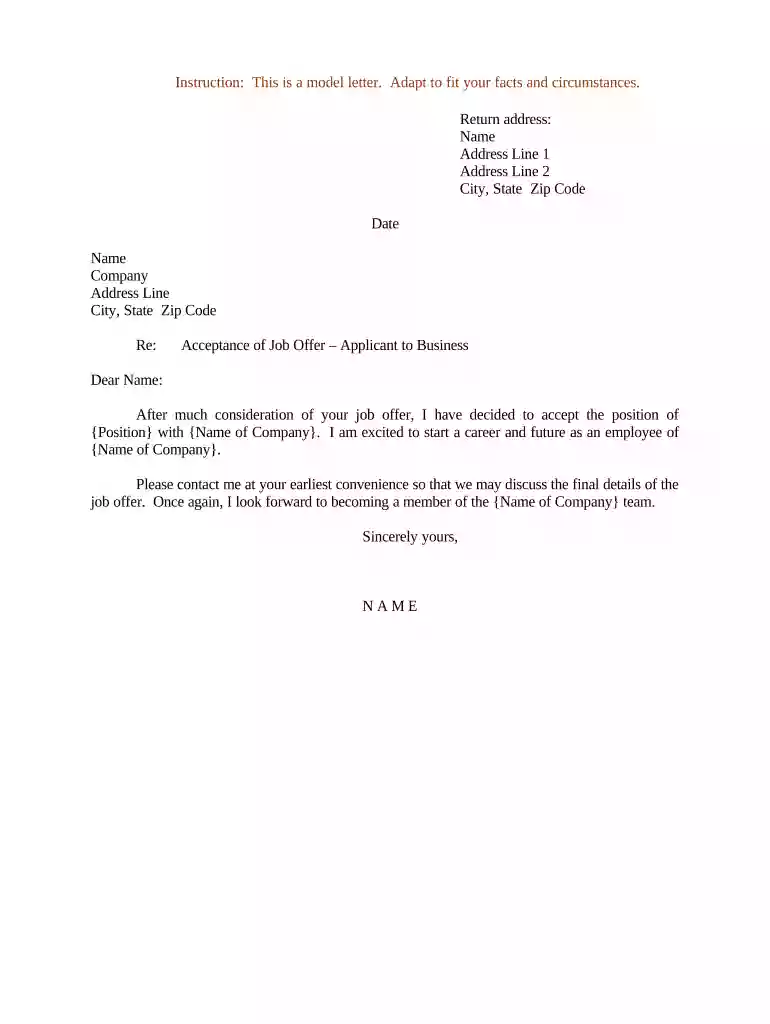
Type text, add images, blackout confidential details, add comments, highlights and more.

Draw your signature, type it, upload its image, or use your mobile device as a signature pad.

Send offer letter acceptance email reply sample via email, link, or fax. You can also download it, export it or print it out.
An acceptance offer letter is a formal document used by job candidates to confirm their agreement to the terms stipulated in a job offer. It represents a pivotal moment in the hiring process, as it signals the candidate's commitment to joining the organization. This letter typically expresses gratitude for the opportunity and often includes a request for further communication regarding onboarding processes. Understanding its structure and contents is crucial for effective communication in the hiring landscape.
When drafting an acceptance offer letter, several key components must be included to ensure clarity and professionalism:
Each of these components plays a vital role in establishing a formal tone and ensuring the letter is properly directed.
The first paragraph should clearly acknowledge the job offer received. Express excitement about the opportunity and gratitude for being chosen. This section sets a positive tone for the rest of the letter.
This acknowledgment serves to confirm that the candidate has received and understood the job offer, reflecting positivity.
Including a brief recap of the key terms of the employment offer is essential. This not only conveys professionalism but also ensures that both parties are on the same page regarding expectations. The components to recap may include:
This section acts as a reference point and can help avoid any misunderstandings later.
A successful acceptance offer letter should also include a section requesting further communication about the next steps in the onboarding process. This may involve inquiries into documentation needed for HR or additional training sessions.
By including this request, candidates demonstrate initiative and eagerness to transition smoothly into their new role.
Finally, the letter should conclude on a positive note. Reinforce excitement for the new role, include well-wishes, and sign off professionally.
This closing creates a polite and professional final impression, reinforcing the candidate's enthusiasm for the position.
Providing examples can be instrumental in guiding candidates through the acceptance process. Here are two types of examples for clarity:
Standard Acceptance Offer Letter: A general acceptance letter that acknowledges the offer and emphasizes key details.
Acceptance Offer Email: A more informal format, suited for electronic communication, that retains the essential components while promoting brevity.
While personalizing your acceptance offer letter is vital, templates can serve as effective starting points. They typically include the necessary structure and elements, allowing candidates to fill in specific details. Many online resources offer straightforward templates, including variations for different roles and levels of formality.
Understanding the structure and purpose of an acceptance offer letter is crucial for candidates entering new roles. By incorporating the essential components, acknowledging the job offer, summarizing key details, requesting further communication, and closing professionally, candidates will convey both enthusiasm and professionalism in their acceptance. This thoughtful approach not only sets a positive tone for the new working relationship but also reinforces the candidate's desirability as an employee.
At DocHub, your data security is our priority. We follow HIPAA, SOC2, GDPR, and other standards, so you can work on your documents with confidence.


May 29, 2013 Successful applicants, recipients of a scholarship, will be required either to have a firm offer of acceptance from their prospectiveRead more
I am writing to confirm my acceptance of your employment offer on April 20 and to tell you how delighted I am to be joining XYZ Corporation in Chicago.Read more
It is my pleasure to officially extend you an offer of employment as a/an [Position Title], with [Agency Name]. This position is being offered to you at Grade [Read more


