






Understanding the Equal Employment Opportunity Policy
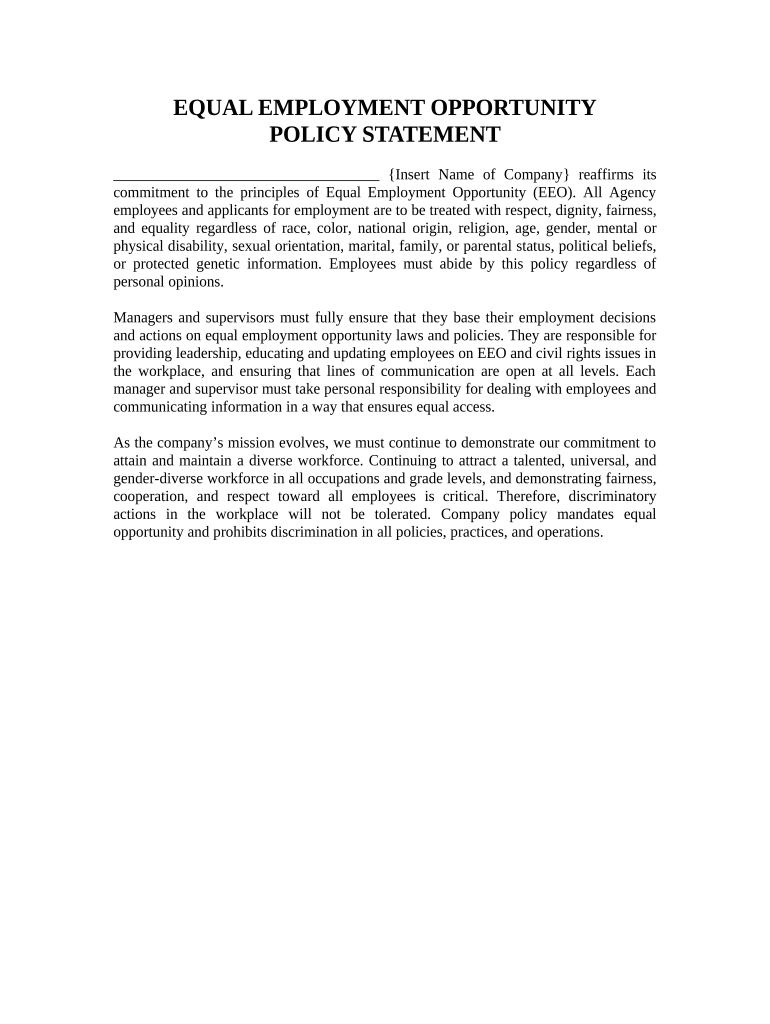
The equal employment opportunity (EEO) policy refers to a set of guidelines established by an organization to ensure fair treatment, diversity, and inclusion in the workplace. It mandates that all employees and applicants receive respect and fairness without discrimination based on personal characteristics such as race, color, religion, sex, national origin, age, disability, or genetic information. This policy serves as a foundation for fostering an equitable work environment, where individual merit determines employment decisions.
Key Elements of the Equal Employment Opportunity Policy
An effective EEO policy includes several key components that reflect the organization’s commitment to equal opportunity:
- Non-Discrimination Clauses: Clearly states the prohibition of discrimination in all aspects of employment, including hiring, promotion, and termination.
- Diversity Goals: Aims to promote a diverse workforce that reflects the community and customer demographics.
- Complaint Procedures: Establishes a mechanism for employees to report incidents of discrimination or harassment without fear of retaliation.
- Training Programs: Offers training for all employees and especially management on the importance of EEO and strategies for maintaining a respectful workplace.
- Compliance Monitoring: Details methods for auditing compliance with these policies and addressing issues.
Organizations should ensure that their EEO policy is readily accessible to all employees, integrated into their operational procedures, and consistently enforced.
How to Use the Equal Employment Opportunity Policy
To effectively implement the EEO policy within an organization, follow these guidelines:
- Communicate the Policy: Distribute the EEO policy to all employees during onboarding and have it available in employee handbooks or on the company intranet.
- Conduct Training: Regularly arrange training sessions to educate employees about their rights and obligations under the policy. This should also include training for managers on handling EEO-related inquiries and complaints.
- Establish Reporting Mechanisms: Create clear procedures for reporting violations. Ensure employees know how to report issues, who to approach, and what the investigation process entails.
- Monitor Diversity Efforts: Regularly review and assess the composition of the workforce to identify areas for improvement and ensure compliance with EEO standards.
- Respond to Complaints: Address any reports of discrimination or harassment promptly and thoroughly, ensuring transparency in how complaints are handled.
Legal Framework Surrounding the Equal Employment Opportunity Policy
Understanding the legal context in which the equal employment opportunity policy operates is crucial. The policy is underpinned by several federal laws, including:
- Title VII of the Civil Rights Act of 1964: Prohibits discrimination in employment based on race, color, religion, sex, or national origin.
- Age Discrimination in Employment Act (ADEA): Protects workers aged 40 and older from employment discrimination based on age.
- Americans with Disabilities Act (ADA): Prohibits discrimination against individuals with disabilities and mandates reasonable accommodations in the workplace.
- Genetic Information Nondiscrimination Act (GINA): Protects individuals from discrimination based on genetic information.
Each of these laws provides additional context and requirements for the implementation of EEO policies, influencing how employers must act to maintain compliance.
Examples of Equal Employment Opportunity Policy Implementation
To illustrate the application of an equal employment opportunity policy, consider these examples:
- Recruitment and Hiring: An organization revises its job descriptions to ensure language is inclusive and attracts a diverse candidate pool. They also implement blind resume screening practices to minimize biases.
- Promotion Practices: A company establishes structured interviews and evaluation processes for promotions to ensure candidates are considered based solely on merit, devoid of personal biases.
- Training Initiatives: A corporation introduces mandatory training on diversity and inclusion, equipping employees with the tools to recognize and confront their biases effectively.
By integrating these approaches into everyday practices, organizations can uphold their commitment to equal employment opportunities, fostering a culture of inclusivity.
Compliance and Penalties Associated with the Equal Employment Opportunity Policy
Failure to adhere to the established equal employment opportunity policy can lead to legal repercussions for organizations. Potential penalties include:
- Financial Penalties: Organizations may face fines imposed by federal or state agencies for failing to maintain EEO standards.
- Compensatory Damages: Victims of discrimination may be entitled to monetary compensation, including lost wages or benefits, reimbursement for legal fees, and damages for emotional distress.
- Reputational Damage: Non-compliance can significantly harm an organization’s reputation, impacting employee morale, customer trust, and business operations.
It is essential for organizations to understand the implications of not adhering to their EEO policies to strive for compliance and promote a fair work environment.