







Understanding the Shipper Declaration for Dangerous Goods
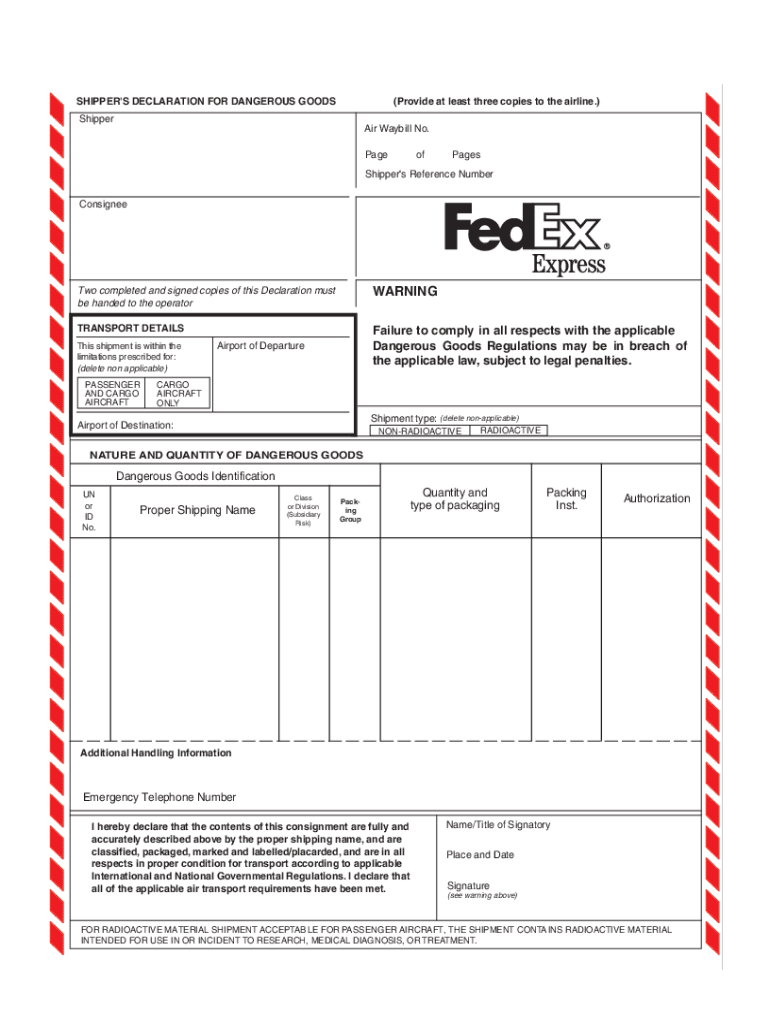
The shipper declaration is a crucial document in the transportation of dangerous goods. This form serves as a formal declaration that the goods being shipped conform to safety regulations and guidelines required by federal and international authorities, such as the International Air Transport Association (IATA) and the Department of Transportation (DOT). It is vital for anyone involved in the shipping process, including shippers, carriers, and regulatory agencies, to accurately complete this declaration to ensure compliance and safety.
Essential Components of the Shipper Declaration
The shipper declaration includes several mandatory components that must be filled out accurately. Understanding each component can assist in preventing delays and legal complications.
-
Identification of the Goods: Clearly identifying the type of dangerous goods being shipped is essential. This includes the proper shipping name, UN number, and class of the goods. For instance, if shipping a chemical identified as "Flammable Liquid," it should include details like the UN number (e.g., UN 1993) and the associated hazard class.
-
Quantity and Packaging: The declaration must specify the quantity of the dangerous goods being shipped, including the number of packages. A precise description of packaging types (e.g., drums, boxes) should also be stated to ensure that all safety measures are appropriately followed.
-
Certification Statement: The shipper or their agent must sign a certification statement confirming that the goods are correctly classified, packaged, marked, and labeled according to regulations. This statement holds legal weight and affirms accountability for the accuracy of the provided information.
Steps to Complete a Shipper Declaration
Completing a shipper declaration correctly is essential for safe and compliant shipping of dangerous goods. Follow these steps to ensure the document is appropriately filled out:
-
Identify Dangerous Goods: Determine the exact nature of the goods you are shipping. Reference the appropriate lists of hazardous materials to classify the items correctly.
-
Prepare the Declaration Document: Use a template or form that meets federal and IATA standards. This document can be a fillable PDF for ease of completion.
-
Fill Out Required Fields: Provide all required information, including the shipper's name, address, and contact information, as well as the recipient's details.
-
Include Itemization: List the items being shipped with their respective UN numbers, proper shipping names, hazard classifications, packaging types, and quantities.
-
Affix Signatures: Ensure the shipper or authorized agent signs the declaration. This signature indicates that the declaration is accurate and legally binding.
-
Retain Copies: After completion, retain a copy of the shipper declaration for at least one year, as it may be required for audit purposes or regulatory review.
Legal Obligations Concerning the Shipper Declaration
Adhering to regulations regarding the shipper declaration is not just best practice; it is a legal obligation. Failure to comply can lead to significant penalties, including fines and shipping delays. It is important to be aware of:
-
Regulatory Compliance: Shippers must comply with various federal regulations, including the Hazardous Materials Regulations (HMR) implemented by the DOT. Non-compliance exposes shippers to legal action.
-
Documentation Retention: Regulations often mandate that a copy of the shipper declaration must be retained for at least one year. This requirement is essential for compliance audits and reviews by regulatory agencies.
-
Training Requirements: Individuals responsible for shipping dangerous goods must undergo proper training to understand the requirements of completing and submitting a shipper declaration. Familiarity with specific procedures and regulations is necessary to prevent legal issues.
Common Mistakes When Completing a Shipper Declaration
Incorrectly filling out a shipper declaration can lead to dangerous situations, fines, or shipment rejection. Common mistakes to avoid include:
-
Incorrect UN Numbers: Failing to accurately match the UN number with the correct shipping name can result in misclassification and regulatory violations.
-
Omitting Required Information: Leaving sections blank or failing to include specific details such as quantity can lead to processing delays or legal repercussions.
-
Inadequate Signature: Not having a proper signature from the shipper or an authorized representative can invalidate the document, leaving the shipment non-compliant.
Examples of Shipper Declaration Forms
Understanding the format of shipper declarations can aid in correct completion. Below are examples of common formats used:
-
Shipper's Declaration for Dangerous Goods Form: Typically includes sections for entering all necessary details about the hazardous materials, shipping information, and certification.
-
Non-Dangerous Goods Declaration: This form is used for items that do not meet the criteria for dangerous goods but still require documentation for accuracy.
-
Import/Export Declarations: These forms may also include shipper declarations that pertain to the international movement of goods, ensuring compliance with both domestic and international regulations.
By understanding the intricacies of the shipper declaration for dangerous goods, individuals and businesses can ensure compliant, safe shipping practices. Properly completed declarations contribute to enhanced safety and regulatory compliance in the transport of hazardous materials.




